Crypto's Clarity Act fails to advance in Senate

Add Axios as your preferred source to
see more of our stories on Google.
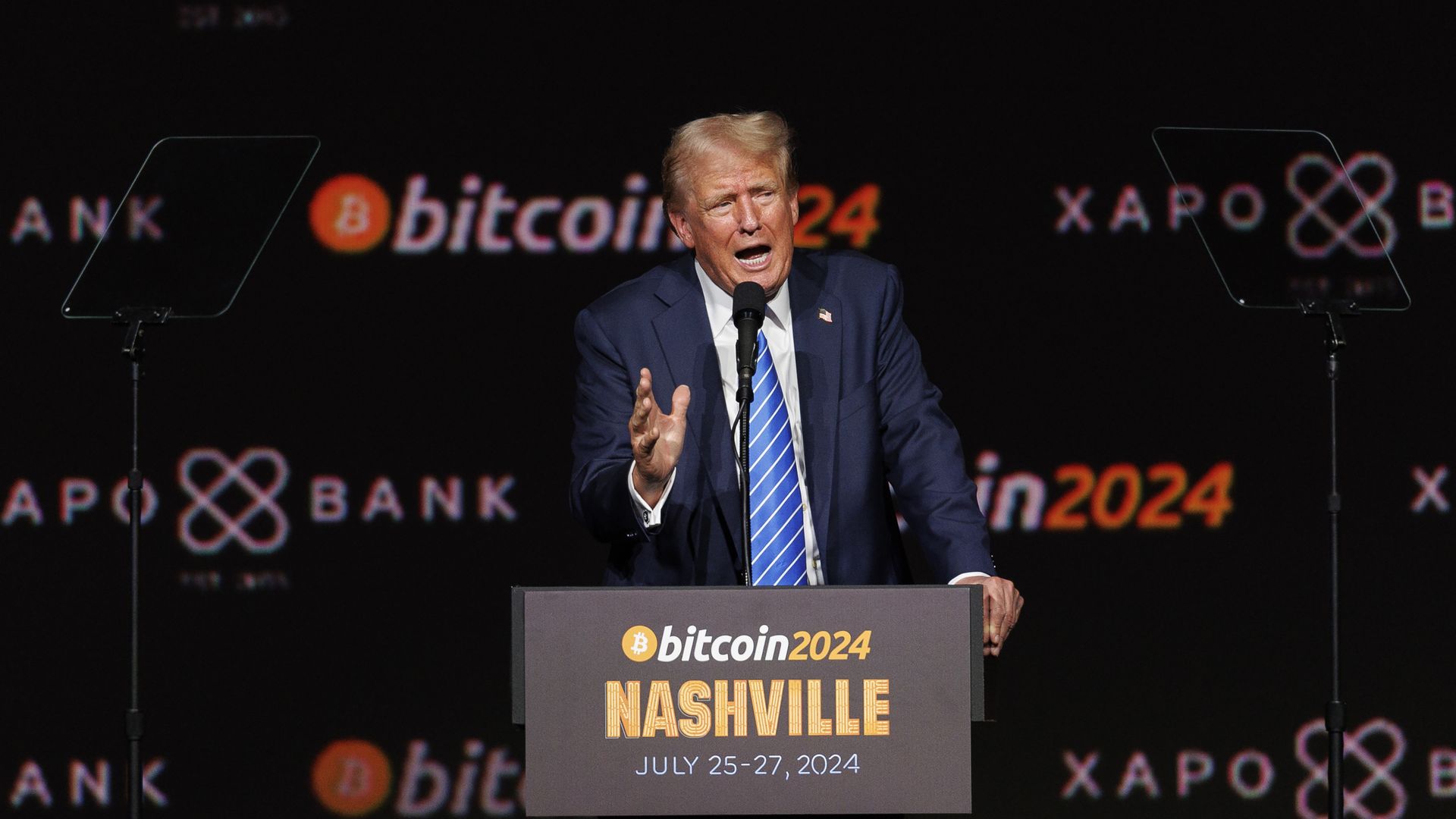
Then presidential candidate Donald Trump speaks at the Bitcoin 2024 conference in Nashville, Tennessee. Photo: Brett Carlsen/Bloomberg via Getty Images
The Clarity Act failed to advance in a key Senate procedural vote Tuesday, a major setback for the long-sought crypto legislation and the industry that had made it its top policy goal.
Why it matters: The bill would create a new federal regulatory framework for the $2.3 trillion crypto industry, but has faced growing opposition from Democrats due to President Donald Trump's investments in the sector.
The big picture: The market structure legislation would create durable rules for how crypto functions in the U.S. financial system, replacing years of regulatory uncertainty around how digital assets can be issued, traded and sold to investors.
- It seeks to address disagreement over whether, and how, existing laws governing securities and commodities can be applied to digital assets.
- Crypto has unique characteristics and functions that place it somewhere in a messy middle between two major financial regulators: the Securities and Exchange Commission and the Commodity Futures Trading Commission.
The intrigue: Trump has pushed for the bill's passage, characterizing himself before the last presidential election as the crypto industry's biggest champion.
- But his personal business interests in the sector have sparked the fiercest opposition to the bill from Democrats, throwing Clarity's ultimate fate in the balance.
The Senate vote Tuesday was 49-50, with three Republicans — Sens. Susan Collins, Josh Hawley and Jerry Moran — voting no. It required 60 votes to advance.
Between the lines: Chief among many Democrats' concerns is that the bill's ethics restrictions are inadequate to prevent the kind of dealings Trump has engaged in since his election.
- Republicans Monday released what they called the "final draft" of Clarity, containing new ethics language and a role for state attorneys general in enforcement.
- The most recent draft also sought to address another major sticking point: concerns from the banking industry that stablecoin rewards authorized under the bill, offered by crypto platforms, will pose a threat to bank deposits.
- On that issue, the changes give authority to the Treasury secretary to step in to prevent deposit flight.
Friction point: The late changes did nothing to silence Clarity's harshest critics before the vote.
- "Late last night, we got the details of President Trump and Republicans' quote 'final offer' on ethics, and it reads exactly like what you expect the most corrupt President in our history to bless: a weak fig leaf that will do nothing to stop him from making his next $1.4 billion in crypto profits," Sen. Elizabeth Warren (D.-Mass.) said in a statement.
- Opponents of Clarity contend that the president's crypto ventures provide a vehicle for bribery and corruption, including from foreign governments.
Yes, but: While Trump's personal involvement in crypto has muddied the outlook for the legislation, regulators under his regime have already gotten to work crafting rules.
- On Monday, SEC chairman Paul Atkins called on Congress to advance the Clarity Act, but made it clear that the agency would continue to "modernize" federal securities regulation to advance the crypto industry, regardless of the vote's outcome.
- "With or without that legislation, this Administration will deliver for American investors and technological innovators — which is immensely important to our markets and to those who participate in them," Atkins said at the Solana Policy Institute Summit in Washington. "Promises were made, and they will be kept."
Reality check: A crypto-friendly SEC can change policy, but only Congress can make it lasting.
- Atkins himself said in August that legislation remains "indispensable" to prevent the work his agency is doing now from being "unwound by a future rogue regulator."
The impact: The price of bitcoin slipped 1.3% following the vote, to under $76,000.
- Crypto-linked stocks fell even harder, with Coinbase down over 8%, Robinhood over 3%, and bitcoin treasury company Strategy slipping 5% Tuesday afternoon.
What's next: While Clarity isn't officially dead, it could face an even more hostile Senate after the midterm elections.
