America's expensive groceries are getting less safe to eat

Add Axios as your preferred source to
see more of our stories on Google.
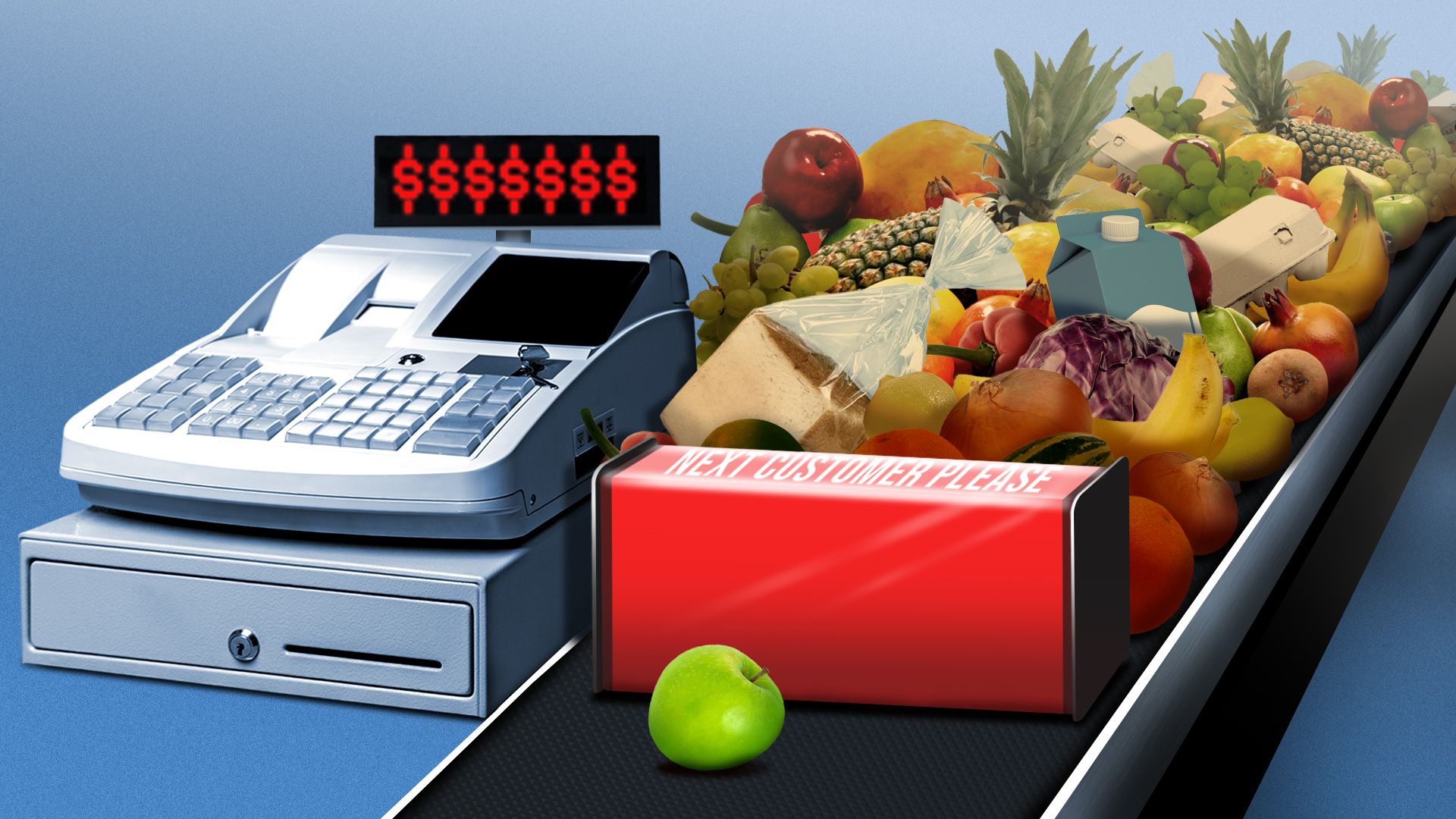
Illustration: Sarah Grillo/Axios
Plenty of Americans feel like they're forking over a fortune for groceries — only to get hit with a recall notice that forces them to throw that expensive food out.
Why it matters: While grocery prices are driven by complex trade and energy costs, the safety net meant to keep food safe to eat is fraying, creating a dual crisis of affordability and safety.
- The average American household pays more than $10,000 on food — including eating out or delivery — every year, and two-thirds of Americans think they're spending too much on groceries.
- Prices have increased by more than 18% since 2022, although some foods have seen sharper or smaller increases.
What they're saying: "It can be really, really scary out there," Lauren Borsheim, a food policy analyst at Food & Water Watch, tells Axios.
- "The Trump administration since 2025 has really just dismantled many of the fundamental protections we need to keep our food supply safe."
- "We have people that are really afraid that the U.S. is not doing a good job regulating our food supply. It's definitely a concern out there that as people are spending more money on their food, they are also fearful that that same food is going to cause them to get sick," Borsheim says.
By the numbers: Recalls are relatively on par with normal levels this fiscal year, according to FDA data.
- So far, 5,504 products have been recalled in 2026. That's up slightly from the 5,461 products recalled last year, but down from the 6,524 products recalled in 2024.
Yes, but: The FDA recently hit a record 19 simultaneous outbreak investigations, covering everything from infant formula to jalapeños.
Between the lines: Mega-corporations and corporate consolidation can turn single-suppliers' errors into multistate panics, as seen with the cyclospora outbreak linked to iceberg lettuce.
- "The U.S. food safety system has gotten hit so hard over the last year and a half," Christopher Barrett, an economist at Cornell University, tells Axios.
Zoom out: Food-safety advocates are concerned about declining federal surveillance after the Trump administration eliminated or pushed out thousands of workers across the CDC, FDA and USDA.
- Those cuts prompted federal officials to say they plan to do fewer inspections.
- Barrett says assuming staffing cuts won't affect food safety is "demonstrably false."
- "When you cut corners, and you're not seeing the inspectors show up very often, then more stuff gets out the door. You get more episodes of foodborne illness. You have expensive recalls. That just adds to companies' costs, which gets turned into higher prices for us, and it's a vicious cycle," Barrett says.
- The FDA did not respond to Axios' request for comment.
The other side: "The U.S. food supply remains one of the safest in the world," a USDA spokesperson told Axios in an emailed statement.
- The USDA "uses the best available science, data, inspection oversight, and technology to ensure standards do not slip, and to respond quickly when risks emerge."
- "Inspectors and frontline personnel provide mandatory inspection coverage at every federally regulated establishment every day and that will not change," adding that no "regulated products can enter commerce without inspection."
- "The number of recalls can fluctuate year to year for many reasons. Enhanced recordkeeping and traceability systems also help identify and remove affected products faster and more precisely, which can contribute to changes in recall totals over time."
The big picture: High-profile recalls are happening alongside persistent grocery inflation, but the two are not sharply connected, former USDA chief economist Joseph Glauber tells Axios.
- Instead, the war with Iran is driving up energy prices, and the president's trade policies and specific weather events are squeezing individual food categories, Glauber tells Axios.
- Beef prices have risen amid low numbers of U.S. cattle and restrictions on Mexican cattle due to New World screwworm outbreaks, while tariffs have hit Mexican tomatoes and weather has struck the price of delicate fruits like citrus, Glauber says.
The bottom line: Inflation is making groceries harder to afford, while reduced federal oversight could make consumers less confident in what they're buying.
Go deeper: America's next grocery shock is brewing
Editor's note: This story has been corrected to reflect that the average American household pays more than $10,000 on food (not just groceries).
