Tesla's Cybercab triggers regulatory game of chicken

Add Axios as your preferred source to
see more of our stories on Google.
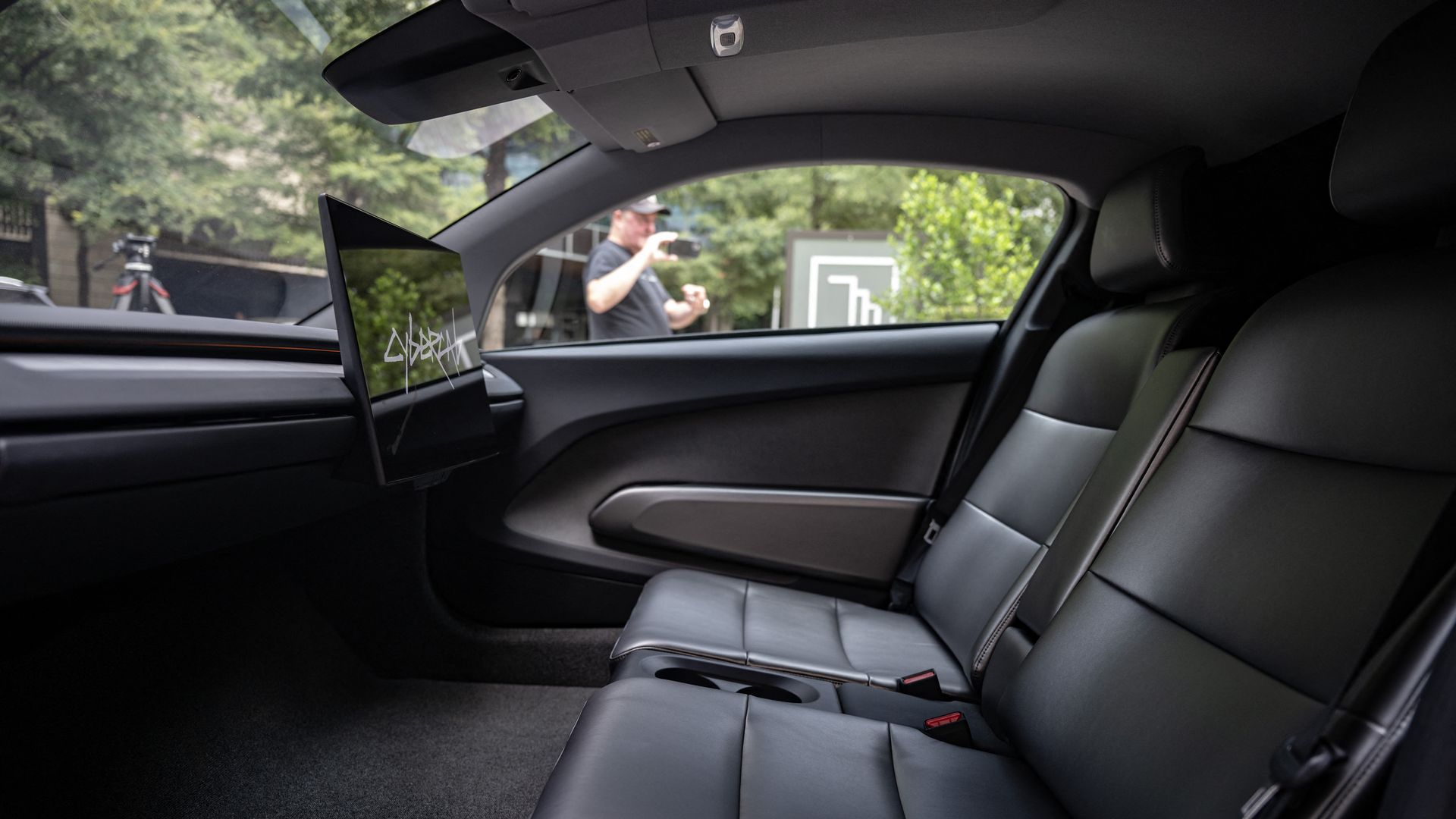
The interior of a Tesla Cybercab, displayed in downtown Austin, Texas, yesterday. Photo: Ronaldo Schemidt/AFP via Getty Images
Tesla's decision to let passengers start booking rides in its driverless Cybercab has triggered a high-stakes test of how far automakers can stretch outdated federal safety rules while regulators race to rewrite them.
Why it matters: Tesla and the Trump administration share the same goal — clearing regulatory barriers to autonomous vehicles — but they may disagree over how quickly Tesla can get there.
Driving the news: The National Highway Traffic Safety Administration said Friday it opened an investigation into Tesla's self-certification that the Cybercab — which lacks a steering wheel and pedals — complies with federal vehicle safety standards.
- The agency's "audit query" will scrutinize the technical data and processes Tesla used to certify a vehicle that doesn't have traditional human controls.
- In particular, the NHTSA says it wants to know whether Tesla concluded that some existing safety requirements simply don't apply to autonomous vehicles.
The big picture: CEO Elon Musk's entire strategy for an autonomous future hinges on producing Cybercabs by the millions.
- To achieve that kind of scale, Tesla is arguing that Cybercab already complies with vehicle safety rules and therefore doesn't need a special exemption, which would require a limited production run.
- That stance — unless challenged by the NHTSA — could give Tesla a huge advantage over rivals like Amazon-owned Zoox, whose own purpose-built robotaxi is capped by law at 2,500 vehicles a year.
Flashback: Zoox tried the regulatory path that Tesla is taking now.
- In 2022, Zoox self-certified its carriage-style robotaxi, which also lacks human controls, saying it was designed to comply with existing rules without exemptions or regulatory changes.
- NHTSA had questions, though, and launched a probe into Zoox's assertions.
- The two sides were essentially locked in a regulatory standoff for about two years until Zoox changed course and said it would seek an exemption after all.
- The NHTSA streamlined the application process in 2025, and Zoox was the first to receive an exemption under the new process this summer, clearing the way for it to begin charging robotaxi passengers.
Now comes Tesla, with essentially the same aggressive argument for self-certification.
Between the lines: Tesla is effectively playing a game of chicken with its regulator: It's betting that its interpretation of today's rules will survive scrutiny — or that Washington will change the rules before the disagreement becomes consequential.
- And that speaks to a potentially big difference between today and Zoox's situation four years ago: NHTSA under President Trump is already rewriting the rulebook to eliminate unnecessary barriers to AVs.
There's reason to think Tesla feels comfortable making that bet.
- On Tesla's most recent earnings call, engineering chief Lars Moravy referred to "a great relationship" with NHTSA administrator Jonathan Morrison, and said that Tesla had been "open and honest" with the agency for years about its Cybercab plans.
- "I don't want to say we're in lockstep," Moravy said, "but I feel like we have a partner there, and we're working together on it."
Yes, but: The NHTSA's investigation demonstrates that it's not looking the other way.
- "Until [the rulemaking] is completed ... existing standards remain in force," the agency said Friday, adding that its job is to ensure "all of our laws are followed."
What we're watching: Whether the NHTSA's audit turns up a genuine compliance problem — or ultimately validates Tesla's aggressive reading of rules both sides agree weren't written for the autonomous era.
