The labor market's lower-rung rebound

Add Axios as your preferred source to
see more of our stories on Google.
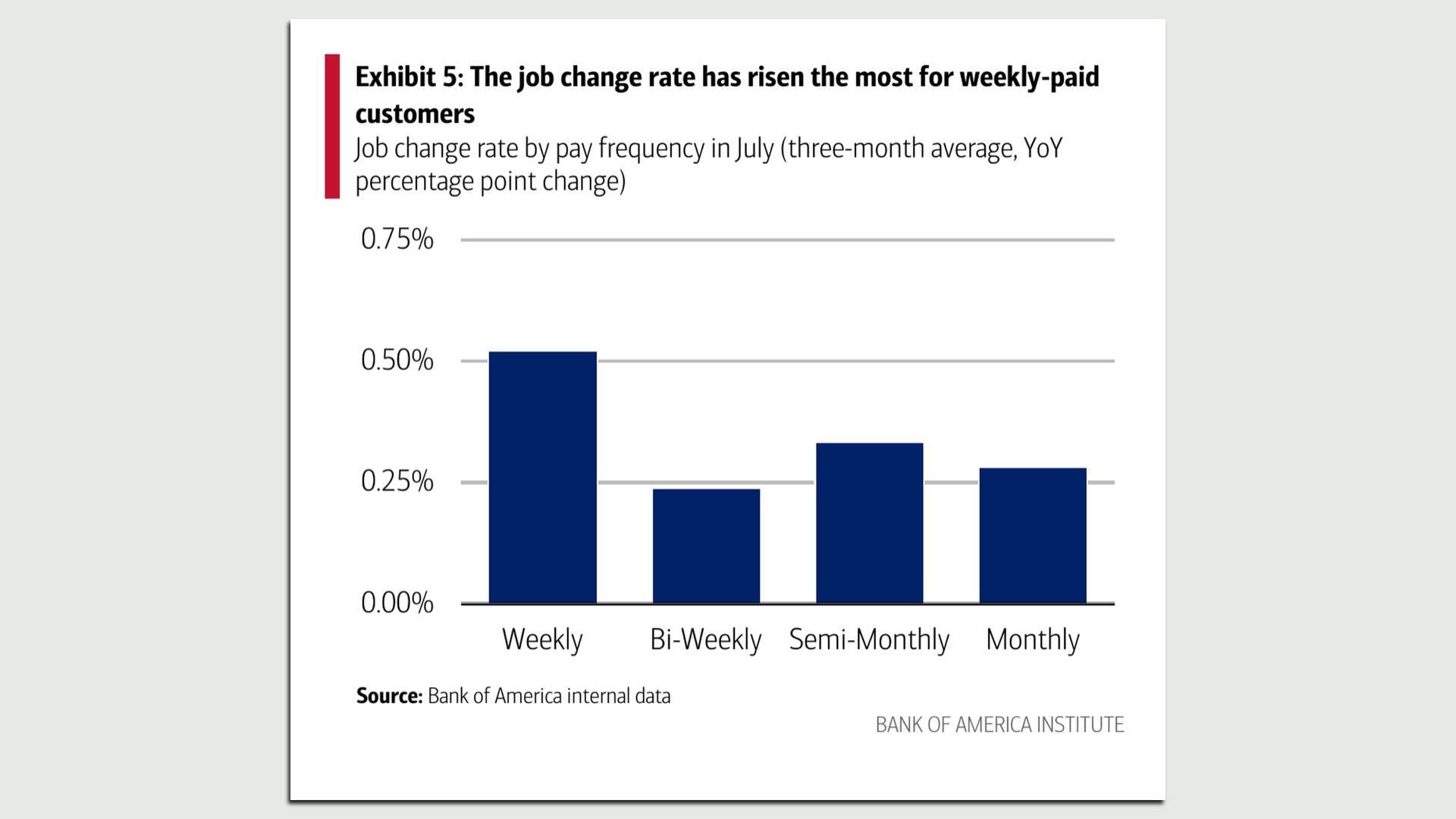
Courtesy: Bank of America
There is a bright spot in a labor market that private-sector reports suggest cooled last month. Lower-paid workers are switching jobs more often and getting bigger raises when they do.
Why it matters: Lower-paid workers are typically among the first to feel a cooling labor market. But now the quirks of the economic cycle — including the AI investment boom — may be helping cushion the blow.
By the numbers: Bank of America Institute estimates payroll growth slowed to 1.5% year over year in August, from 1.8% in July, based on anonymized customer account data.
- After-tax wage growth was 4.7% for lower-income households, compared with the 3.5% gain for higher-income households — extending a reversal of the K-shape divide in wage growth.
The intrigue: Job switching has picked up particularly among weekly-paid workers, who tend to hold lower-paid, hourly jobs.
- The typical raise associated with changing jobs reached 12.5% in July, the highest in more than three years.
- "You don't move jobs, obviously, if you're fearful of the labor market," David Tinsley, a senior economist at the Bank of America Institute, told reporters Thursday morning.
Zoom in: Tinsley pointed to construction, where data center development is supporting nonresidential activity just as the workforce faces a labor supply squeeze.
- Roughly 60% of construction workers are paid weekly, he said.
Yes, but: Lower tax withholding under the GOP tax law is also boosting after-tax pay, especially for lower- and middle-income households.
- Tinsley sees both the tax boost and "some genuine tightening at the bottom end" of the labor market.
