Driscoll resignation roils defense-tech investment

Add Axios as your preferred source to
see more of our stories on Google.
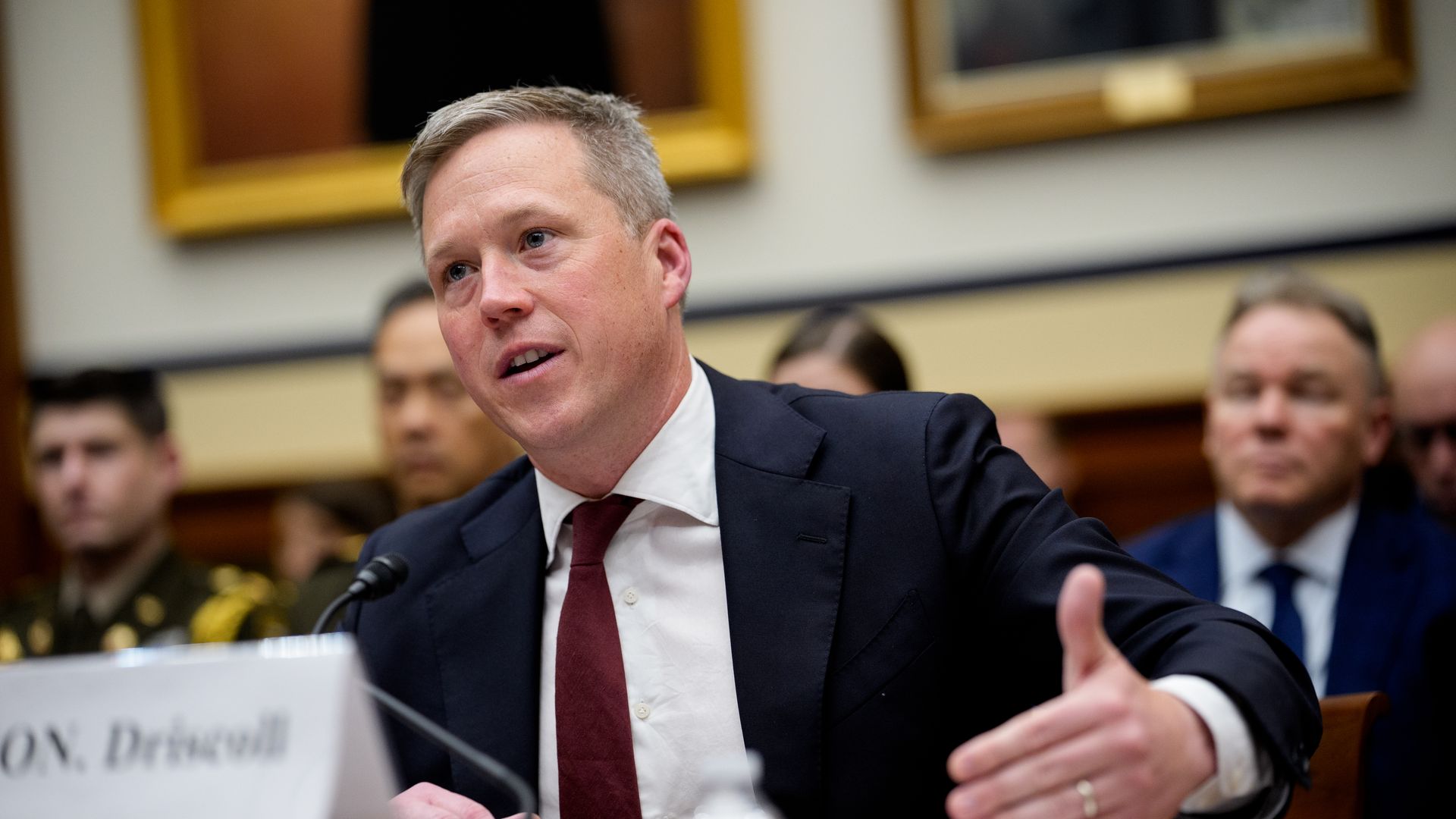
Army Sec. Dan Driscoll at a House hearing. Photo: Andrew Harnik/Getty Images)
Defense tech has become one of venture capital's hottest sectors, after being ignored for decades, but it just lost a top evangelist within the Pentagon.
Vibes check: Defense-tech investors tell Axios that they're concerned and disappointed, but not slowing down.
Driving the news: Army Secretary Dan Driscoll this week resigned, after clashing with Defense Secretary Pete Hegseth.
- It follows Hegseth's firing of Gen. Randy George, the Army's chief of staff, and many other forced departures across most services.
- The Army is now without its top two Senate-confirmed leaders, despite the ongoing Iran conflict.
Behind the scenes: Driscoll was viewed as tech's top military man in D.C.
- He had spent a few years as COO of venture firm Flex Capital, and had pledged to bring a "Silicon Valley" ethos to procurement and deployment.
- He and George also supported the Army Transformation Initiative, which would have eliminated certain big-name and big-cost weapons — believing that drones had fundamentally changed the future of warfare.
- But Driscoll's focus on modernization was in conflict with Hegseth, who reportedly was more concerned about culture war issues like eliminating DEI initiatives.
- After his firing, George joined a venture capital firm.
What they're saying: "Driscoll is very widely respected across the defense sector generally and the defense-tech world specifically [but] on the substance I don't think anything changes," says VC with several defense-tech deals. "Momentum is bigger than any one person."
- There's also a pervasive sentiment that Driscoll could be back at DoD, perhaps as secretary, were Vice President JD Vance to become president.
- The two are close friends and former classmates at Yale Law School — a relationship that may have contributed to Hegseth's "suspicious and paranoid" attitude toward his Army chief.
By the numbers: U.S. defense-tech companies have raised $51.1 billion so far this year, per PitchBook, compared to $52.4 billion for all of 2025.
- For context, there was less than $7 billion invested in 2016.
The bottom line: So long as DoD budgets remain robust, capital will flow. Even if the path has become a bit bumpier.
