G20 economies share problems with different solutions


Add Axios as your preferred source to
see more of our stories on Google.
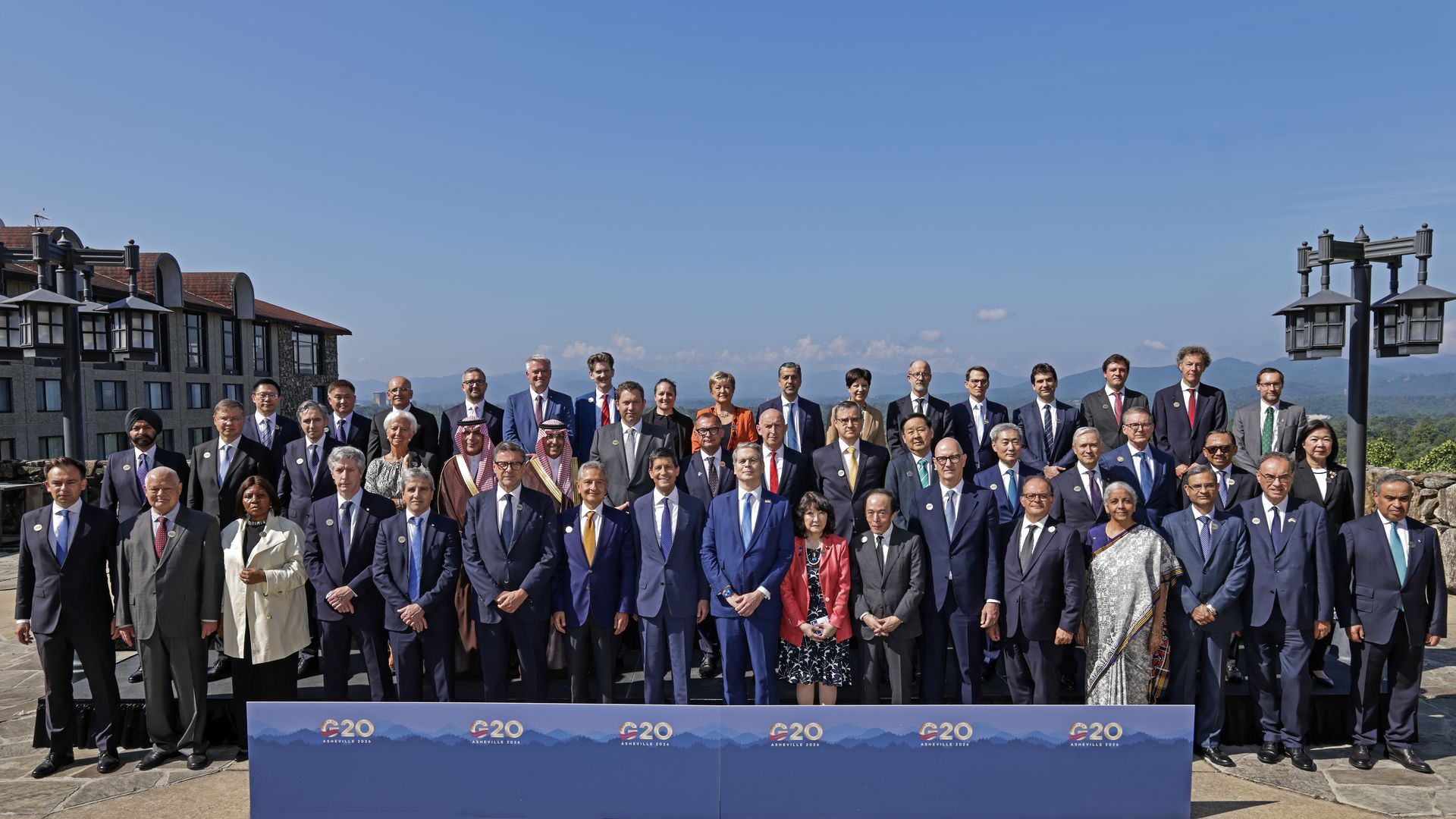
G20 finance ministers and central bankers in the customary "family photo" in Asheville, North Carolina. Photo: U.S. Treasury Department public affairs
The world's biggest economies need stronger growth to outrun mounting debt, aging populations and a new wave of global shocks. That much, the world's financial leaders can agree upon.
- But this week's G20 meeting is exposing sharp differences over what's holding global growth back.
The big picture: That's the reality on the ground as the world's leading finance ministers meet in Asheville, North Carolina, against a backdrop of rising global interest rates and massive debt overhangs.
- Stronger growth is both a cause of the rate surge and the most appealing alternative for solving debt problems, though the specifics vary across countries — as do their priorities and domestic politics.
Driving the news: Treasury Secretary Scott Bessent stripped back the G20 finance agenda to focus on economic growth. In remarks that opened the finance gathering, Bessent said that years of "mission creep" had pulled the group away from its original purpose.
- This year's agenda left out much of the focus on climate change and inequality that have been key areas during recent years' G20 gatherings — much to the consternation of European delegations.
- The U.S. instead focused on deregulation, private sector investment, global imbalances and sovereign debt.
State of play: U.S. officials say G20 members largely agree with Bessent on the need to focus on growth, with a caveat: What works in one economy may not translate to another.
- "I think the principles of what Secretary Bessent laid out — those are well understood, well agreed upon principles," Treasury Under Secretary Erin Browne told Axios in an interview on the conference sidelines.
- "But different economies have different challenges. We have members of the African Union that are here, and they have challenges that are very distinct from Germany, as an example," she said.
- Countries with the same apparent imbalance can have different problems underneath the hood, requiring very different fixes.
- "You could be a surplus country because you don't have enough investment demand, or you could be a surplus country because you don't have enough consumption demand," Browne said, referring to countries that take in more from trade and investment abroad than they send out.
Of note: Federal Reserve chairman Kevin Warsh made a similar point in his opening remarks, describing "enormous change in the global economy."
- "We're all experiencing it somewhat differently," Warsh said.
The intrigue: While climate change was absent from the agenda, European officials said on the sidelines that it remained a priority.
- "It is part of the question related to the economic growth — to economic resilience," EU commissioner Valdis Dombrovskis told reporters Tuesday morning. "We are seeing more and more extreme weather events and they are taking a toll on the economy and public finances."
- "This new energy shortfall from the Iran war just reiterates the need of reducing our reliance on fossil fuels and strengthening of green production," Dombrovskis added.
China's export boom, meanwhile, is putting far more pressure on Europe's growth model than that of the U.S. The so-called "China shock 2.0" is devastating Germany's manufacturing sector, forcing officials to consider harsher measures. ("It's important to move from analysis to action," Dombrovskis said.)
- U.S. tariffs have contributed to some diversion of Chinese goods toward other markets.
- "I warned the rest of the developed world and the upper-developing world that when the U.S. put up our tariff wall, that the excess goods from China would come to their shores. And unfortunately I was right," Bessent told reporters Tuesday morning.
- "This is a G7-plus-plus problem, ex-U.S. We have taken our measures ... and now it's up to the countries that are receiving these goods to do something about it."
What to watch: The Iran war, now six months old and showing new signs of intensifying, is another shock that countries around the table have little control over but one that has wildly shifted their domestic economic outlook.
- Bank of England governor Andrew Bailey, who chairs the Financial Stability Board, warned G20 ministers ahead of the meetings that the conflict has delivered a "substantial supply shock," fueling energy inflation and higher interest rates.
- Bessent played down the longer-term economic risk on Monday. "We will get to the other side of this Iran conflict, and the world will be better for that."
