NASA's new telescope could unlock key mysteries of the universe

Add Axios as your preferred source to
see more of our stories on Google.
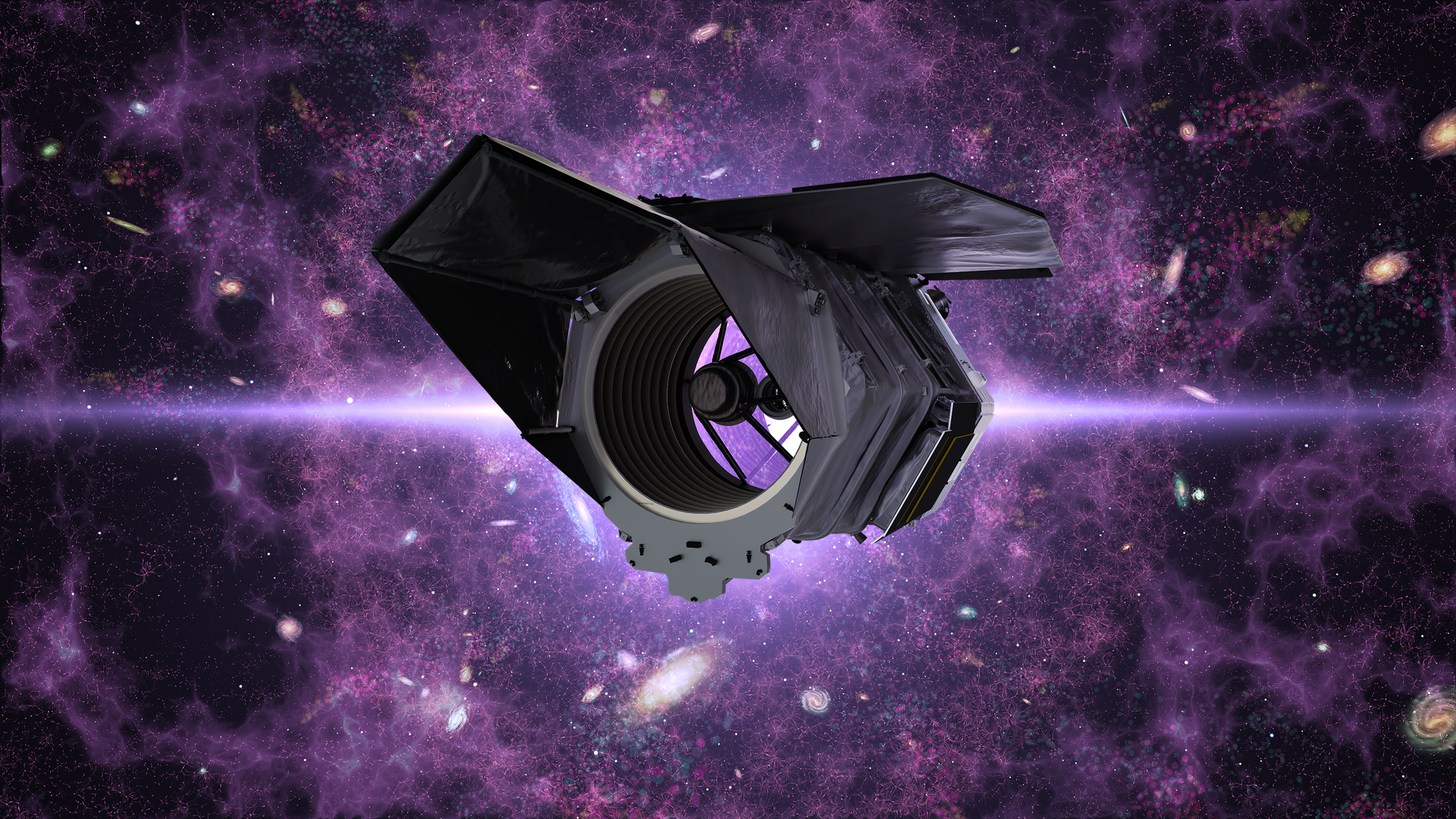
Rendering: NASA
NASA is preparing to launch the Roman Space Telescope, one of the agency's biggest and most promising scientific endeavors in years.
Why it matters: The Roman Space Telescope is designed to help answer some of science's most tantalizing mysteries, including questions around dark matter and dark energy.
- Researchers also hope to use it to discover a plethora of new exoplanets — worlds outside our own solar system.
Driving the news: Roman is set to launch on at least a five-year mission early Sunday, Aug. 30, from Florida's Kennedy Space Center aboard a SpaceX Falcon Heavy rocket.
- It'll then travel about a million miles away to a spot called Lagrange Point 2, where it'll have an excellent view of deep space.
- It's named for Nancy Grace Roman, NASA's first chief of astronomy and first female executive.
How it works: Roman, about 42 feet long and 14 feet wide when operational, is carrying two scientific devices: the Wide Field Instrument and the Coronagraph Instrument.
- The first is a 300-megapixel near-infrared camera with a field of view 100x that of the esteemed Hubble Space Telescope — meaning a single image from Roman will contain the visual data of 100 Hubble pictures. The result: much faster data collection and discovery-making.
- The second will be used for high-contrast imaging and spectroscopy of nearby exoplanets to better understand them. (Spectroscopy is a way of studying planets and other objects based on their color.)
Stunning stat: Roman's primary mirror is about the same size as that of Hubble's, but at 80% less weight — reflecting huge tech advancements since Hubble was built in the 1970s.
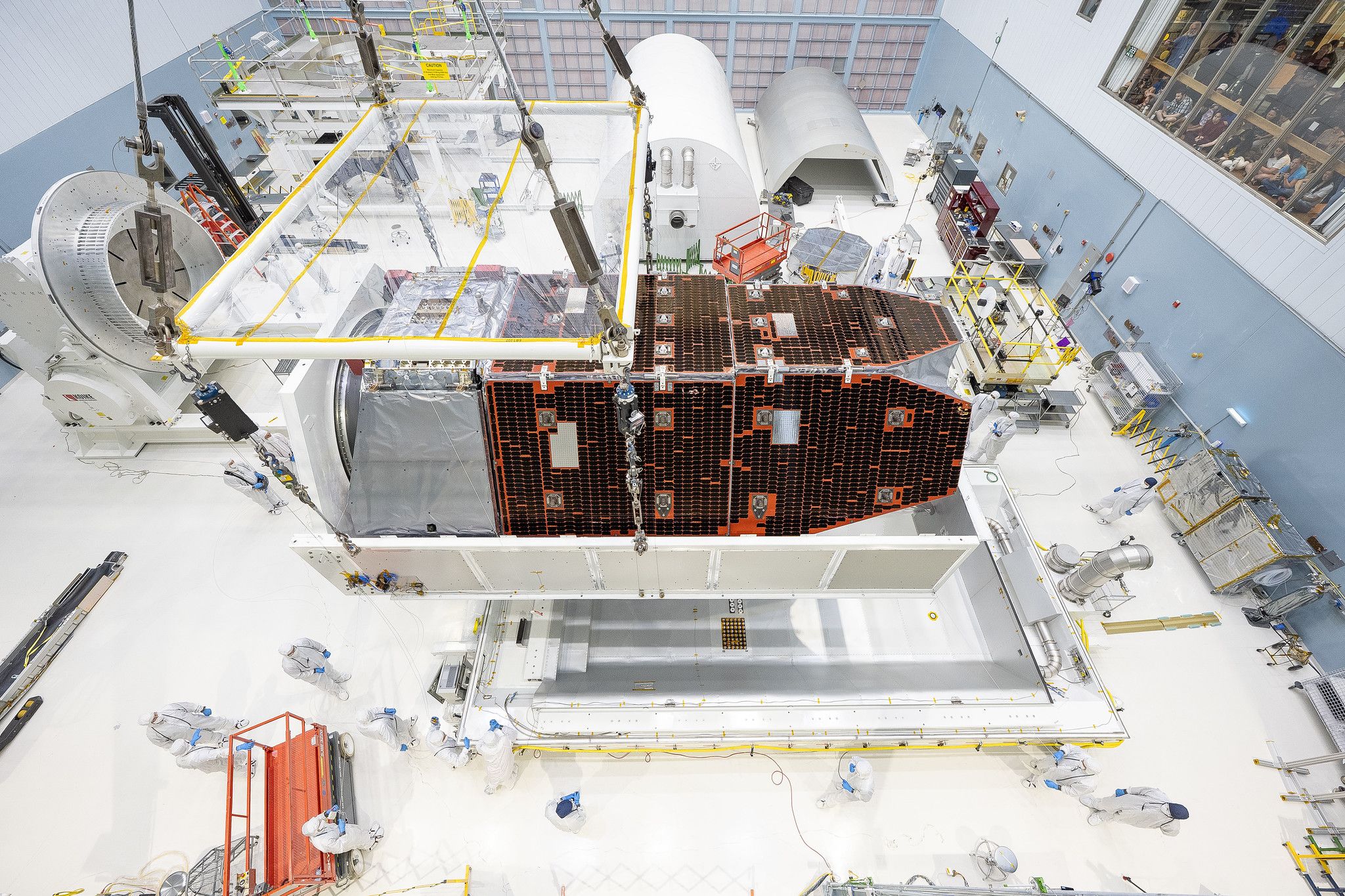
Zoom in: Researchers hope that data from Roman can help answer lingering questions about two of the universe's least-understood phenomena: dark energy and dark matter.
- Scientists have proposed dark energy as the driving force behind the universe's accelerating expansion, making up nearly 70% of the cosmos.
- Dark matter is thought to be an invisible "glue" binding the universe together and accounting for 27% of the universe.
What they're saying: "I can't help but think that the biggest result from Roman 10 years from now is something that we just haven't thought of yet," Jeff Kruk, Roman's deputy senior project scientist, tells Axios.
- "I've now been doing science in one form or another for 50 years, and what we know about the universe has changed enormously in that time. So I can't help but think that Roman's going to take that next step."
What we're watching: NASA will carry the launch live on YouTube.
- As with all space launches, delays and setbacks are possible.
The bottom line: A new age for better understanding our shared cosmos is about to begin.
