The coming data center comms offensive

Add Axios as your preferred source to
see more of our stories on Google.
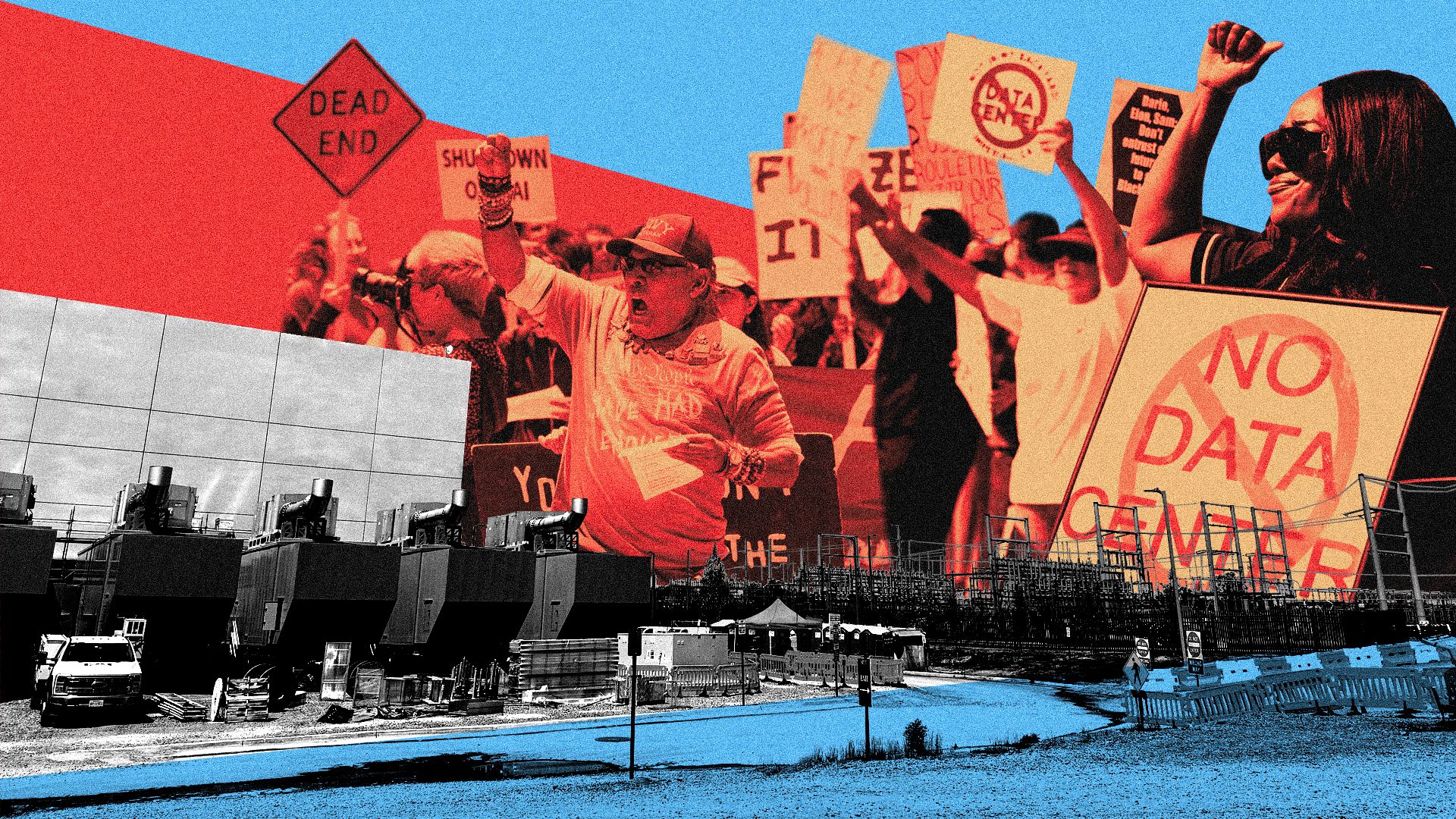
Photo illustration: Sarah Grillo/Axios. Photos: Amy Harder/Axios and Jason Henry/Bloomberg, Sandy Huffaker/AFP via Getty Images
We're in the midst of a roiling online debate about whether the data center backlash is just a comms problem or something more fundamental.
- "[H]ey guys we gotta figure out a new narrative on this data center thing...." Alexis Ohanian, Reddit co-founder and entrepreneur, posted on X last Friday.
Why it matters: Opposition to data centers crosses political, geographic and cultural lines as they become a stand-in for much larger anxieties over AI, jobs and economic inequality.
The big picture: On X, the social media platform of choice for tech, the debate over what the industry should do next is playing out publicly and in real time.
One camp believes the underlying terms of data center projects need to be reassessed.
- "This is a structural material question, and we have to meet it with structural material answers," says Jim Prosser, a veteran communications strategist with experience at Google, Twitter, and SoFi. "This is not something that you can just persuade away or educate on."
This means bringing comms in much earlier to avoid a problematic site altogether, instead of trying to message the way out of a mess.
- "Going in when you do site selection, being aware of what the community hot-button issues are," says Shifali Erasmus, vice president at Crackle, which works with some data center companies. "It's not about trying to sweep things under the rug."
Case in point: Microsoft's approach is the model to follow, says Prosser.
- Its "Community-First AI Infrastructure," published in 2026 after the company abandoned a proposed Wisconsin data center amid local opposition, promises to cover the electricity costs its facilities create, reduce and replenish water use, add jobs, grow the tax base and invest locally.
- "You get better communications outcomes when you develop specific programs that address the issue, not when you modify messaging," Microsoft chief communications officer Frank Shaw told Axios.
The other side thinks industry needs to go on offense and make a stronger case for what communities stand to gain while pushing back harder on what they see as misinformation and, in some cases, foreign influence.
One of the strategists developing that argument is Sam Lyman, head of research at the Bitcoin Policy Institute and former chief speechwriter to Treasury Secretary Scott Bessent.
- Lyman previewed to Axios a proposal that calls for "data center dividends," cash payouts modeled on Alaska's oil fund, in which communities could turn some of the tax revenue generated by the facilities into direct checks, scholarships or other benefits for residents.
- And while he acknowledged that most opposition is organic, he also said "exposing foreign influence" remains important and confirmed his group will continue researching that front.
Between the lines: AI itself can feel abstract and unstoppable, but a proposed data center in your community does not.
- Drew Pusateri, OpenAI's director for strategic communications, argued on X that data centers have become an "avatar" for much broader societal fears around AI and tech.
- If tangible questions about water, electricity costs, noise, jobs and taxes become secondary to a more fundamental rejection of AI development, he said, it becomes "deeply unclear" how much improvements on those issues can move public opinion.
Simon's thought bubble: If I were leading up this unenviable challenge, I'd spend less on broad national persuasion campaigns and more on hyperlocal direct engagement.
- I'd also look for credible independent groups willing to scrutinize company commitments, track whether they're being met and acknowledge measurable progress when it occurs — a strategy I saw work with Oxfam's Behind the Brands campaign.
What's next: The midterm elections will test the persuasive power of local data center messaging and could bring into office candidates pushing for stricter moratoriums and guardrails.
