When to seed your lawn as fall nears

Add Axios as your preferred source to
see more of our stories on Google.
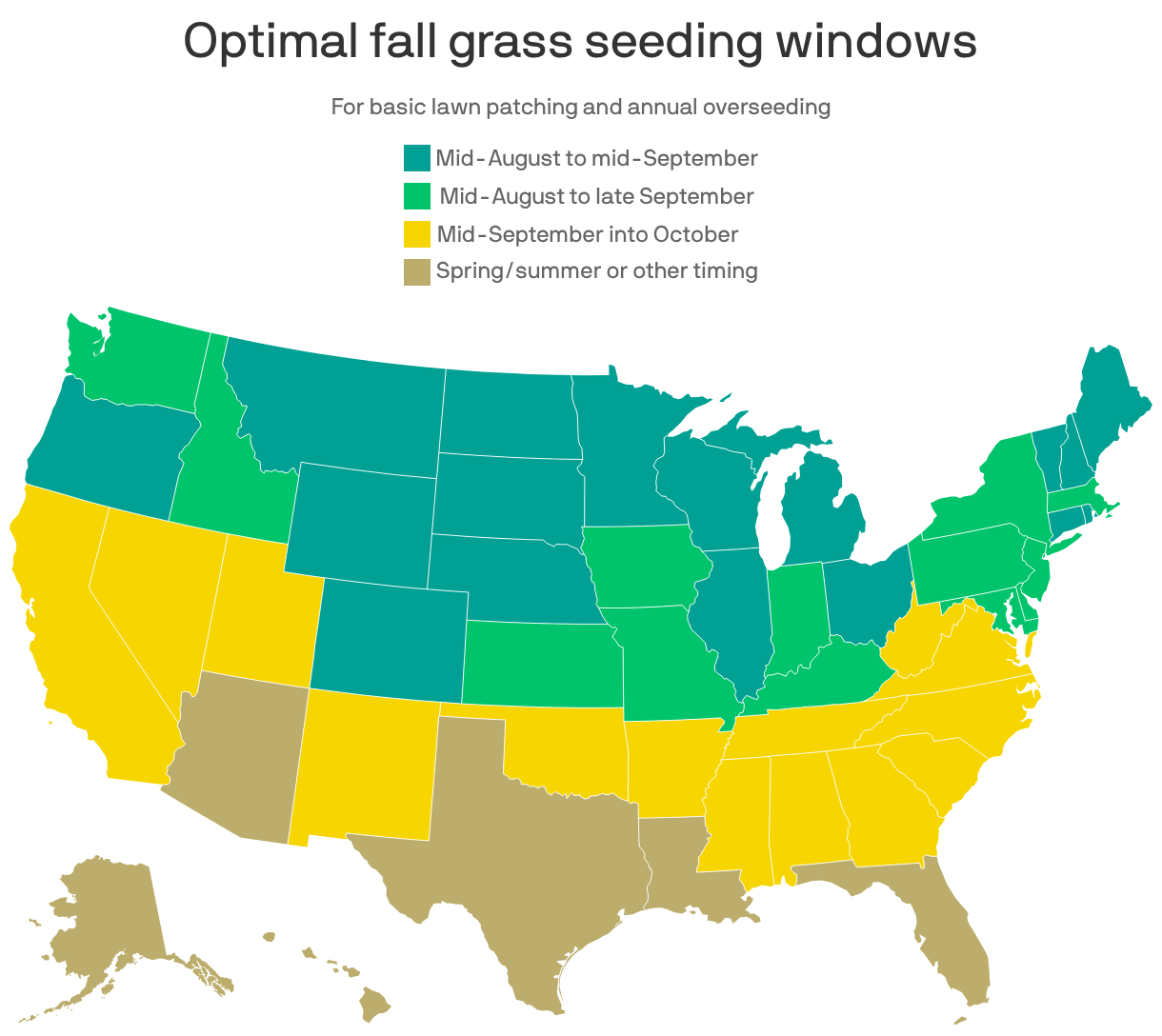
It's prime time to plant grass seed for patching bare spots or overseeding lawns in most U.S. regions.
Why it matters: Plant too late and grass might not establish before winter; too early and young grass could still be exposed to stressful summer heat.
Zoom in: Across much of the northern U.S., the optimal fall seeding window closes about mid-September, according to Axios' analysis of each state's Cooperative Extension guidance.
- Across parts of the Mid-Atlantic, Midwest and Northeast, the window extends through the end of September.
- Farther south, late September and early October are more ideal.
Between the lines: The calendar follows the grass type.
- Cool-season varieties like Kentucky bluegrass, tall fescue and perennial ryegrass benefit from cooler air but with soil still warm from summer.
- The farther north you go, the earlier the window closes as that first frost approaches.
Yes, but: Many Southern lawns use warm-season grasses like bermudagrass and centipedegrass, which are better repaired or established during spring and summer.
- Some areas are trending away from grass altogether.
Context: State borders aren't climate borders. Elevation, temperature and grass type can shift the ideal window.
- North Carolina, for example, recommends earlier fall seeding in the mountains than in the Piedmont and warmer Coastal Plain.
The fine print: Axios reviewed Cooperative Extension recommendations in each state — university-based public services providing agricultural and gardening guidance.
The bottom line: If you seed outside your region's best window, you could be tossing away time and money along with those seeds.
