The social cost of sobriety

Add Axios as your preferred source to
see more of our stories on Google.
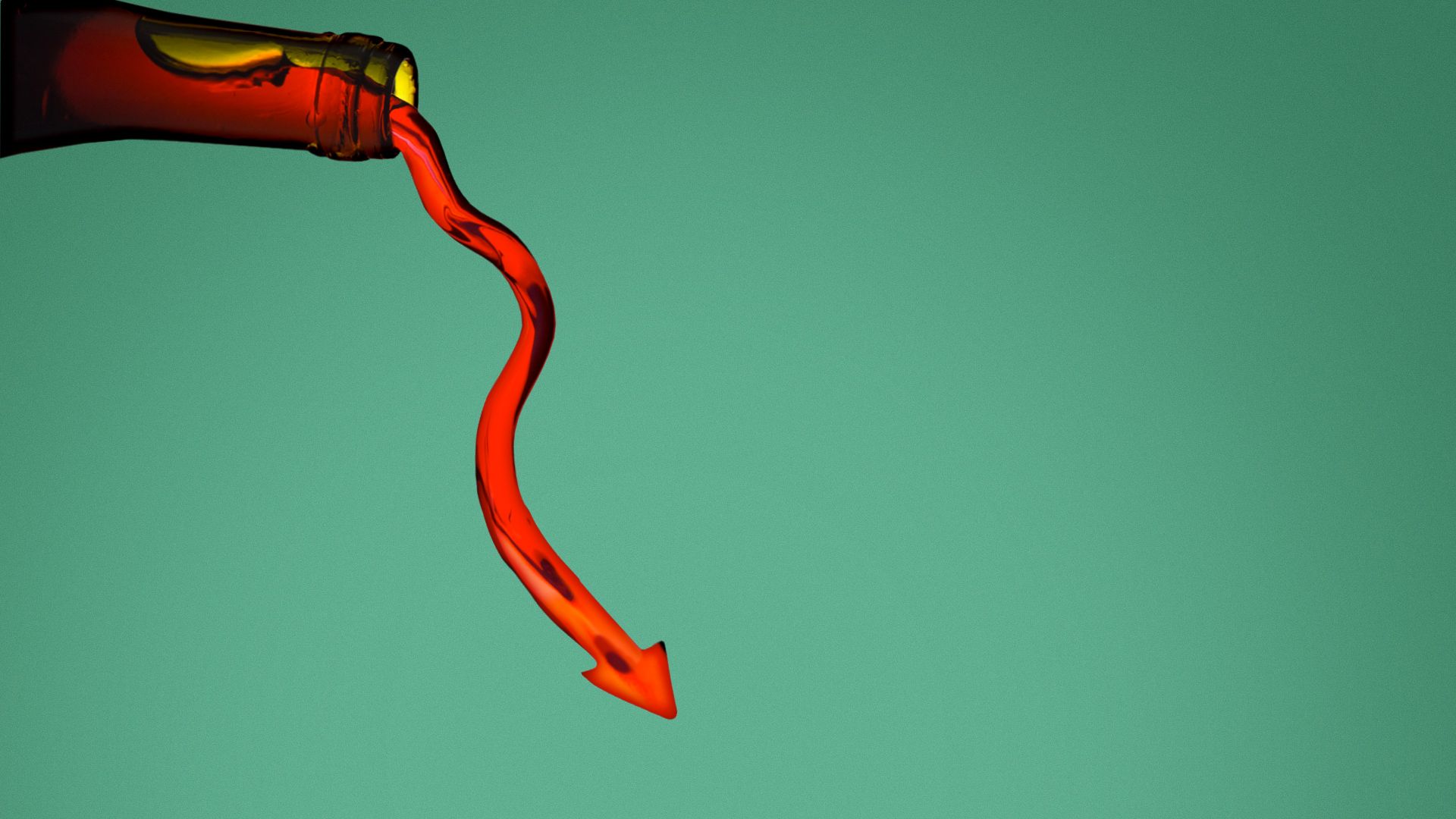
Illustration: Aïda Amer/Axios. Stock: Getty Images
As America's dry spell stretches on, one of our most reliable forms of social glue is drying up with it: hanging out at a bar.
Why it matters: Americans are drinking less to protect their health, improve their sleep and feel sharper. But we still need "third places" outside home and work where people can gather without much of a plan.
Two recent articles explore what else may disappear as Americans retreat from alcohol, including neighborhood gathering spots and small rituals that help people connect.
Zoom in: New York Times columnist Ginia Bellafante traveled to Louisville, Ky., where the shrinking alcohol industry is threatening jobs, arts funding and civic institutions built around bourbon. (Gift link)
- "For all the benefits of cutting back, certain rituals were vanishing," she writes.
- Writer Derek Thompson takes on a similar tension from a more personal angle, arguing that America's health-optimization boom can become "selfish optimization," squeezing other people out of our daily routines.
State of play: Americans are prioritizing workouts, sleep hygiene and mental clarity over closing down the neighborhood dive bar.
- Scroll social media long enough and someone with Hollywood-ready abs will explain why your entire life would improve if you stopped drinking, woke up at 5 a.m. and subscribed to a suspiciously expensive meal-prep kit.
- It's possible some people are drinking less because they have fewer people to drink with.
Josephine's thought bubble: I'm a reporter and a fitness instructor, so when a longevity trend takes off online, I'm usually trying it, scrutinizing it or doing both.
- I increasingly treat late-night cocktails like a hostile act against tomorrow's workout, and I'm hardly alone.
By the numbers: The share of adults 35 and younger who say they drink fell 9 percentage points in the past three years, from 59% to 50%, Gallup found.
- In 2025, 54% of U.S. adults said they drank at least occasionally — the lowest share in nearly nine decades. From 1997 through 2023, that figure never dipped below 60%.
Reality check: Excessive drinking causes immense harm, and alcohol is associated with cancer and other serious health risks.
- But Thompson argues that today's zero-tolerance rhetoric can flatten important distinctions.
- At around six drinks a week, Thompson writes, it is difficult to confidently identify a measurable effect on longevity.
- The risks become far clearer around 14 drinks a week.
Between the lines: Run clubs, coffee raves and alcohol-free gatherings are on the rise. But they don't always replace the social superpower of "liquid courage."
- A shared drink can coax a shy person into a conversation, turn acquaintances into friends and give everyone a reason to linger.
- Without it, many of us — and yes, I am including myself — default to staring at our phones and pretending to be busy.
The bottom line: If we give up a social lubricant, we need to work harder to preserve the relationships built around it.
Go deeper: A record share of Americans are giving booze the boot
