America is having fewer twins

Add Axios as your preferred source to
see more of our stories on Google.
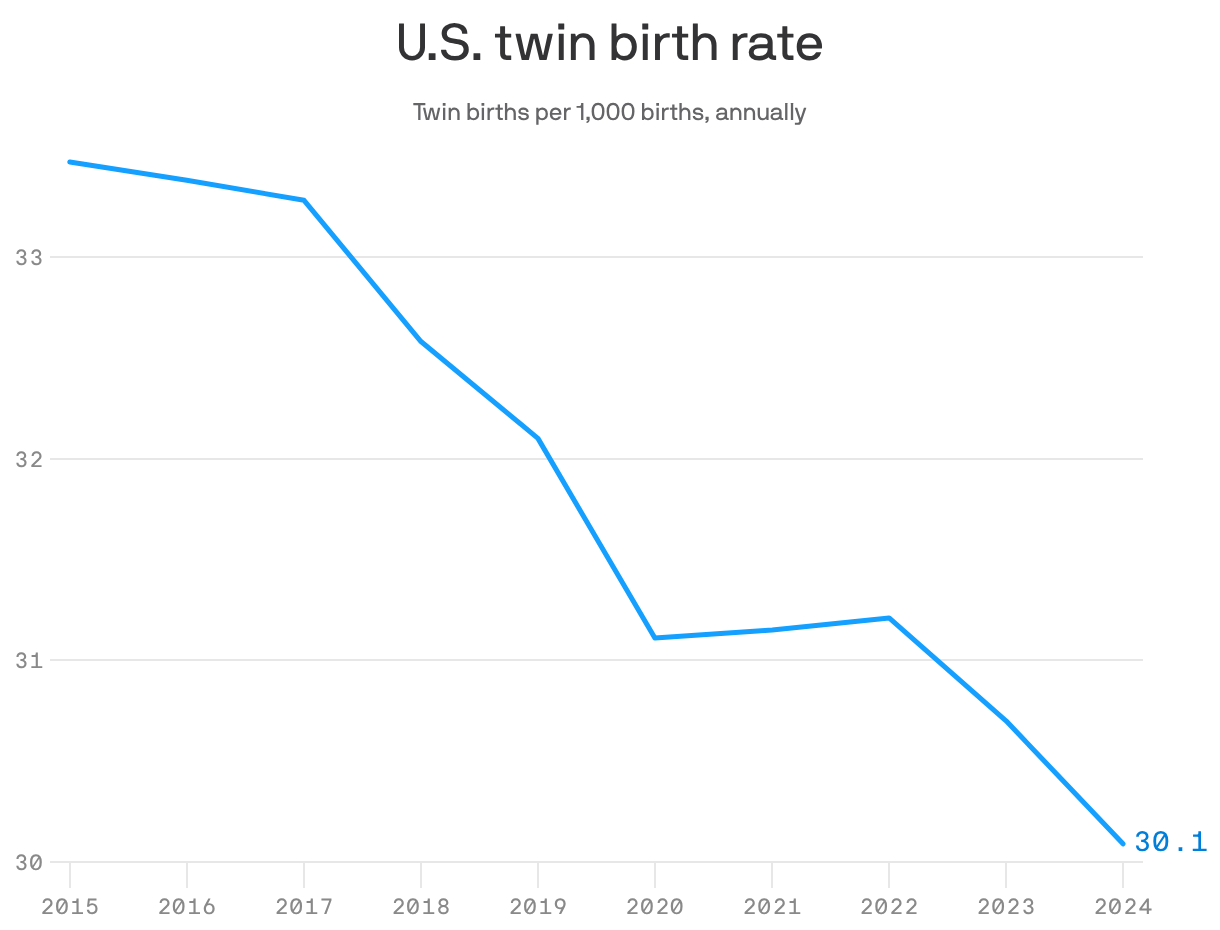
In the last decade, the rate of twin births has declined in the U.S., per CDC data.
The big picture: Early use of IVF contributed to a national twin baby boom. But once fertility treatments got more advanced, doctors increasingly recommended transferring a single embryo to reduce pregnancy risks.
Between the lines: Fraternal twins can result when two embryos are transferred during IVF or when a woman releases two eggs in the same cycle, which becomes more common with age.
By the numbers: The national twin birth rate rose 79% from 1980 to 2014, before dropping an average 1% per year after that, according to the CDC.
Zoom in: The biggest twin birth declines were for mothers age 30 and older. Rates dropped …
- 18% for mothers 30-34.
- 27% for mothers 35-39.
- 46% for mothers 40 and older.
Yes, but: Black mothers already had the highest twin birth rate, and that rate rose 5% nationally over the decade. The CDC didn't determine what drove the increase.
💭 Carly's thought bubble: My Class of 2007 high school yearbook devoted an entire page to graduating twins. My fraternal twin sister and I were in it, of course.
