Substack bets readers want to pay for content written by humans

Add Axios as your preferred source to
see more of our stories on Google.
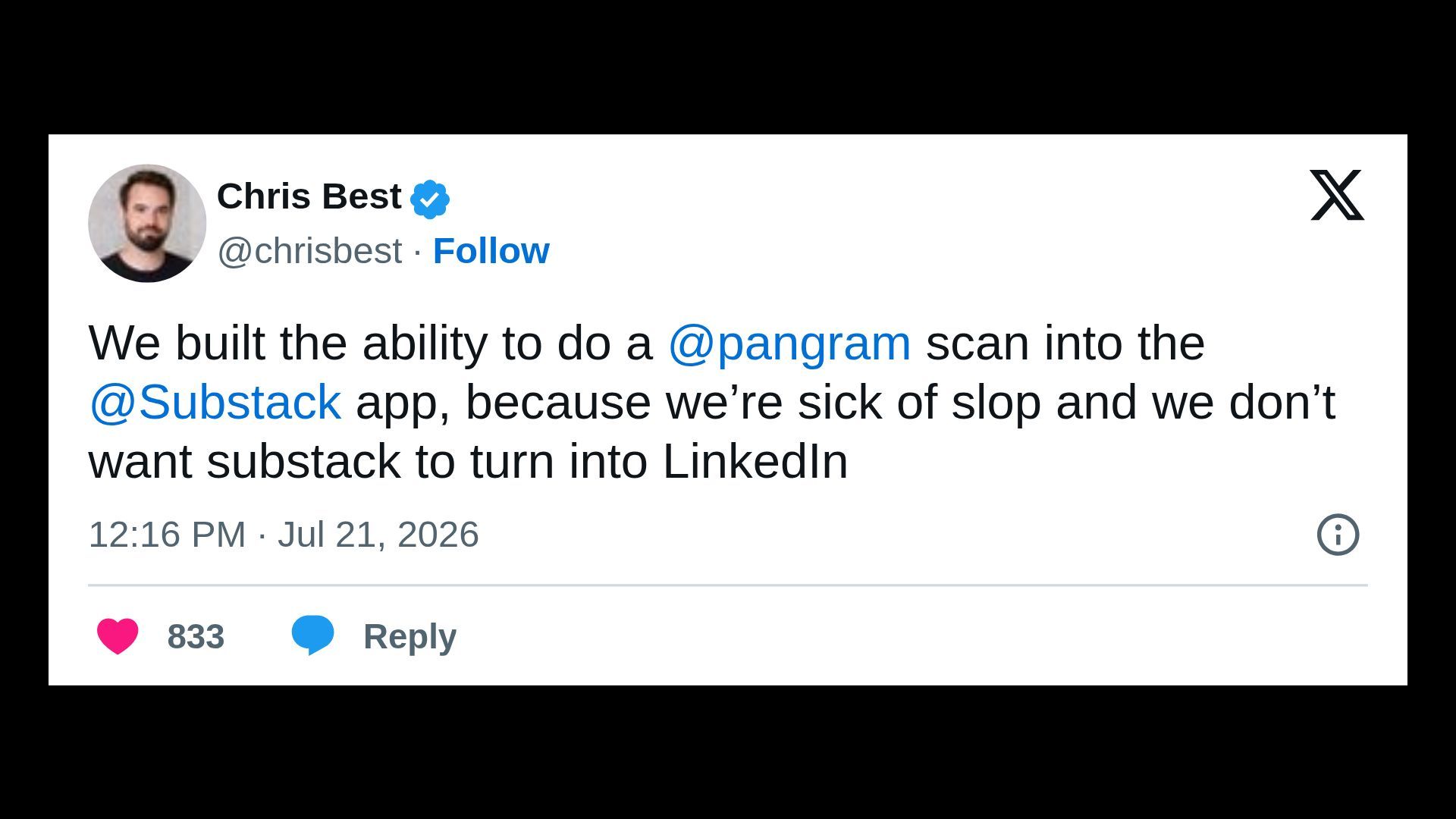
Substack's CEO takes a potshot at LinkedIn. Screenshot: @chrisbest/X
Substack is betting that subscribers, and the sponsors they attract, value authenticity and are willing to pay for content that is verifiably created by humans.
Driving the news: The media platform is partnering with Pangram, an AI-detection tool, to allow users to estimate how much text on the platform — including posts and comments — was made with AI.
How it works: Users on the iOS app or on a browser will be able to scan text in notes, replies, comments and posts and get an estimate of how much was human-written versus AI-generated.
- It only works for text longer than 100 words and published after July 21, when the news was first announced. Substack said the feature is coming to Android soon.
- Creators will also have access to Pangram to review their drafts as well as report and remove scans they believe are mistaken.
- Substack is also adding a feature for creators to insert a "How I make this" statement, where they can disclose whether they use AI.
Catch up quick: Substack is increasingly part of a comprehensive communications strategy for companies.
- Many journalists who previously worked for larger outlets have found loyal, paying audiences on Substack, covering subjects like tech, venture capital and health.
- The State Department, Tory Burch and a16z have turned to Substack for new owned communication channels.
- With Pangram, readers can now run this content through leading AI detection tools.
What they're saying: "When content made by no one takes over parts of the internet that are supposed to be human, it pollutes the commons and makes it hard to discover and hear human voices," wrote CEO Chris Best.
- "When readers have to wonder if what they're reading is real, it undermines trust in authorship and threatens the livelihood of writers—including those who use AI tools thoughtfully to produce work they believe in."
The big picture: He argued the problem with "Claudefishing" is that readers are unwittingly investing time and attention in content that wasn't created by a human.
- Best also ribbed LinkedIn, saying Substack doesn't want to turn into the professional network platform.
- While LinkedIn has surged in popularity with business leaders and professionals looking to become thought leaders, so has the amount of AI content.
- Labels disclosing AI-generated content are becoming increasingly common, particularly on visual platforms. Meta, Google and TikTok automatically label content made with their own AI tools.
What we're watching: Whether creators embrace Substack's push toward transparency around AI use and how rival platforms respond.
- Beehiiv allows AI use as long as it supports the creator's "original voice," is substantive, editorially relevant and "avoids manipulative practices."
