From mayor to U.K. PM: Inside Andy Burnham's swift ascent

Add Axios as your preferred source to
see more of our stories on Google.
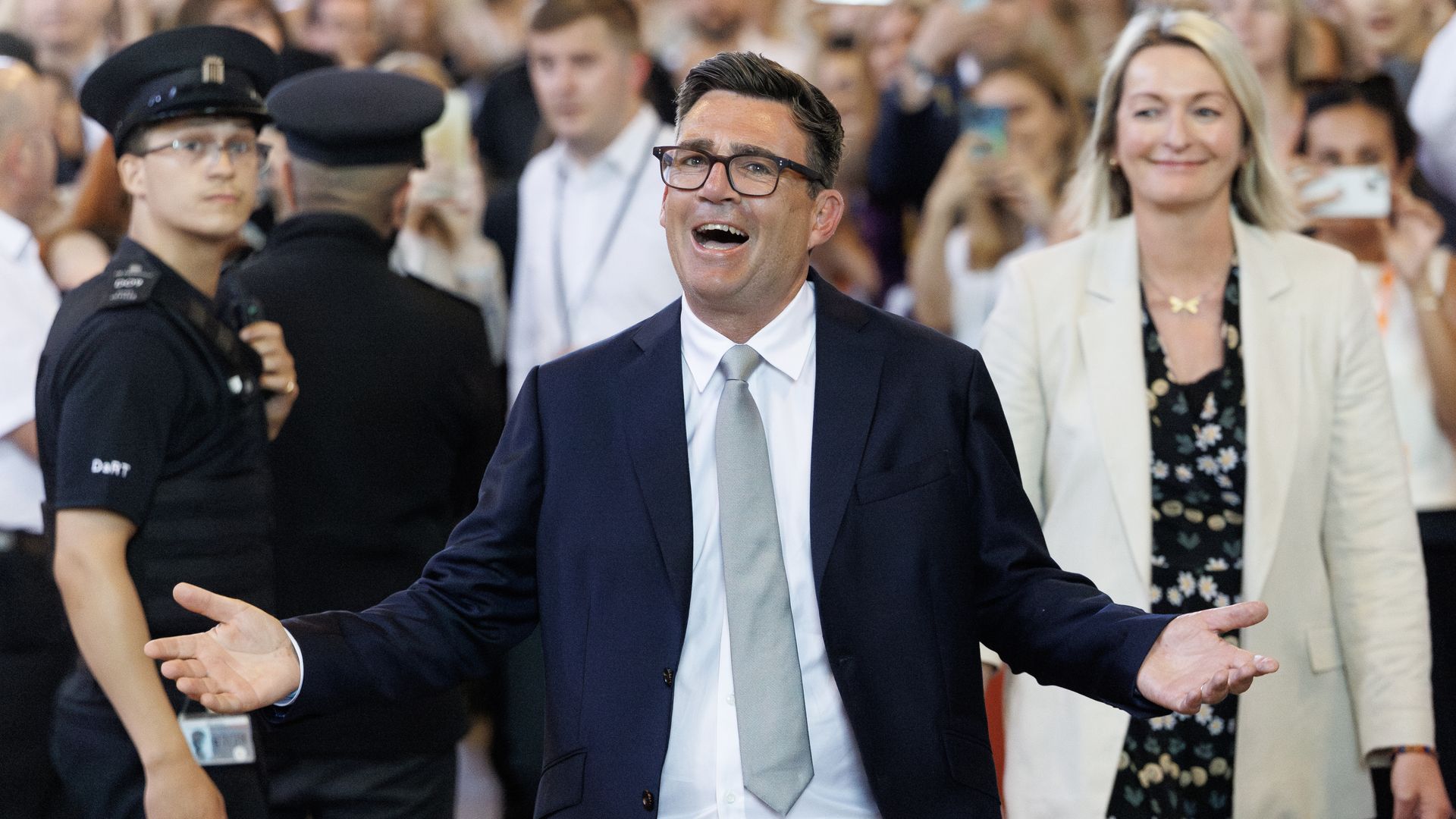
Andy Burnham, Britain's new prime minister, after his swearing-in as member of Parliament for Makerfield at the Houses of Parliament in London in June. Photo: Dan Kitwood/Getty Images
Andy Burnham will be the U.K.'s new prime minister after becoming Labour's leader Friday.
Why it matters: Burnham vaulted from regional politics to the cusp of Downing Street within weeks — an unusually rapid ascent that leaves him little time to prepare for mounting economic and political challenges.
- He spent seven years as the mayor of Greater Manchester before he was reelected to Parliament in June.
- He is due to officially become PM on Monday.
The big picture: Burnham returned to Westminster with the explicit goal of becoming prime minister, at a moment when outgoing PM Keir Starmer's unpopularity had Labour panicking about its electoral prospects.
- Burnham's plainspoken, working-class appeal made him the party's clearest answer to the insurgent appeal of Nigel Farage's right-wing Reform UK.
How it works: Burnham automatically became Labour leader, replacing Starmer, after securing enough Labour MPs' nominations to be elected without a leadership contest.
Background: Burnham was first elected as an MP in 2001 and went on to serve in the Cabinets of Prime Ministers Tony Blair and Gordon Brown, rising to the post of health secretary in 2009.
- Burnham remained an MP after Labour lost power in 2010, and he unsuccessfully ran for leadership in 2010 and 2015.
- He left Westminster in 2017 to run for mayor of Greater Manchester in northwest England.
- He became a popular mayor known as the "King of the North" for his fierce advocacy for the metropolitan county, notably during the COVID pandemic, when he pushed Boris Johnson's government to provide more financial support for northern regions facing strict lockdowns. He was re-elected in 2021 and 2024.
What to expect: Burnham has vowed to devolve power from London to Britain's regions and plans to move parts of the prime minister's office to Manchester.
- He has indicated he wants to "have a proper look" at potentially raising personal income tax thresholds.
- In his maiden parliamentary speech, he vowed to develop the biggest social housing building program since the period following the Second World War, when local authorities built more than 100,000 homes every year.
- He also said he wanted to ensure regions had "greater public control of essential services like water, housing, energy and transport," drawing on his flagship public transportation model in Manchester.
- The system is designed to bring the city's buses, trams, and eventually commuter rail lines under unified local public control.
Yes, but: Burnham has yet to reveal details on how he plans to implement energy and water policies.
The intrigue: He says he'll govern under Labour's 2024 manifesto after ruling out an early general election.
- It's not immediately clear how he can fund his plans — especially in light of his party's pledge at the last election not to raise the main tax rates.
