Americans are trimming their grocery carts

Add Axios as your preferred source to
see more of our stories on Google.
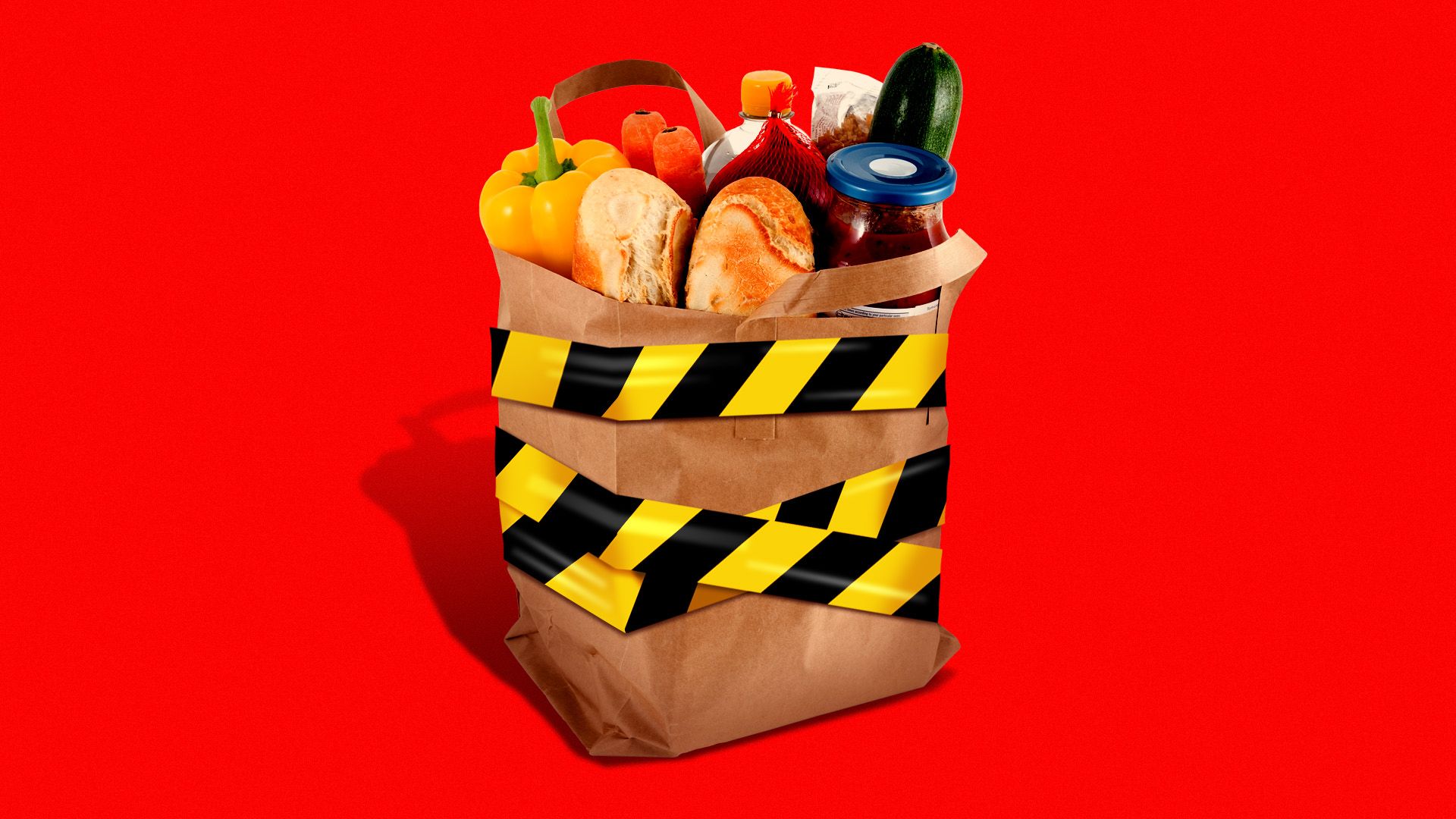
Illustration: Sarah Grillo/Axios
Americans are putting fewer groceries in their carts than they were a year ago, extending a troubling trend for the food industry.
Why it matters: The era of boosting sales simply by charging more appears to be ending, leaving food companies under growing pressure to grow volumes.
Driving the news: The number of items sold at grocery stores have fallen nearly 2% year over year in four of the last five months, according to analysis from Bain & Company using NielsenIQ grocery data, shared with CNBC.
- Bain attributes the volume declines to sticker shock and stretched household budgets, as well as changes to SNAP benefits. The impact of GLP-1s is a contributor too, it says.
- Grocery prices are roughly 30% higher than they were in 2019, according to government data, though food inflation has cooled sharply over the past two years.
Between the lines: Those higher prices have been fueling sales growth for retailers and suppliers, but both groups are increasingly talking about the need to spur volume growth.
Zoom in: PepsiCo, the maker of Cheetos, Doritos and Lay's has been cutting prices this year to try to reignite sales.
- It hasn't worked quite yet, however, as volume growth came in flat in the second quarter for its North American food business, the company said last week.
- "I think the consumer is worse than what we had anticipated," CEO Ramon Laguarta told analysts, putting much of the blame on high gas prices.
PepsiCo is not alone. General Mills, Kraft Heinz, Mondelēz and other packaged-food companies have reported flat or declining North American volume in 2026, as price increases struggle to offset soft consumer demand.
Retailers, meanwhile, are competing on value to get shoppers in the door and items in their carts.
- Walmart last week announced high-profile price cuts on a range of summer products including ground beef, ice cream and Coca-Cola and PepsiCo products.
- In February, Kroger was reported to be planning some of its biggest price cuts in years to compete more aggressively with Walmart and Costco.
What they're saying: Grocers are "using a combination of promotions, loyalty programs, personalization, private label, to stitch together an overall value proposition that customers can understand and trust," Kurt Grichel, head of Bain's Americas retail practice, told CNBC.
The bottom line: Higher prices have driven sales in the food industry, but the challenge now is rebuilding volume.
