Human attention is childhood's next digital divide

Add Axios as your preferred source to
see more of our stories on Google.
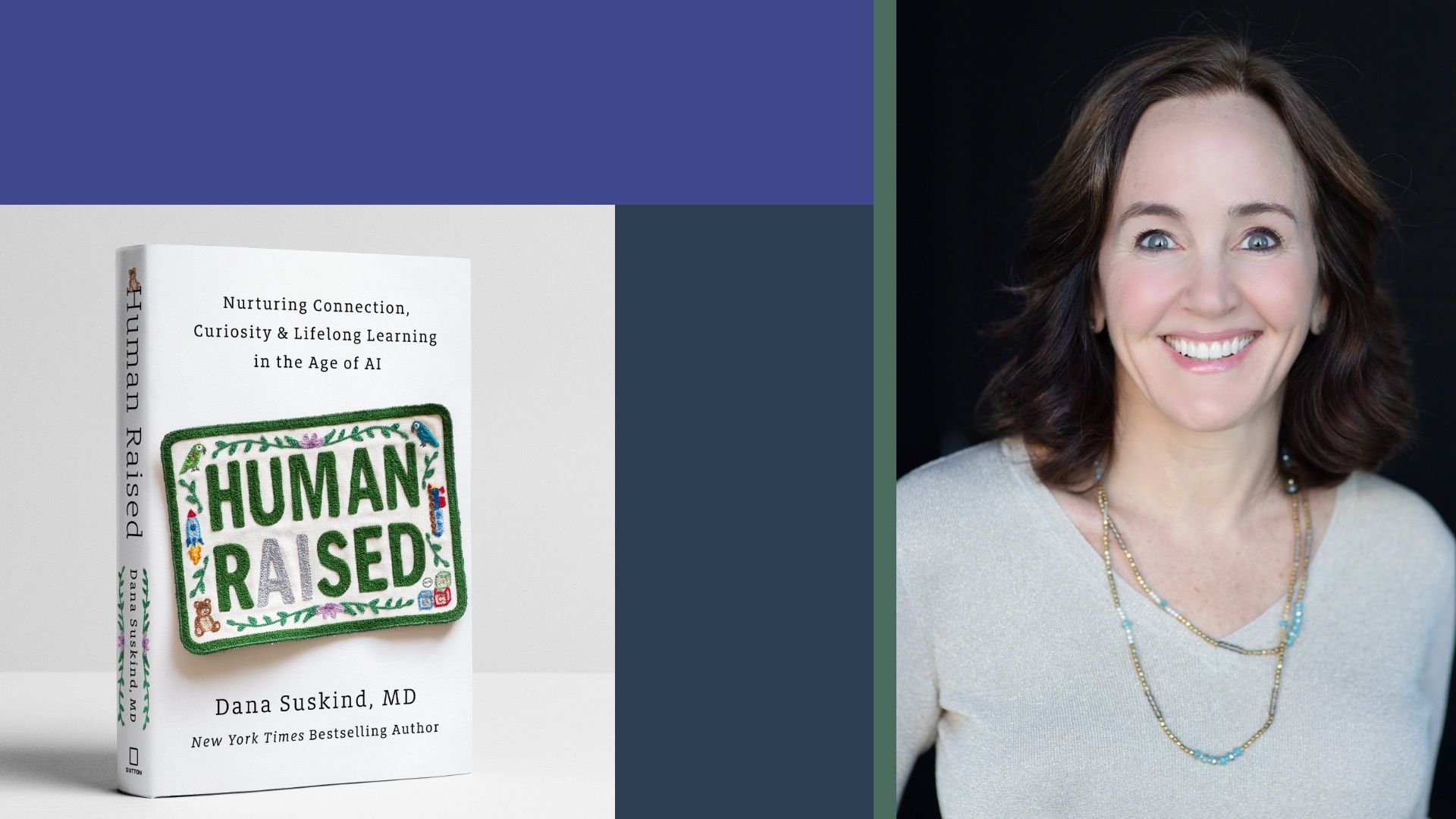
Photo collage: Megan Morrone/Axios. Photos courtesy of Elaine Melko and Dana Suskind
AI tools and toys could force children into two tracks — kids surrounded by human connection and kids increasingly taught and entertained by AI substitutes.
Why it matters: Human attention could become a privilege, Dana Suskind — a University of Chicago pediatric surgeon and early childhood researcher — warns in a new book.
The big picture: Suskind argues that young children need low-tech childhoods because early human relationships help wire the brain.
- But parents working multiple jobs or lacking child care, time or money don't always have the luxury of offering an idyllic screen-free childhood or a life without AI.
Driving the news: Suskind's book "Human Raised: Nurturing Connection, Curiosity & Lifelong Learning in the Age of AI" comes out July 14.
- Suskind compares the risks of AI toys and tutors to the risk of processed food: a cheap, convenient substitute that can crowd out what children actually need.
- Suskind worries that AI tools marketed as educational "will become that sort of ultra-processed alternative for certain populations, widening opportunity gaps in ways that we can't even imagine."
Context: Suskind outlines various categories of AI toys and tools, such as dolls that can chat with kids, make up stories, or remember their favorite things.
- AI tutors are already promised as a solution to the global teacher shortage, even for the youngest children.
- Robotics companies are piloting elder care robots with the ability to provide companionship, surveillance and emergency alerts. Suskind writes that similar robots could one day care for children.
Zoom in: Suskind warns of a future in which human connection itself becomes a luxury good where a certain class of parents will have the time to ensure that their children get a low-tech childhood.
- "And others will get the artificial replacement," she tells Axios.
By the numbers: In a Common Sense Media poll last year, nearly 30% of parents of kids ages 0 to 8 said their children had used AI learning tools, even though the major general-purpose chatbots have age limits that exclude young kids.
- Nearly half of kids ages 7 to 11 said "talking to a digital companion feels like talking to a character or a friend," according to AI safety tool Aura's 2026 State of the Youth Report.
The impact of AI on kids could be fundamentally different from the impact of TV, the internet, iPads and social media, Suskind argues.
- "The algorithms are going to become much more sophisticated and keep kids engaged even longer," she says.
- Suskind also points to research showing that young kids are more likely to anthropomorphize AI and to trust AI chatbots.
Zoom out: AI is rapidly moving into homes and schools with little oversight or regulation.
- Right now, there is no federal law regulating AI toys. In Congress, one proposed House bill would ban AI chatbot-enabled toys, and lawmakers have introduced similar bills in New York and California.
Between the lines: OpenAI CEO Sam Altman has said that he's going to wait as long as possible to expose his child and future children to AI.
- "I don't know when I would let him talk to AI," Altman said in April on the "Mostly Human" podcast with Laurie Segall.
- "I'd rather be on the late end of what's reasonable," Altman said. "I think it's great that he'll grow up in a world where computers are smarter than him and do anything he wants."
- "But you know, I want him to play in the dirt for now," Altman added.
Flashback: Bill Gates and Steve Jobs both also reportedly limited their kids' use of the technology their companies built.
- Follow the people who are creating this technology, Suskind says. And be suspicious "if the bridge makers are not wanting to cross their own bridge."
Suskind is not calling for parents to bar their kids from using AI entirely, just not alone and unsupervised. Used well, she writes, it can "ease parents' burdens and enrich children's learning."
- But it's not, she argues, a replacement for human connection.
- "Human connection is not a nice to have. It's a biological necessity," she says.
