Fed saw "upside risks" to inflation, disagreed on rate path


Add Axios as your preferred source to
see more of our stories on Google.
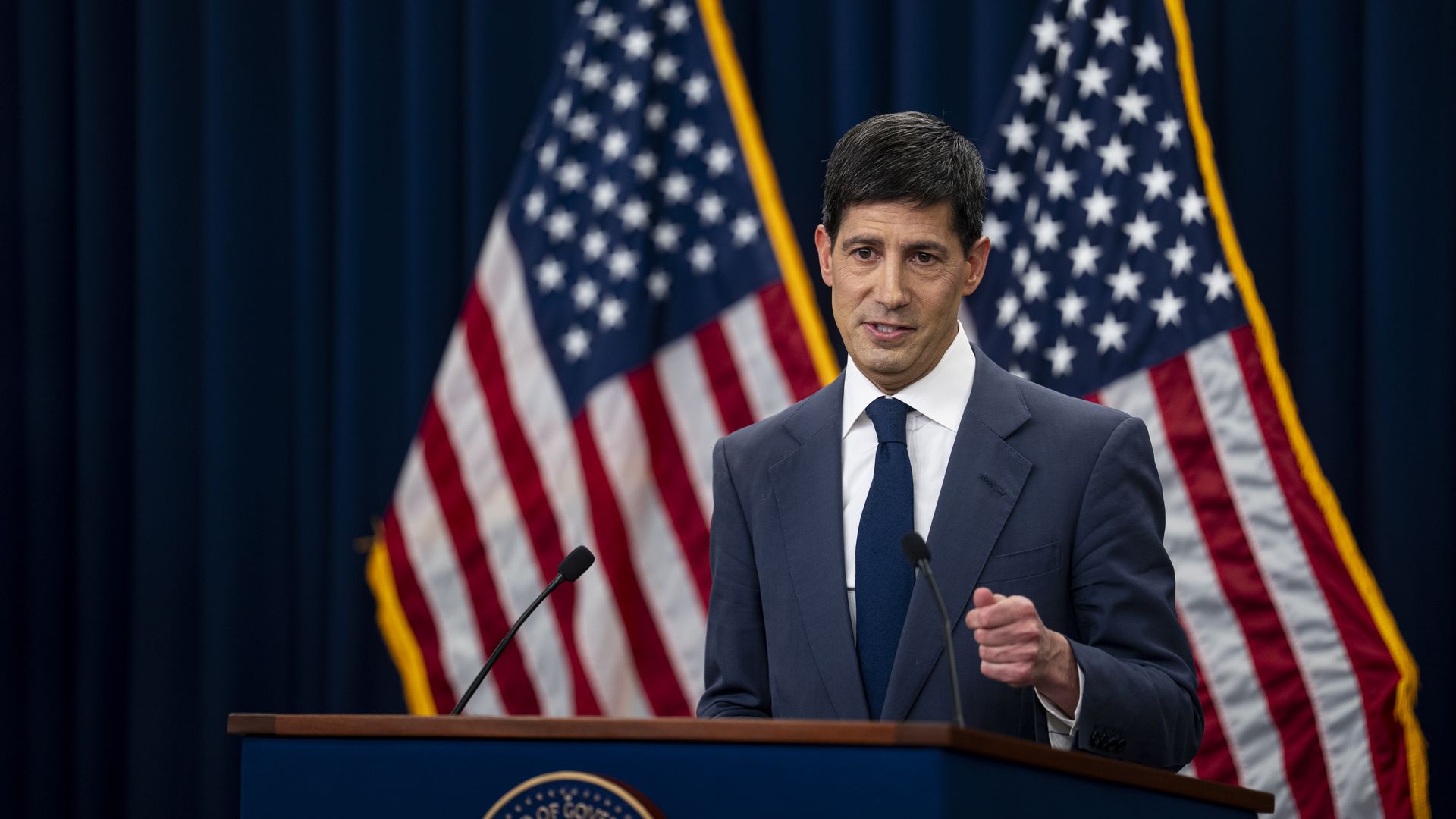
Federal Reserve chairman Kevin Warsh at last month's press conference. Photo: Al Drago/Getty Images
Federal Reserve officials saw a wide range of scenarios for how the economy and inflation will evolve at their meeting last month, leaving the central bank's policy committee divided over the path for interest rates ahead, according to minutes released Wednesday.
Why it matters: In Kevin Warsh's first meeting as Fed chairman, he wrestled with significant factions of the Federal Open Market Committee who see ongoing price pressures from the AI buildout as well as one that is more confident that falling energy prices will calm inflation.
- The minutes, released after the customary three-week lag, show that all members of the policy committee were ultimately on board with leaving rates unchanged last month.
- The document, however, gives little visibility into whether the Fed will feel compelled to raise interest rates in the coming months.
Driving the news: The document said that officials believed that "upside risks to price stability remained elevated while downside risks to achieving maximum employment had moderated a bit."
- A few officials supported raising rates at the meeting, but ultimately agreed with the decision to leave them steady.
Zoom in: Rather than lay out a single thesis for how the economy is likely to evolve, the minutes paint a picture of a policy committee gripped by "a range of scenarios for the evolution of the economy and for future monetary policy actions."
- "Most participants" remarked on scenarios where inflationary pressures dissipate and inflation "would soon begin to return to 2 percent," and believed that in those scenarios "almost all" thought that leaving rates unchanged or eventually lowering them would be justified.
- Yet "most participants" also pointed to scenarios in which "inflation would remain elevated due to strong AI-related demand, the conflict in the Middle East, or the effects of tariffs."
- In those scenarios, "almost all" believed that "some policy firming would likely be warranted" to return inflation to 2%.
Zoom out: The document said that "many participants" thought that interest rates should be at or slightly below current levels at year-end, while "many other participants" thought that rates would be higher.
What they're saying: "Participants anticipated that inflation would remain elevated in the near term and then begin to decline as the effects of tariffs and energy price increases wane and other supply disruptions related to the closure of the Strait of Hormuz diminish," the minutes said.
- However, policymakers "judged that the risks to the inflation outlook were still tilted to the upside" as several reported business contacts facing "notable cost pressures."
Flashback: Projections released at the time showed the committee about evenly divided between officials who think a rate hike will or won't be appropriate by the end of this year.
- Warsh declined to offer his own projection or to give much guidance as to the direction of policy, consistent with his longstanding critique of the Fed's practice of offering "forward guidance" about future actions
