E-bike injuries continue surge among younger riders

Add Axios as your preferred source to
see more of our stories on Google.
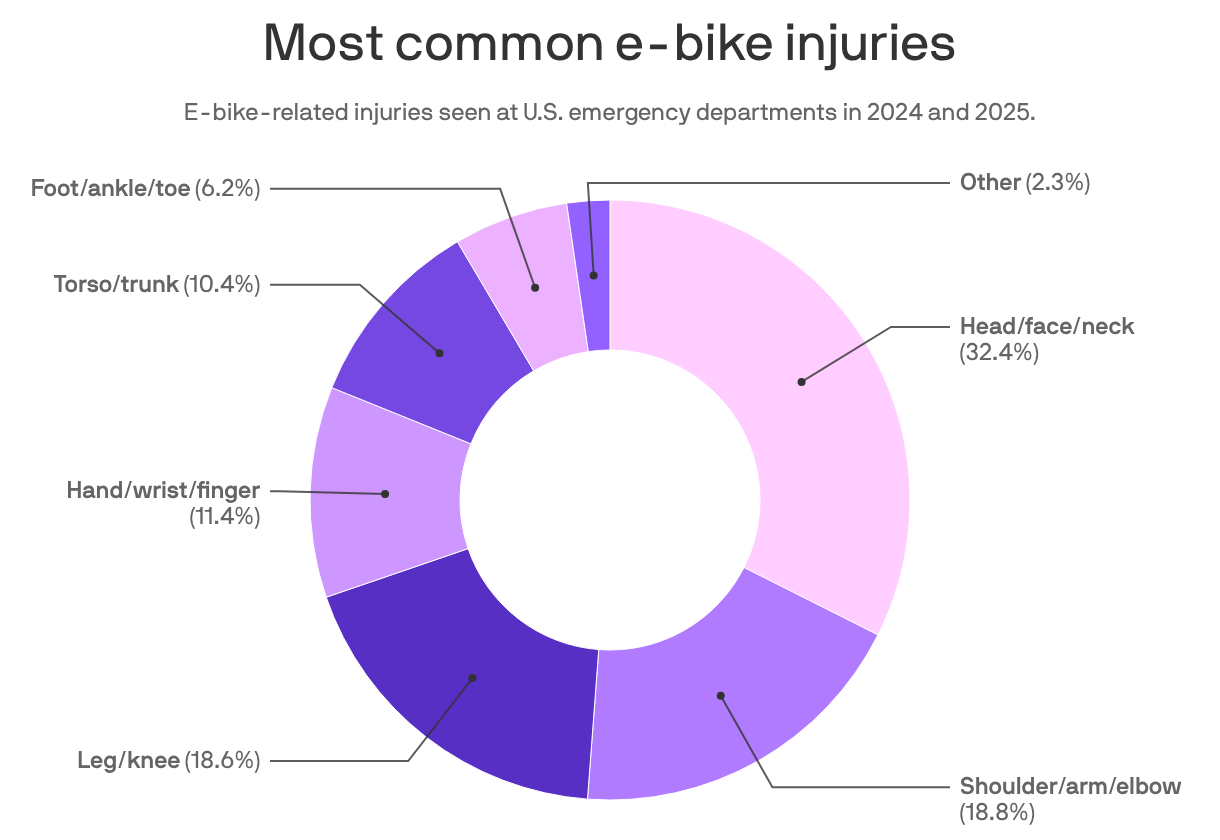
E-bike sales in the U.S. have more than quadrupled over the past five years, but a spike in ownership has meant a spike in injuries, too, especially among young people.
Why it matters: The result has been evident in emergency departments, particularly among teens and younger riders.
- About 41% of all emergency visits for e-bike injuries in 2024 and 2025 involved patients ages 10 to 19, according to National Electronic Injury Surveillance System estimates.
- At Rady Children's Health Orange County, a southern California hospital, just one trauma visit was related to an e-bike crash in 2021. By 2025, e-bike injuries had become the leading cause of trauma patient visits.
Catch up quick: E-bikes travel faster and weigh more than conventional bicycles, making them more difficult for inexperienced riders to control and increasing the risk of serious injuries.
- E-bikes use electric motors that amplify a rider's pedaling effort. Some models include a throttle that propels the bike without pedaling.
- Youth-oriented models are electronically limited to about 20 mph, but some users illegally bypass those speed limiters, substantially increasing both crash and injury risks.
No federal law regulates e-bike use, leaving states and local governments to set their own rules. Some examples:
- San Diego's city council in June approved rules that will ban children under 12 from riding e-bikes.
- As of July 1, New Jersey requires all e-bike operators to be at least 15 years old and have an e-bike license or driver's license.
- Helmet laws also vary widely. Thirteen states require helmets for all e-bike riders, 11 have conditional or bike-class-specific requirements, and 26 do not require helmets for adults, though some have separate rules for children.
Worthy of your time: The American Academy of Orthopaedic Surgeons offers a list of tips to prevent e-bike injuries, including wearing a helmet every time, and putting phones and headphones away while riding.
The bottom line: E-bikes can make it easier for people to get around, but doctors and safety officials say riders — especially teens and children — should treat them with more caution and respect than traditional bicycles.
