Carlos Sainz says giving Netflix access was worth it

Add Axios as your preferred source to
see more of our stories on Google.
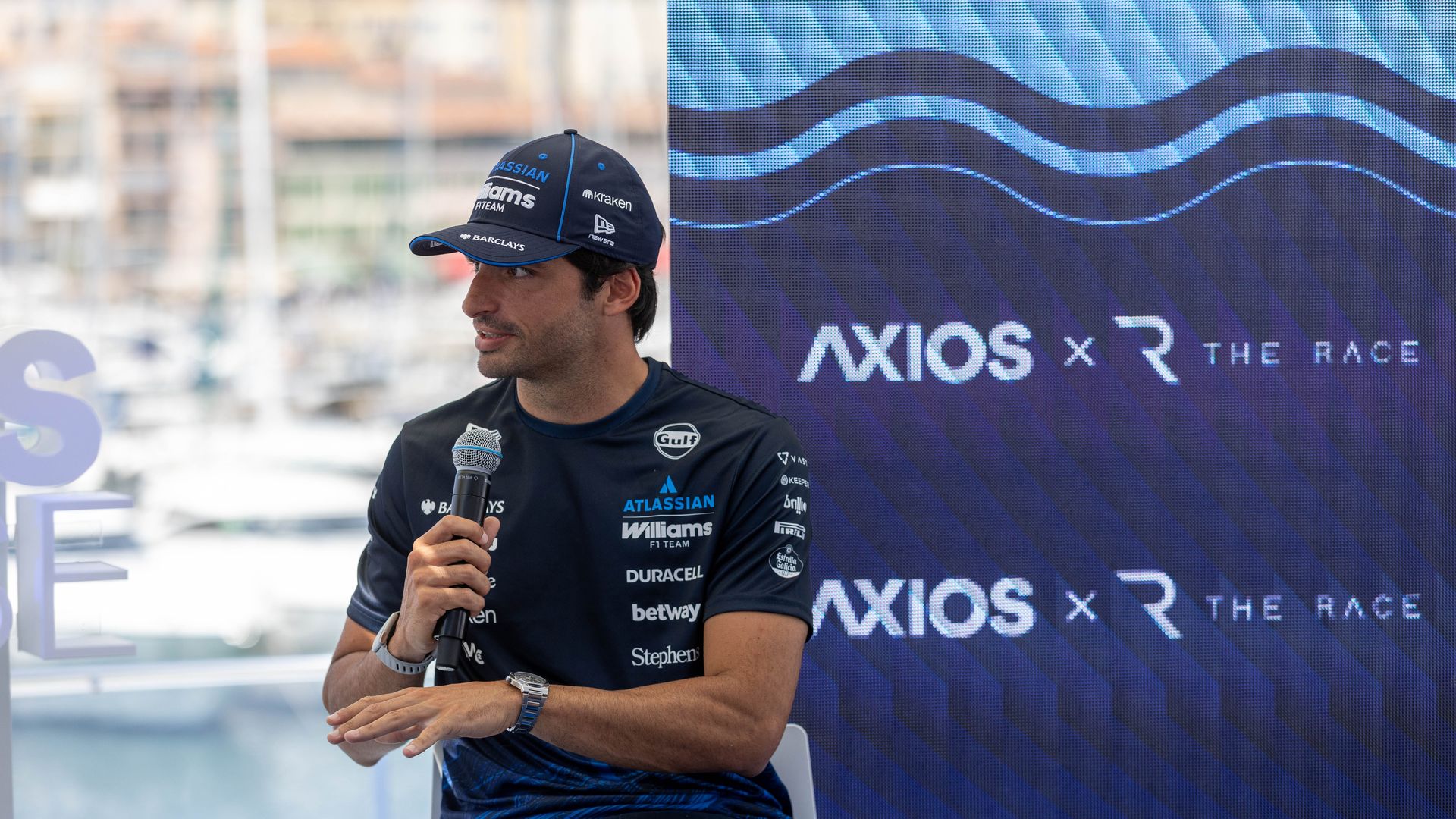
Atlassian Williams F1 driver Carlos Sainz speaks at an Axios House Cannes event on June 24. Photo: Nicolas Gavet for Axios
CANNES, France — Formula One driver Carlos Sainz said granting Netflix access for the popular "Drive to Survive" show was "worth it."
Why it matters: F1's fanbase has surged 63% since 2018, the year before Netflix released the sports documentary series.
What he's saying: Sainz said he recognized the Netflix series could be a major opportunity in 2018, despite his aversion to having cameras documenting his private life or contract negotiations.
- "I said, look, this could be game-changing, so let's give Netflix access, at least the first year until we see how this pans out," he told Darren Cox, founder of The Race Media, at an Axios House Cannes event in late June.
- The first season of the show included a full episode featuring Sainz and his career. He gained 500,000 followers in two weeks after it was released, which made him feel like "it's paying off and it's worth it."
- "From then on, everyone realized this was going to be a big help for Formula One, and we all started opening up a bit more," he said.
Catch up quick: Sainz has raced in F1 since 2015 and witnessed firsthand some of the sport's biggest transformations during his career.
- Liberty Media acquired F1 in 2016, ushering in a new wave of commercialization as the new owners looked to bring new audiences to the motorsport.
- Liberty pitched a behind-the-scenes docuseries to Netflix, which became the smash hit "Drive to Survive." The show has been credited with introducing millions of new fans, particularly younger audiences and women, to F1.
- Liberty also relaxed social media rules that previously banned filming by anyone inside the paddock beyond broadcasters with TV deals or F1 management.
Zoom in: Sainz, who races under the Spanish flag for the Atlassian Williams F1 team, said those changes made F1 a truly global sport and brought new fans to in-person races.
- "It was already a global sport, but more, maybe niche European, some areas of Asia, some areas of South America, and then suddenly became a completely globalized sport," he said.
- "I lived through experiencing going to Austin and maybe not seeing that many fans, and then suddenly two years after COVID, going to Austin and finding an insane amount of people there, not even considering Vegas or Miami."
What to watch: F1's continued investment in reaching and growing new audiences.
- "Nowadays, pretty much all of our media content gets translated to Spanish," Sainz said, whether that's a dedicated Spanish account or translations included in content posted to main pages.
- He said it's nice to see the effort and noted that the Williams team is "doing everything we can to bring F1 closer to all these Latino, Spanish-speaking people."
The bottom line: "I think it's such an exciting sport, it's such an incredible sport, which obviously, thanks to Netflix and social media, we are able to show now, but there's still so much more to show that I want to show everyone," Sainz said.
