Top central bankers are eager to rewrite the playbook

Add Axios as your preferred source to
see more of our stories on Google.
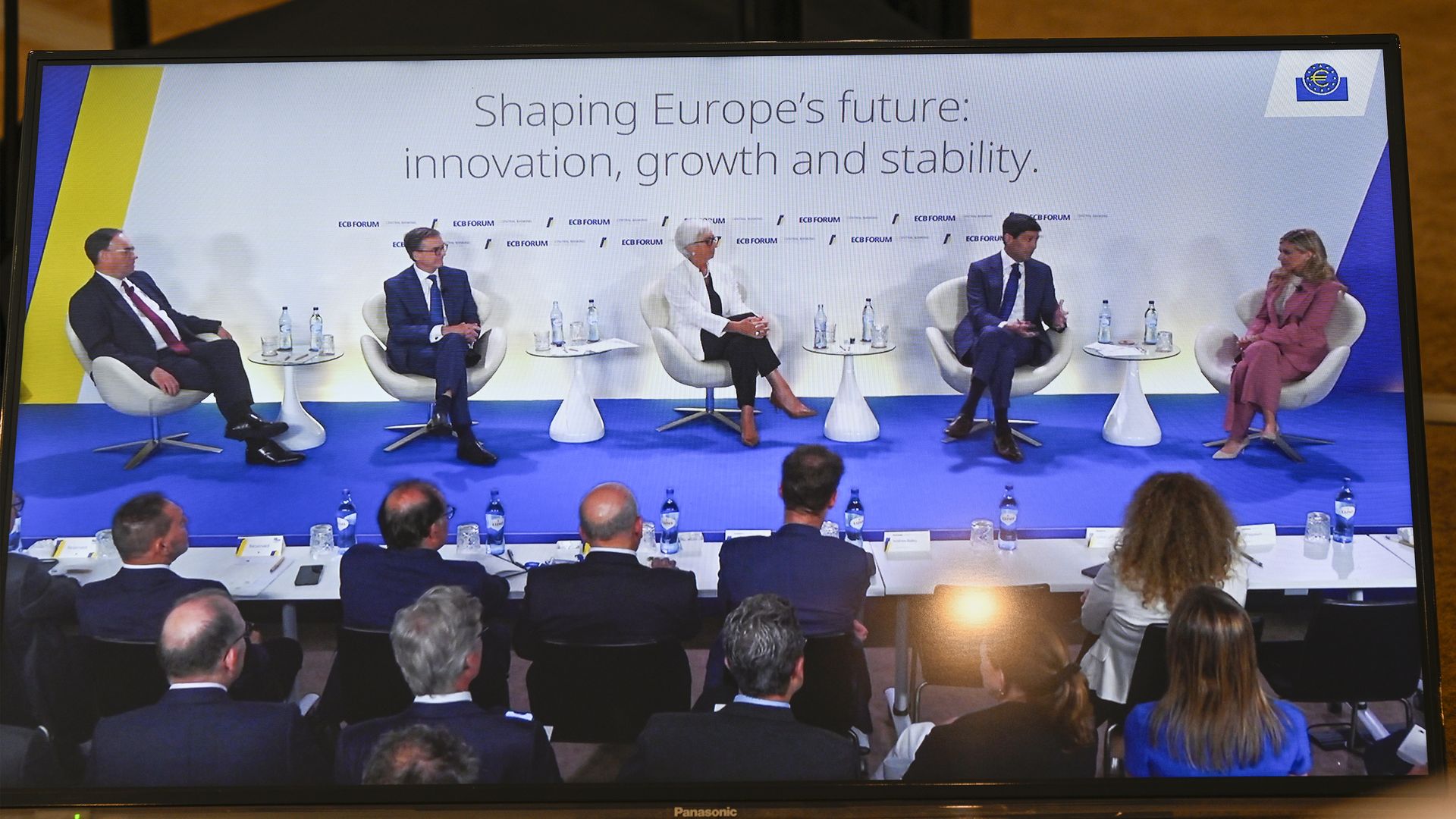
Journalists in Sintra, Portugal, watch a panel with top central bankers. Photo: Horacio Villalobos/Corbis/Getty Images
It's not just an American thing. Central bankers from other top Western democracies also believe that they should communicate less about where policy is going.
Why it matters: There was striking alignment of views among the heads of the European Central Bank, Bank of England, Bank of Canada and the U.S. Federal Reserve on display in Portugal.
- It suggests that Kevin Warsh's ascent to Fed chairmanship is helping trigger a global turning of the page on some of the monetary policy assumptions of the last couple of decades.
State of play: Warsh has been a longtime critic of forward guidance, of central banks laying out explicitly what they anticipate doing in the future. He had like-minded company on stage at the ECB's annual conference in Sintra.
- "If I have one regret," said ECB president Christine Lagarde, "it's to have felt bound and compelled by forward guidance."
- "Where forward guidance has been very difficult," said Bank of England governor Andrew Bailey, "and therefore I'm in a very similar place to my colleagues, is you can get locked into it very easily."
- "It's much easier to put it in place than it is to take it away," Bailey said. "Therefore, before you ... put it in place, think about what we're going to have to deal with as time goes by. It becomes quite problematic after a while."
What they're saying: "So we have found common cause," Warsh said. Referring to Lagarde, he added, "I liked her when we met 20 years ago when she was finance minister. After that answer, I love her."
- "What I've found most exhilarating about the last two days here," Warsh said, is that many people are "open-minded, keen to think anew about the conduct of monetary policy."
- "We're going to chart a new course, so that we can make better decisions and do the right thing," he added.
The intrigue: Warsh ducked a question on whether the Fed is likely to raise interest rates in the weeks or months ahead, consistent with his general disdain for forward guidance and reluctance to commit to a policy path.
- When the Fed's policy committee meets in late July, he said, it will have a closed-door discussion and make a judgment based on the data.
- "We're going to have a good debate," he said. "But I don't have much more for you than that."
Yes, but: For all the apparent singing from the same hymnbook, there were some subtle distinctions between how Lagarde and Warsh talked about central bank communications.
- Lagarde spoke of rejecting "forward guidance" but embracing "framework guidance," laying out to financial markets and the public how the ECB's decisions are made, such as how it weights various indicators.
- Warsh seemed less eager to lay out the Fed's policy reaction function more explicitly.
Of note: Warsh said that the membership of five task forces meant to provide outside perspective on longer-term aspects of how the Fed works will likely be announced next week. The Fed aims to deliver findings by year-end.
- "I feel incredible comfort that I'm not sure I had internalized that there is a willingness by my colleagues in the central banking community around the world to go back to first principles," Warsh said.
- "We've been burdened by the policies the Fed created in the 2008 crisis," he added. "This is a rare moment to go back to first principles, ask hard questions."
What's next: Bloomberg reports that former Bank of England governor Mervyn King will lead a task force on communication.
