The "dad bod," explained by science

Add Axios as your preferred source to
see more of our stories on Google.
Sarah Grillo/Axios. Stock: Getty Images
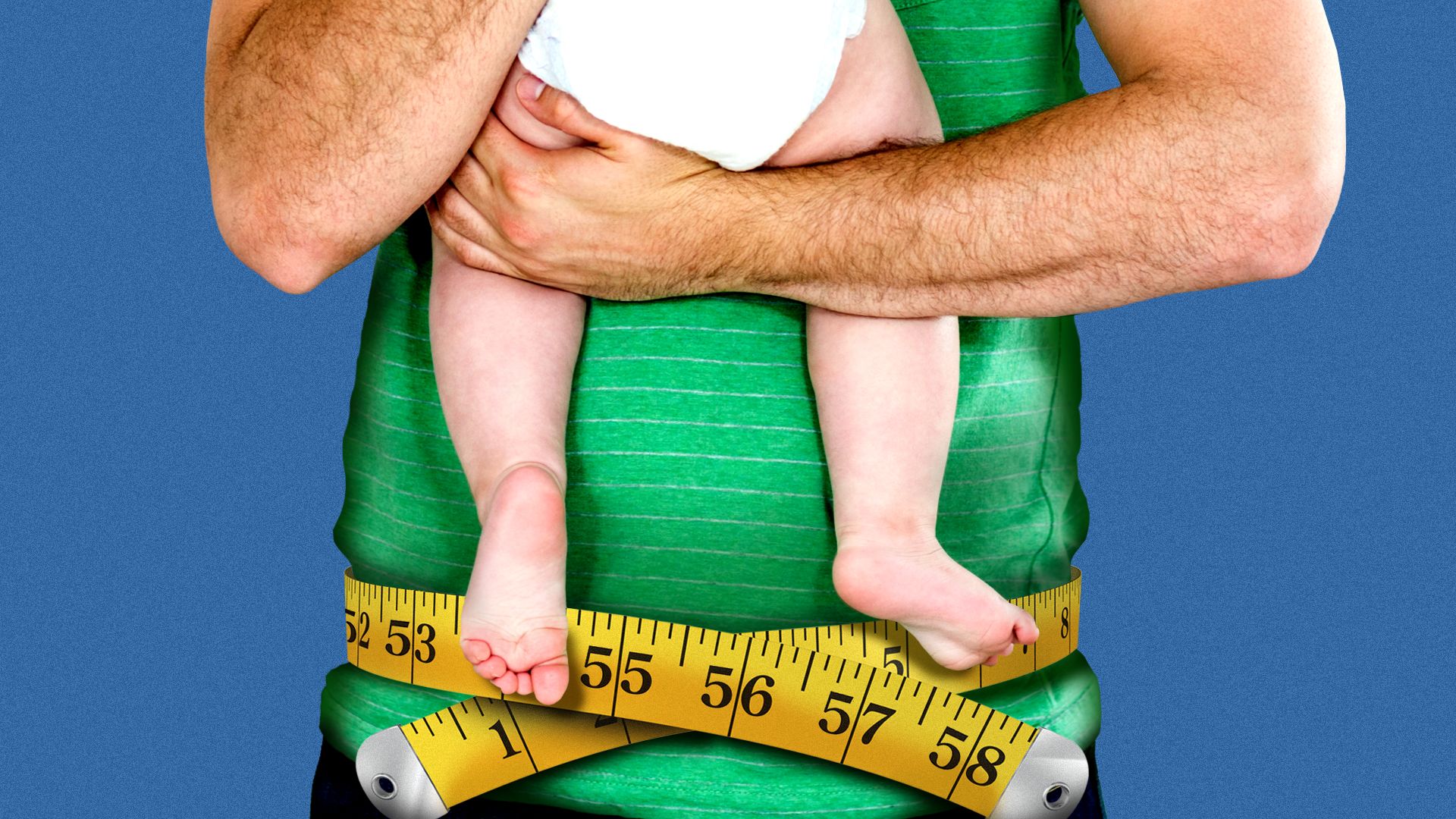
For more than a decade, the "dad bod" has been celebrated, mocked and memed as the inevitable physique of married men with kids. But the term is more than a cultural phenomenon.
Why it matters: There's growing scientific research that fatherhood changes men's bodies and brains — even though these changes are rarely discussed.
Zoom in: Many dads put on weight in early parenthood. And it's not just humans — some other primates do, too.
- A study on human parents found that new dads gained roughly 4.5 pounds after the birth of their first child. In another study, expectant father monkeys gained up to 8% of their starting weight by the time their mates gave birth.
Between the lines: The "dad bod" is a "real phenomenon with real productive value," clinical psychologist Darby Saxbe writes in her new book "Dad Brain."
- Gaining a few pounds may have helped fathers look intimidating to potential threats, carry kids more easily, and bank fat reserves in case food ran short, Saxbe tells Axios.
The big picture: The emergence of "dad bod" may be linked to a larger shift in parenting.
- "Men's child care time has quadrupled in the past few generations. Millennial dads are now spending about as much time with their kids as baby boomer moms once did," Saxbe writes in the New York Times.
- That means men might be dealing with some more of the downsides of parenthood as well — including the hit to mental and physical health.
- Dads' weight gain could also be linked to a drop in testosterone that happens when men transition into parenthood.
The good news: With "dad bod" comes "dad brain," Saxbe writes. Research shows that parenthood can boost men's cognition and have an anti-aging effect on the brain.
