NIH moves to reduce animal testing in research

Add Axios as your preferred source to
see more of our stories on Google.
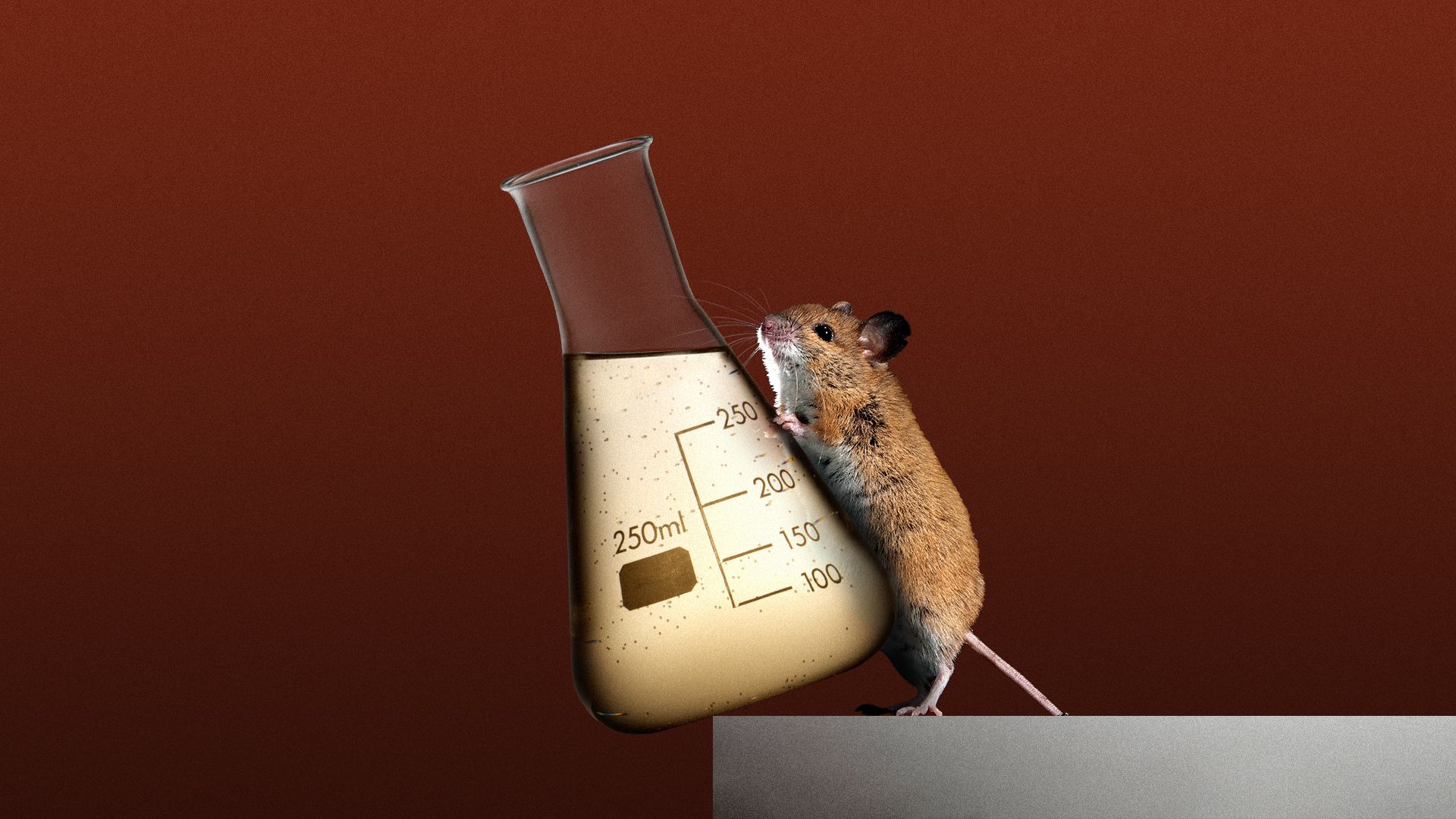
Illustration: Lindsey Bailey/Axios
The Trump administration took another step toward pivoting away from animal testing in biomedical research on Monday, establishing an office within the National Institutes of Health to develop and promote 3D human tissue models, computational tools and other alternatives.
Why it matters: It makes good on a pledge NIH director Jay Bhattacharya made in April 2025 and follows the launch of a Food and Drug Administration pilot program to phase out some animal testing requirements for antibody therapies and other drugs.
Driving the news: The new Office of Research Innovation, Validation, and Application, or ORIVA, will fund methods that simulate human disease — including "organoids" grown from patient cells — and computer models and AI that simulate biological systems and drug interactions.
- The office also is supposed to serve as a hub for coordinating with other government agencies and regulatory changes.
- "By strategically capitalizing on these tools and encouraging further innovation, NIH aims to steer biomedical research in this direction," Bhattacharya said.
Congress in 2022 removed a long-standing requirement that experimental drugs undergo mandatory animal testing before human clinical trials, giving developers the option to use non-animal methods.
Reality check: It could take years to reach a point where alternative methods can be widely deployed.
- While some technologies like organ-on-a-chip have been shown to potentially save drug companies billions in testing, many still use animals to cover their bets, industry experts say.
- Some experts have also said predicting drug efficacy using AI models will require more data, particularly in areas like oncology and neurology.
NIH didn't say how much money is being directed toward the effort. The administration proposed a 12% cut to NIH spending in its FY27 budget.
