"China shock" fear shapes EU trade policy

Add Axios as your preferred source to
see more of our stories on Google.
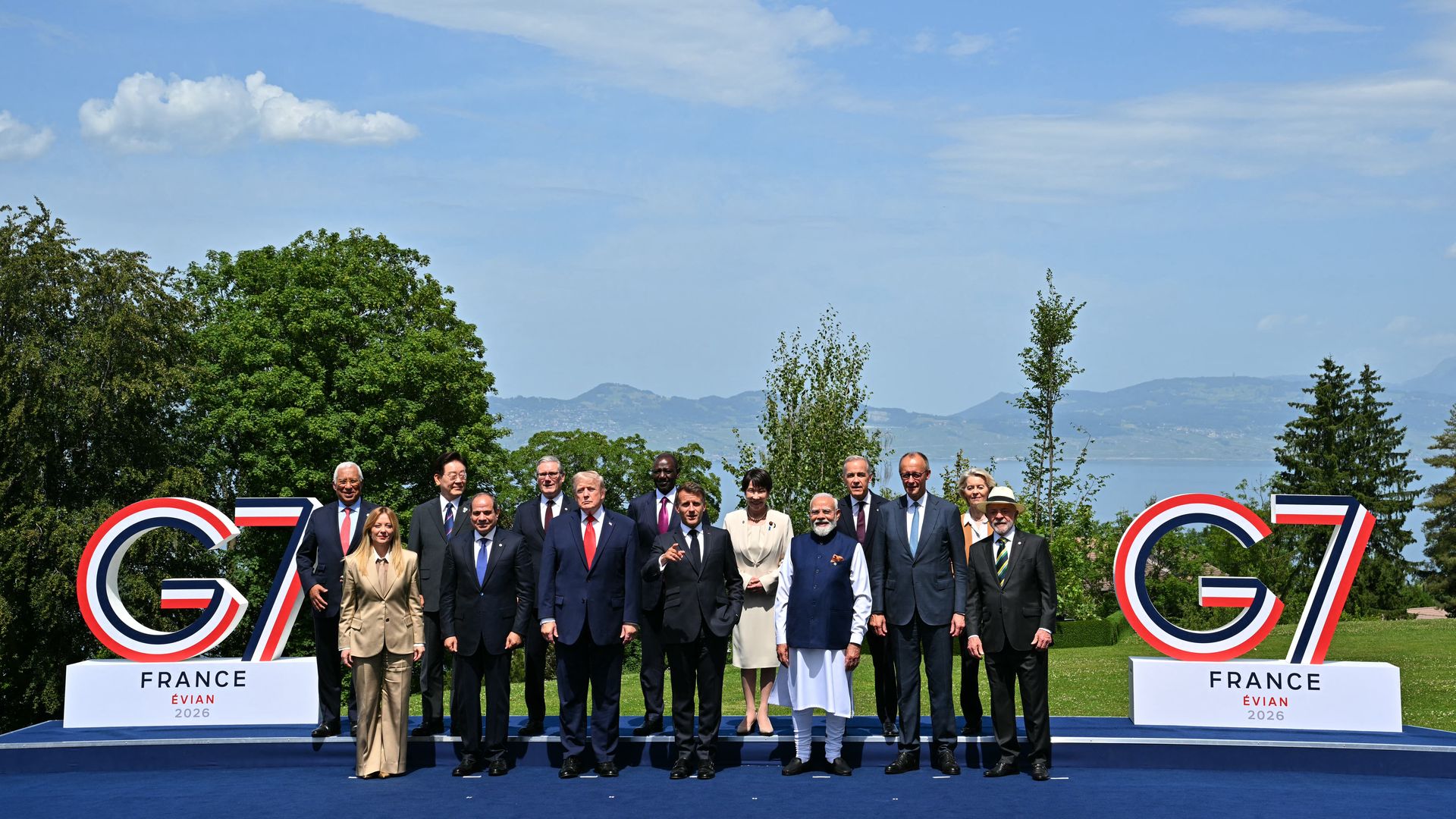
Leaders from the G7 nations — as well as from South Korea, Egypt, Kenya, India, Brazil and the European Union — pose for a portrait during the G7 summit in Evian, France. Photo: Mandel Ngan/ AFP via Getty Images
Europe is bracing for another "China shock," with a flood of cheap exports threatening to hollow out the continent's most important industries.
Why it matters: Global imbalances — the growing gap between countries that produce more than they consume and those that consume more than they produce — are high on the G7 agenda this week.
- For years, the loudest warning that China's export-led growth model was distorting global trade came from the U.S.
- Now, European policymakers fear that those same imbalances are spilling into their own markets.
- The concern is driving a shift toward tariffs, local-content requirements and other tools more commonly associated with President Trump's trade policy.
Driving the news: France, which holds this year's G7 presidency, made "global economic and financial imbalances" a centerpiece of the summit's economic agenda.
- China isn't mentioned by name in the G7 priorities document, which instead refers to "non-market policies and practices" that distort trade and investment flows — language widely interpreted as a reference to concerns about Chinese overcapacity.
"This is a way for the French to put on the table the issue that, in some sense, is the same issue that the Americans are concerned about," Phil Luck, director of the economics program at the Center for Strategic and International Studies, told reporters last week.
- "Imbalances relating to U.S. overconsumption, Chinese overproduction and potentially European lack of investment as sort of a third piece of the puzzle," Luck said.
The big picture: China's rise as a manufacturing powerhouse in the 1990s and 2000s hit industries like textiles, toys and furniture the hardest, wiping out millions of manufacturing jobs across advanced economies and reshaping global trade.
- Chinese exports are now surging into sectors that Europe long viewed as competitive strengths, fueling fears that Beijing's excess production is spilling into autos, chemicals, machinery and other industries at the heart of Europe's economy.
Zoom in: China's trade surplus hit a record $1.2 trillion last year, an astonishing feat that suggests U.S. tariffs have redirected Chinese exports to markets like Europe — not reduced them.
- "If you look at the year 2025, this will be remembered as the year for the first time ever all member states had a trade deficit with China. ... This is a force [that is] not sustainable," European Commission president Ursula von der Leyen told reporters Monday.
What to watch: Fears of a second China shock and dependence on the world's second-largest economy are reshaping European policy.
- The EU is considering harsher tariffs and other import restrictions on Chinese goods. Policymakers in Brussels have also begun crafting an "overcapacity" instrument aimed at sectors flooded by subsidized imports.
- Officials this year have ramped up the debate over rules designed to favor European-made products in sectors like batteries, wind equipment and clean technology.
The bottom line: Europe is increasingly arriving at the same diagnosis as Washington — that Chinese overproduction poses a threat to domestic industry.
