Creeping screwworm: Trump's new political pest

Add Axios as your preferred source to
see more of our stories on Google.
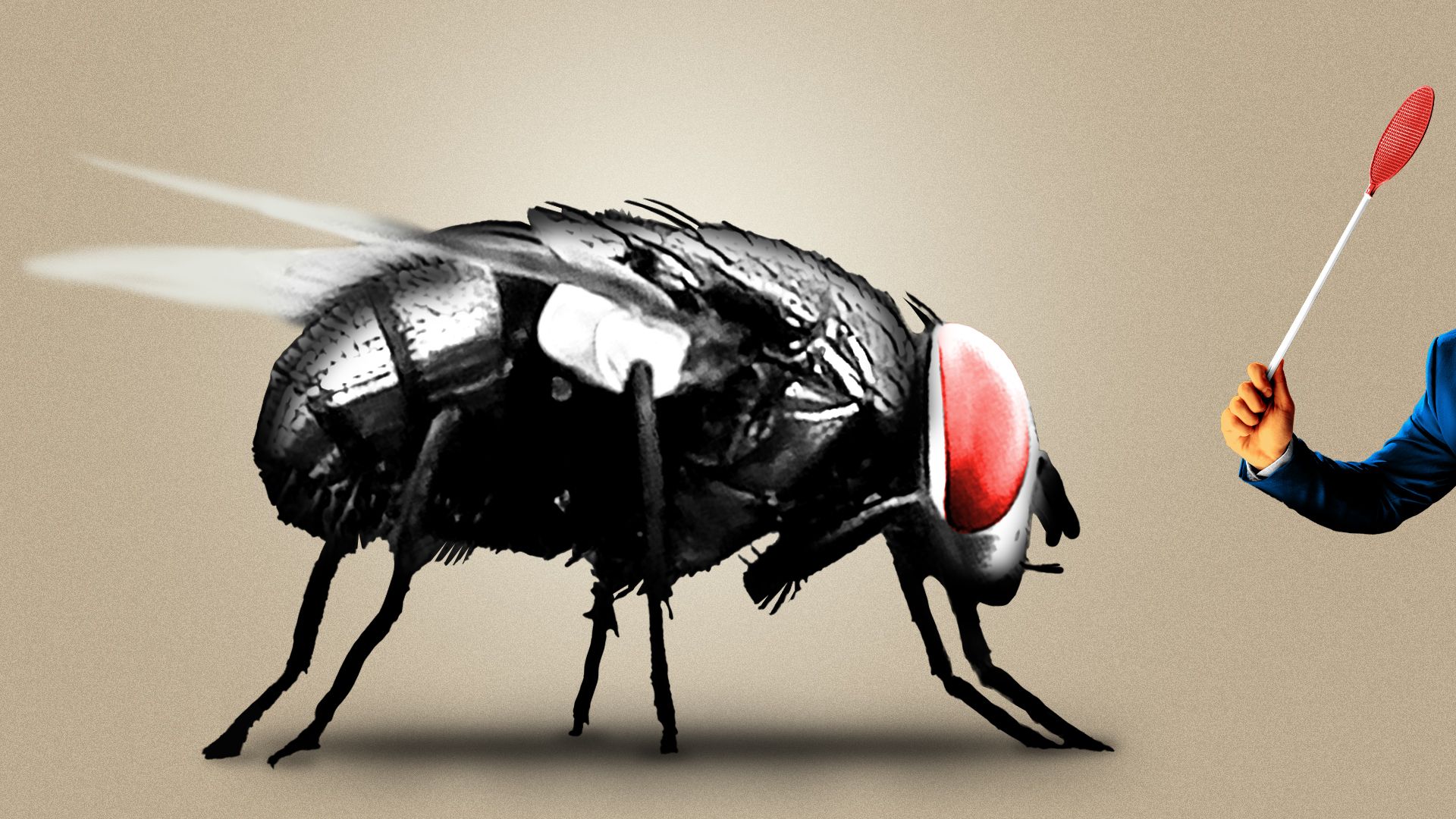
Illustration: Sarah Grillo/Axios. Stock: Getty Images
The screwworm has arrived in the United States, and it's creeping up on President Trump as a political pest.
Why it matters: Trump and the Republican Party are already reeling from soaring beef prices and accelerating inflation.
- A screwworm outbreak could exacerbate the GOP's biggest vulnerability just as the midterm elections are heating up.
State of play: The Department of Agriculture is gearing up for a $1 billion+ fight against the screwworm, AP reports.
- It'll cost about $750 million to set up a plant to produce and release 300 million sterile male screwworms every week. This technique — in which the males mate with wild females, preventing reproduction — has long been the gold standard for eradicating the pest.
Threat level: The first case of screwworm in the U.S. was detected in South Texas on June 3 — one day after Agriculture Secretary Brooke Rollins denied a claim by a Texas state lawmaker that the parasitic fly was found within a mile of the U.S.-Mexico border.
- There are now 12 confirmed cases in the U.S. — mostly in cattle — including 11 in Texas and one in New Mexico.
Between the lines: The outbreak comes with beef prices near record highs and the cattle herd at its lowest level in 75 years, depressed by a prolonged drought.
- "Given that this possible screwworm outbreak could lead to a larger supply shock on top of an existing supply shortage, prices could increase further," Brandon Parsons, an economist at Pepperdine Graziadio Business School, told CNBC this week.
Reality check: The screwworm's arrival in the U.S. hasn't measurably affected beef prices so far.
- But its spread in Mexico has reduced cattle imports and added to price pressures.
Zoom in: The arrival of the pest on U.S. soil comes a year after the USDA's Animal and Plant Health Inspection Service lost more than 2,100 employees — roughly 25% of its workforce — as part of the administration's sweeping federal workforce cuts.
- That's the agency that monitors and responds to threats like the screwworm.
- Before the first case was discovered, Texas Agriculture Commissioner Sid Miller called the federal response "slow" and "bureaucratic."
The backstory: For decades, the screwworms had been contained in Panama, but starting in 2023, cases began popping up farther and farther north, until they crossed onto U.S. soil this month.
- Trump officials are pointing the finger at the Biden administration and attributing the spread of the flies to the northward migration of people and livestock. "The threat didn't appear overnight; it was the direct result of the Biden-Harris Admin's WEAK foreign policy agenda and FAILED immigration policies (and wide open border…)," Rollins wrote on X last week.
Democrats draw a direct line between the administration's workforce cuts and its inability to keep the screwworm out of the U.S.
- "Trump's reckless and harmful cuts and his administration's incompetence have left the U.S.'s food supply vulnerable to outbreaks and risk escalating already high prices for beef," DNC Rapid Response director Kendall Witmer said in a statement.
The bottom line: Additional detections could turn the screwworm from an agricultural problem into a political one for Trump and the Republican Party.
