What to know about soccer rules for the World Cup

Add Axios as your preferred source to
see more of our stories on Google.
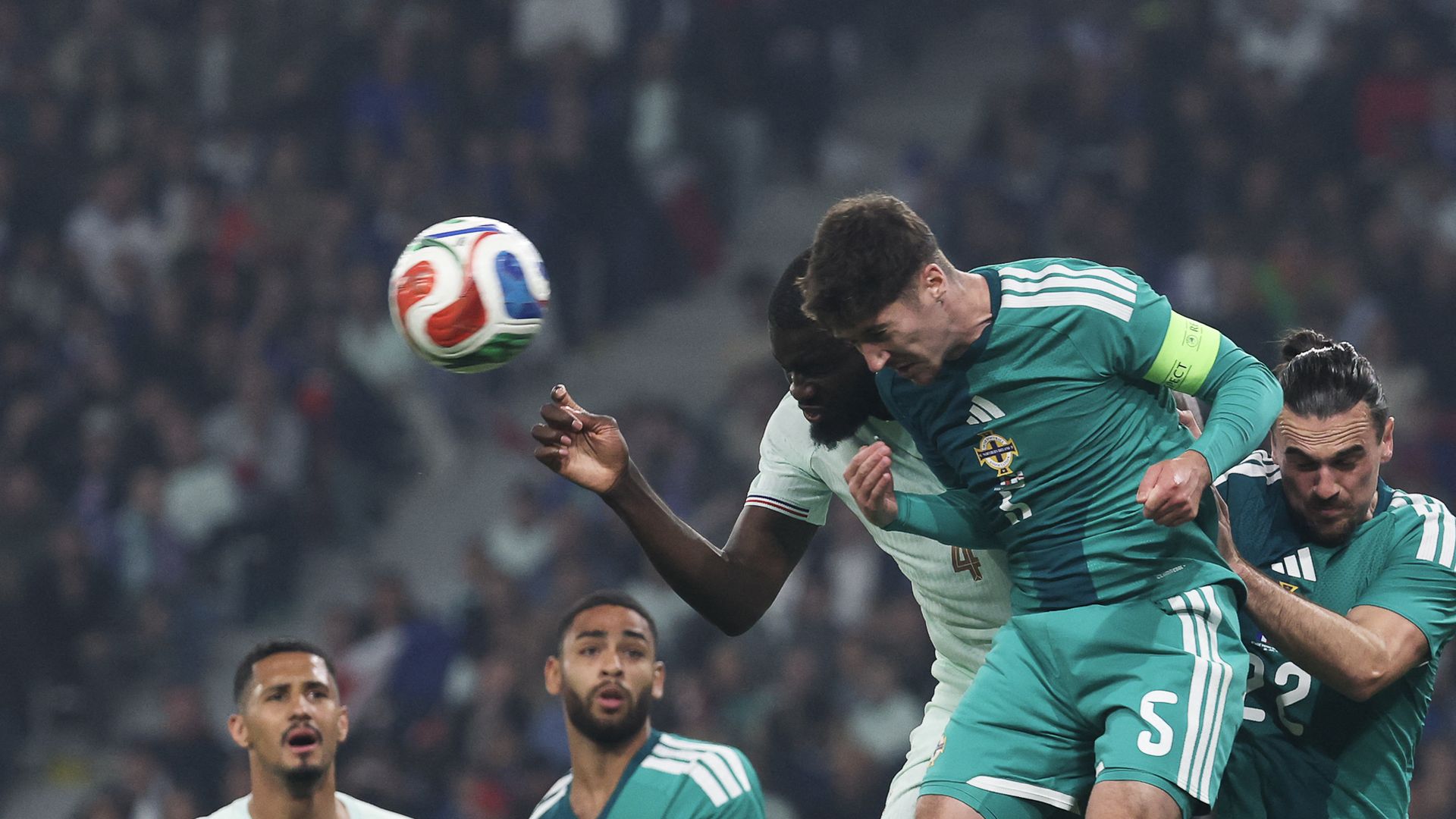
Players from the France and Northern Ireland teams vie for the ball during a friendly match on Monday. Photo: Franck Fife/AFP via Getty Images
Let's say you've got a rooting interest in the World Cup but tune into soccer only every four years.
- Here's a refresher on the rules of the game and what you need to know about this year's World Cup, which starts Thursday in Mexico City and then heads to the U.S. and Canada.
The group stage
There are 12 groups of four teams, decided by the World Cup draw in December. Each team plays the other three teams in their group.
- A win gets you 3 points, a tie 1 point and a loss no points.
- The top two teams from each group advance to the first single-elimination knockout round. Additionally, the top eight teams from among the third-place teams in each group advance.
The knockout rounds
This year's expanded format means there will be a round of 32 for the first time. The winners of those games will advance to the round of 16. That round is followed by the quarterfinals, the semifinals and then the final.
- The losers of the semifinal round play each other in the third-place game.
Number of players
Each team is allowed no more than 26 players. Teams start with 11 players on the field and can substitute five players, with an additional substitute allowed during extra time.
- A player cannot reenter the game after being substituted out.
The length of games
Each half is 45 minutes, but the referee stops time for injuries, substitutions and video reviews, so typically stoppage time is added to the end of each half.
- During the knockout rounds, tied games after regulation time go into overtime, which consists of two 15-minute halves.
- If the teams are still even at the end of extra time, then the game is decided by a penalty shootout with each team getting five kicks; if a tie remains, the shootout goes to sudden-death rounds.
VAR
The video-assisted referee will play an expanded role this World Cup. Now subject to review: incorrectly awarded corner kicks, cards issued to the wrong player in a case of mistaken identity, and more.
Yellow cards and red cards
Yellow cards are issued for repeatedly breaking the rules, delaying the restart of play, arguing with a referee, tactical fouls that stop a promising attack and reckless challenges, among other things.
- A second yellow card results in a red card, at which point the player is ejected from the game. That player's team is not allowed a substitute.
- Players can receive red cards for first-time offenses including dangerous fouls, violent conduct and spitting at an opponent, among other things. Red cards also can result in suspension from the following game.
- If a player receives two yellow cards during the first two games of the group stage, that player is suspended for the third game. Likewise, a player who receives a yellow card in the round of 32 and again in the round of 16 is suspended in the quarterfinals. The suspended player's team can still play with 11 players.
Penalty kicks
If a defending player commits a foul — such as trip, push or handball — inside their penalty box, the attacking team is awarded a penalty kick, which is marked 12 yards from the goal line.
- One player takes the penalty kick and all other players must stand outside the penalty box until the ball is struck. The goalkeeper must stay on the goal line until the ball is kicked.
Offside
Offside is called when a player receives a pass and is closer to the opponents' goal than both the ball and the second-to-last defender at the moment the ball is passed.
