MAHA's food dye fight spreads across the grocery aisle

Add Axios as your preferred source to
see more of our stories on Google.
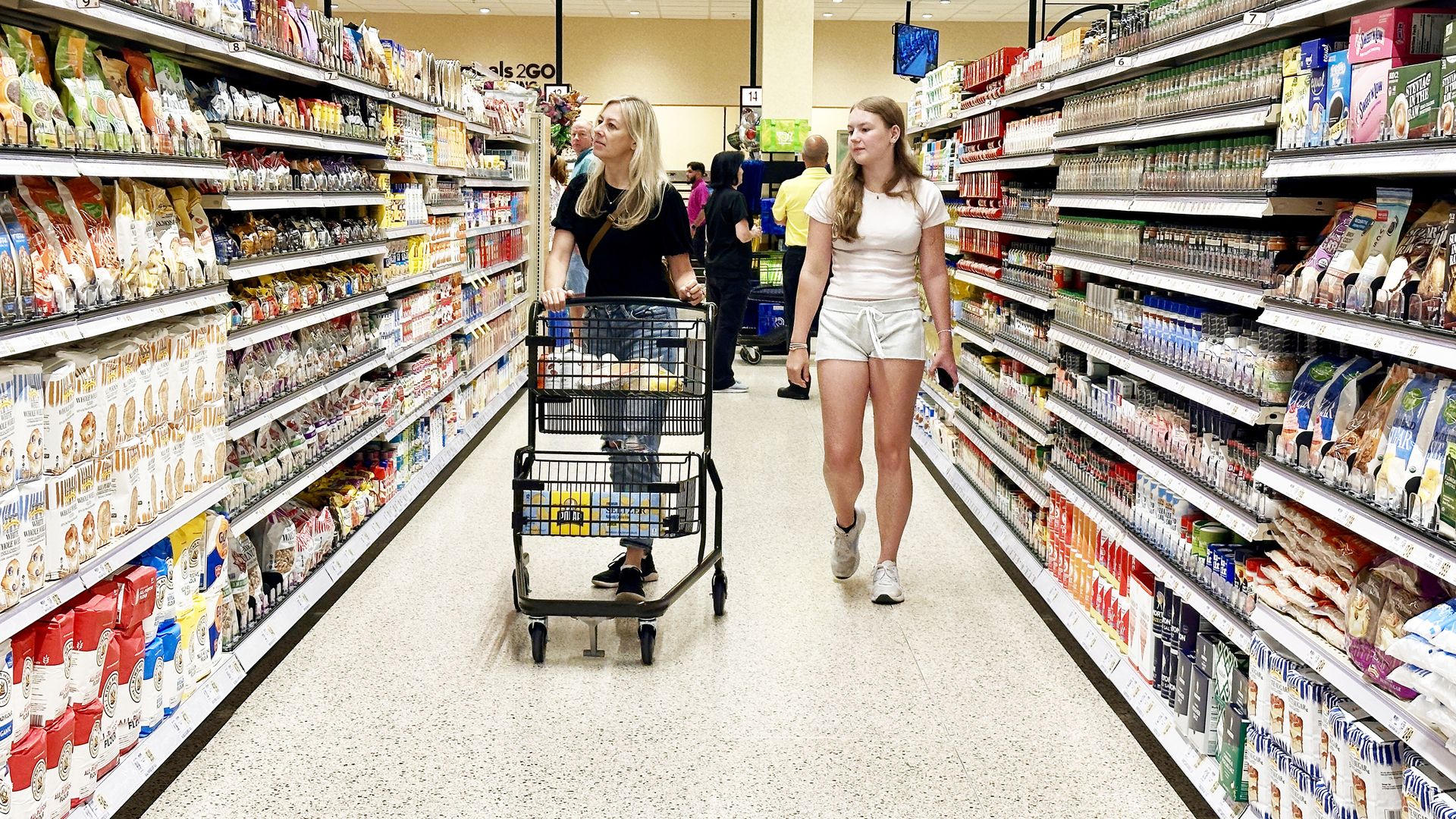
The next phase of the food dye debate may be playing out in grocery aisles. Photo: H. John Voorhees III/Connecticut Post via Getty Images
The effort to remake America's packaged foods is extending beyond Health Secretary Robert F. Kennedy Jr. and his "Make America Healthy Again" agenda, as retailers and food companies respond to the public's growing scrutiny of ingredients.
Why it matters: More retailers and food manufacturers are voluntarily removing artificial dyes and other additives from products as shoppers pay closer attention to what's in their food.
- Many of the industry's largest players are now racing toward company-set 2027 targets for removing synthetic colors, even as retailers move faster and consumers continue demanding more understandable ingredient labels.
- The push comes as a growing number of states weigh banning additives from school meals, limiting purchases of some processed products with SNAP benefits and establishing their own definitions of ultra-processed foods.
The big picture: Changes once limited to a handful of brands are spreading across the grocery aisle.
- Target now requires all cereals sold in its stores to be made without certified synthetic colors, a category that includes many artificial food dyes.
- Sam's Club says all Member's Mark food and beverage products now meet its "Made Without" standards after removing more than 40 ingredients and certified synthetic colors.
- Aldi recently announced plans to eliminate an additional 44 ingredients from its private-label food products by the end of 2027.
- Kraft Heinz, General Mills and other major food companies have pledged to remove artificial colors from products over the next several years.
Between the lines: The industry's ingredient overhaul predates MAHA's rise.
- Companies were already reformulating products to respond to consumer demand and competition from startups with cleaner ingredient lists, supermarket analyst Phil Lempert told Axios.
- "RFK just sped up the process because of the attention the issue has received," Lempert said.
- Retailers have become an increasingly important force in the ingredient debate, helping accelerate changes that were already underway, according to Lempert, who pointed to Aldi and Whole Foods as early leaders.
Zoom in: Kraft Heinz's recent launch of Jell-O Simply illustrates one of the biggest challenges facing food companies.
- The new line is made without artificial sweeteners or artificial food dyes and includes ready-to-eat gelatin cups in orange, raspberry lemonade and blueberry, along with pudding and gelatin mixes in flavors such as chocolate, vanilla and banana.
- Consumers increasingly want simpler ingredient lists and fewer artificial additives, but they still expect iconic brands to look and taste the way they always have.
What they're saying: One surprise during Kraft Heinz's reformulation efforts was learning how important color remains to consumers, Caroline Boulos, president of meals and desserts, told Axios.
- One question was whether "consumers may be willing to forgo the colors that they know and love, and the answer resoundingly is no," Boulos said. "The color serves a huge role in the joy of eating them, in cueing the flavor."
Reality check: Removing synthetic dyes is proving more complicated than swapping one ingredient for another.
- Reformulating products can take two to four years because companies must source replacement ingredients, test them on manufacturing lines and evaluate shelf life, stability and allergen impacts, Lempert said.
- Replacing colors can affect shelf life, manufacturing processes and consumer acceptance. Kraft Heinz said some reformulations now rely on ingredients such as huito plant extract from Peru to help create colors that historically depended on synthetic dyes.
- When Sam's Club removed synthetic colors from a blue sports drink, the beverage turned a more natural purple hue. The retailer ultimately infused blue coloring into the packaging instead.
Zoom out: The trend stretches beyond artificial dyes.
- Ferrero executives recently told Axios the company plans to bring its U.S. brands in line with evolving consumer preferences. Ferrero also noted that many of its products already comply with stricter European ingredient standards.
- The MAHA movement has also amplified public attention on food ingredients, turning issues like artificial dyes, preservatives and ultra-processed foods into mainstream conversations.
- But Kennedy's federal health department has stopped short of regulating ultra-processed food.
The bottom line: What started as a debate over food dyes is evolving into a broader rethink of how packaged foods are made and sold.
