Automakers stockpile vehicles amid war-shaken supply chains

Add Axios as your preferred source to
see more of our stories on Google.
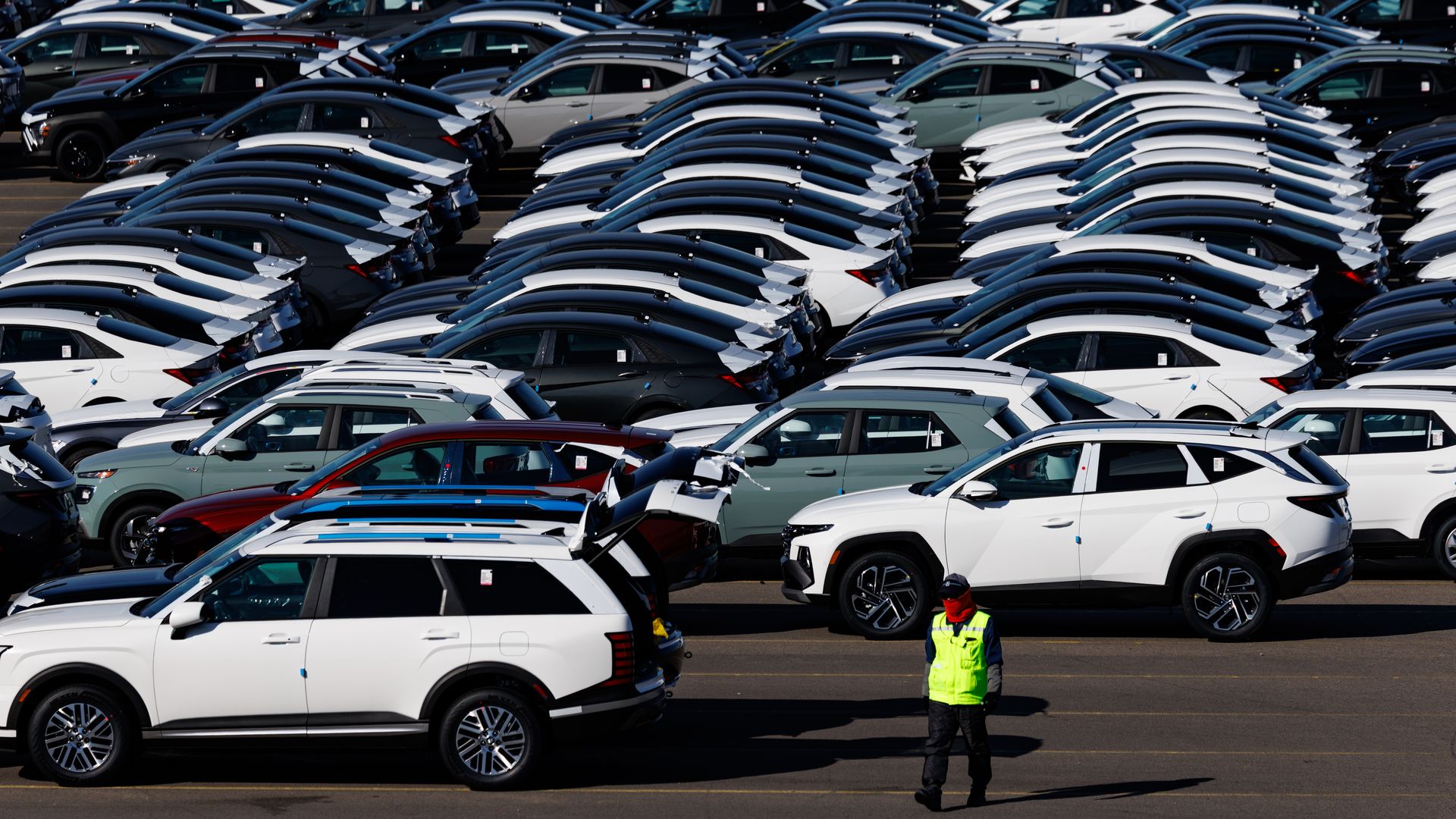
Hyundai vehicles bound for export await shipment at a port near the company's plant in Ulsan, South Korea, earlier this year. Photo: SeongJoon Cho/Bloomberg via Getty Images
Automakers are building up vehicle inventories, particularly in Asian markets, as a hedge against supply chain disruptions caused by the war with Iran.
Why it matters: The industry learned long ago not to build more cars than consumers are willing to buy, but they're also wary of getting caught flat-footed as they did during the COVID-era semiconductor shortage.
The big picture: While a tentative deal to reopen the Strait of Hormuz could get oil flowing again, the ripple effects of the war have already spread across the auto industry.
- Aside from sharply higher gas prices, the war is limiting access to key raw materials needed to produce vehicles.
- A variety of petroleum-based products, including naphtha used to make many kinds of plastics, are in short supply. So are raw materials needed to make aluminum and semiconductor chips.
- Japan and Korea, which are heavily dependent on naphtha supplies from the Middle East, are particularly vulnerable, per The New York Times.
State of play: Some automakers are building up inventories while they can, according to Michael Robinet, a vice president at S&P Global Mobility.
- "We're finding some build-ahead," a trend that is likely to accelerate through the summer, Robinet told journalists at an Automotive Press Association event.
Between the lines: Ordinarily, carmakers try to be disciplined about matching production to demand, so they're not forced to unload vehicles at a discount. But the lessons from COVID are still fresh, he said.
- "If you can get the feedstocks now, and you can find resin to make plastic, and you can find chips that require helium, and you can find urea and ammonia that are required for different operations, if you can find all of that, then they're going to build the vehicle," Robinet said.
- The downside, he said, is that the vehicle will sit on their balance sheet until it's sold, but amid such uncertainty, carmakers would rather have inventory to sell than face supply shortages.
Zoom out: The war is driving a broader inventory buildup across the economy.
- April durable goods numbers were boosted by civilian aircraft orders, but the jump in overall industrial orders looks temporary as "companies [are] rushing to build inventories as a buffer against supply chain disruptions linked to the war," says Samuel Tombs, chief U.S. economist of Pantheon Macro.
Flashback: A year ago, the chaos of President Trump's tariff threats sparked a temporary surge in manufacturing as companies raced to get ahead of higher costs.
- The 2026 version of that chaos is Trump's war in Iran.
