G7 finance chiefs talk "balanced growth" amid global strain

Add Axios as your preferred source to
see more of our stories on Google.
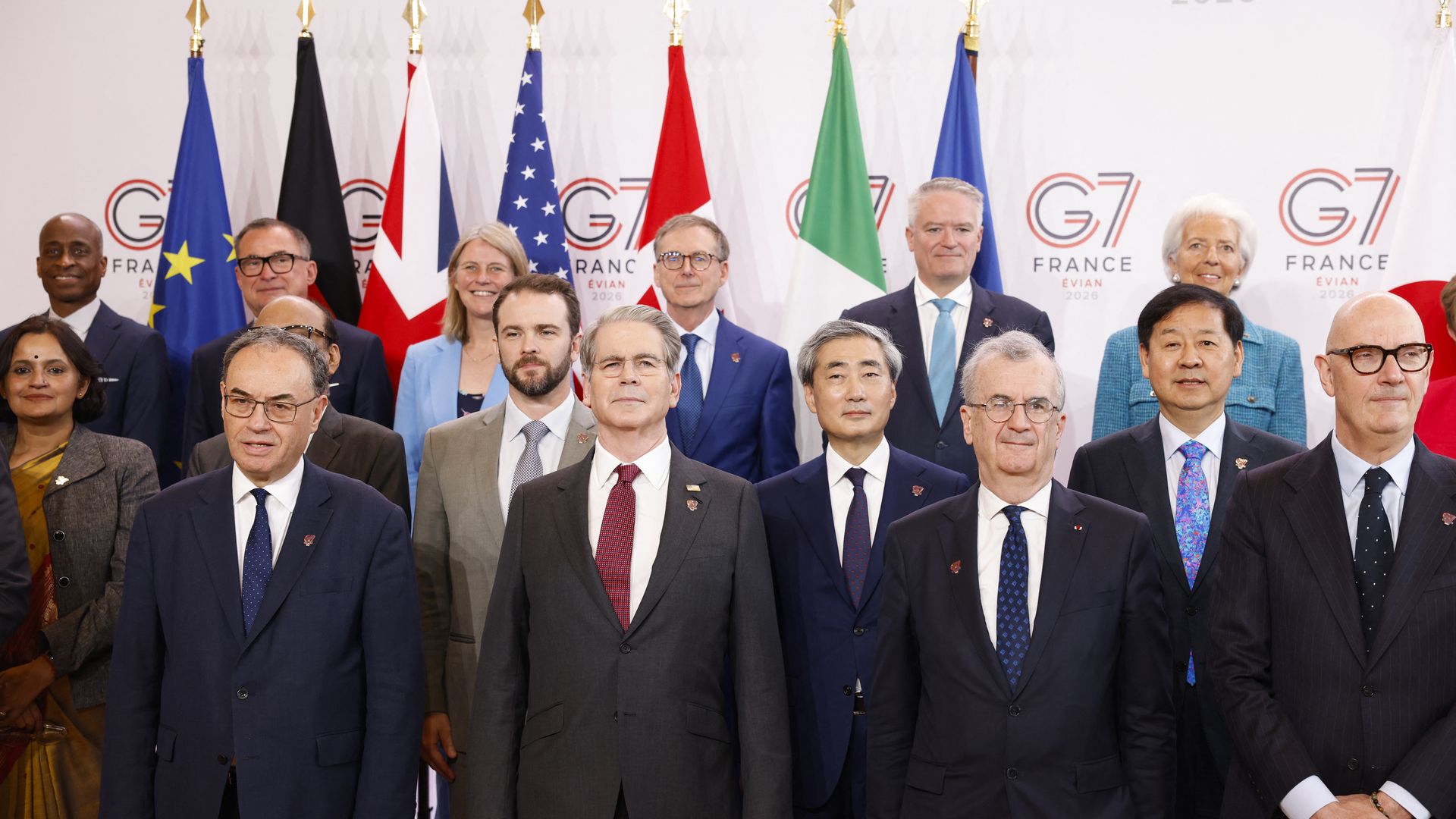
G7 finance ministers and central bankers meet. Photo: Kenzo Tribouillard/AFP via Getty Images
Leading finance ministers and central bankers concluded a two-day summit in Paris on Tuesday, and the kinds of global strains that former top International Monetary Fund official Gita Gopinath described on Monday were top of mind.
Driving the news: In a communiqué, G7 finance leaders jointly said they would aim for policies "promoting balanced growth and macroeconomic stability" in their respective nations.
- "Countries with large and persistent external deficits should undertake policies that include supporting domestic savings and fiscal consolidation."
State of play: That language is pretty much boilerplate. But it takes on additional meaning at a moment when the bond market is growing skittish amid surging inflation and massive public borrowing.
- The Japanese 30-year yield, for example, rose to a multidecade high of 4.17% on Tuesday, from 3.72% as recently as May 7. One factor: The Japanese prime minister announced fiscal measures to try to bolster the country's economy amid the energy shock caused by the Iran war.
- Similarly, yields on longer-term U.K. gilts have surged amid uncertainty about the future of Prime Minister Keir Starmer's government and what fiscal direction may follow if it falls.
Between the lines: Throughout the 2010s, finance ministers in rich countries enjoyed a free lunch, with inflation persistently low and demand for safe assets seemingly insatiable.
- Now, they are facing a world where one supply disruption after another is keeping inflation elevated, and bond investors are wary of political risk in a time of already massive public debts.
What they're saying: "The way the global economy has been developing for the past 10 years or so is clearly unsustainable," French finance minister Roland Lescure told reporters, per Reuters.
- "We are no longer in a period where public debt is not a subject," he said.
