New signs Iran war is boosting clean energy

Add Axios as your preferred source to
see more of our stories on Google.
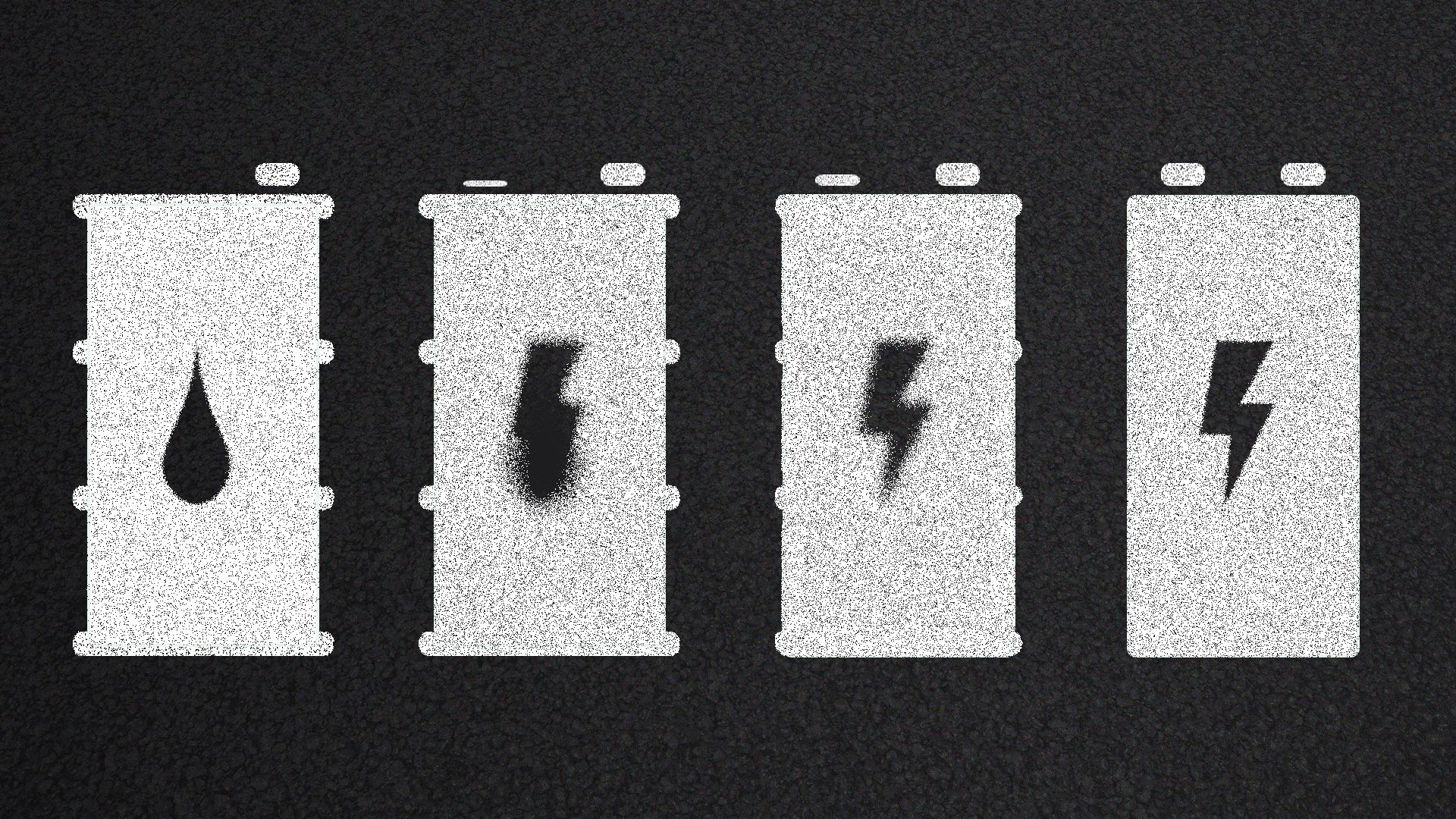
Illustration: Annelise Capossela/Axios
Nearly 10 weeks into the Iran war, there's new — if still anecdotal — evidence that it could bring tailwinds for global uptake of clean energy tech.
Why it matters: The energy shock highlights many nations' vulnerability to the expensive disruption of oil and gas imports — and the security case for diversifying.
Catch up quick: We've explored this concept a few times, so let's dive right into latest hints of whether cleaner power and vehicles are really getting a boost from the war.
A few examples of data points that back the bull case...
🇨🇳 China's solar exports soared in March, per the think tank Ember and the energy research firm BloombergNEF.
- But they both note that it was partly in anticipation of domestic tax changes, which took effect in April, that make exports a little less lucrative.
- "What will be really interesting to see is the April export figures from China," BloombergNEF's Ethan Zindler said via email.
🇰🇷 South Korea's domestic EV sales more than doubled last month compared to March 2025, while solar panel imports were up 137%, per Bloomberg.
🇪🇺 European Union EV sales surged in March, per data from the European Automobile Manufacturers' Association, with the year-over-year growth larger than in January or February.
- Again, keep an eye out for April's data that lands later this month.
What we're watching: EU leaders say they're going to get even more aggressive on electrification plans as a result of the expensive crisis.
- Over $3 billion flowed into exchange-traded funds linked to renewables in April, the FT reports based on Morningstar data, the biggest inflow since January 2021.
Reality check: I have a few.
- One is that coal is also seeing a boost in some countries — including South Korea.
- And remember that solar and EV deployment is already growing fast in many nations, so isolating the Iran signal from the transition noise is tricky.
Still another is that diversification can also mean oil and gas from other regions.
- Think Norway's energy minister citing the Iran crisis when announcing the reopening of North Sea gas fields yesterday, or the U.S. oil and petroleum production export surge since the war began.
What they're saying: Former Bank of England and BP chief economist Spencer Dale, writing in the FT yesterday, ticks off forces that could thwart or slow a war-driven shift to low-carbon energy.
- One is that slower economic growth from the energy shock and more demands on governments to cushion the blow could crowd out the fiscal space for financing clean energy.
- BloombergNEF, in a report today on the battery storage market, cautions that despite higher oil and gas costs, businesses "may delay switching to low-carbon options ... unless they expect a structural shift away from fossil fuel dependence."
The bottom line: "[I]t is still too early to say that the Iran war is clearly accelerating the whole transition," said Tatiana Mitrova, a fellow at Columbia's Center on Global Energy Policy, in an email exchange
- "But there are already concrete signs that it is making solar, storage, and electrification-related choices more attractive through an energy-security lens," she adds.
