Georgia wildfires come as much of America is ready to burn

Add Axios as your preferred source to
see more of our stories on Google.
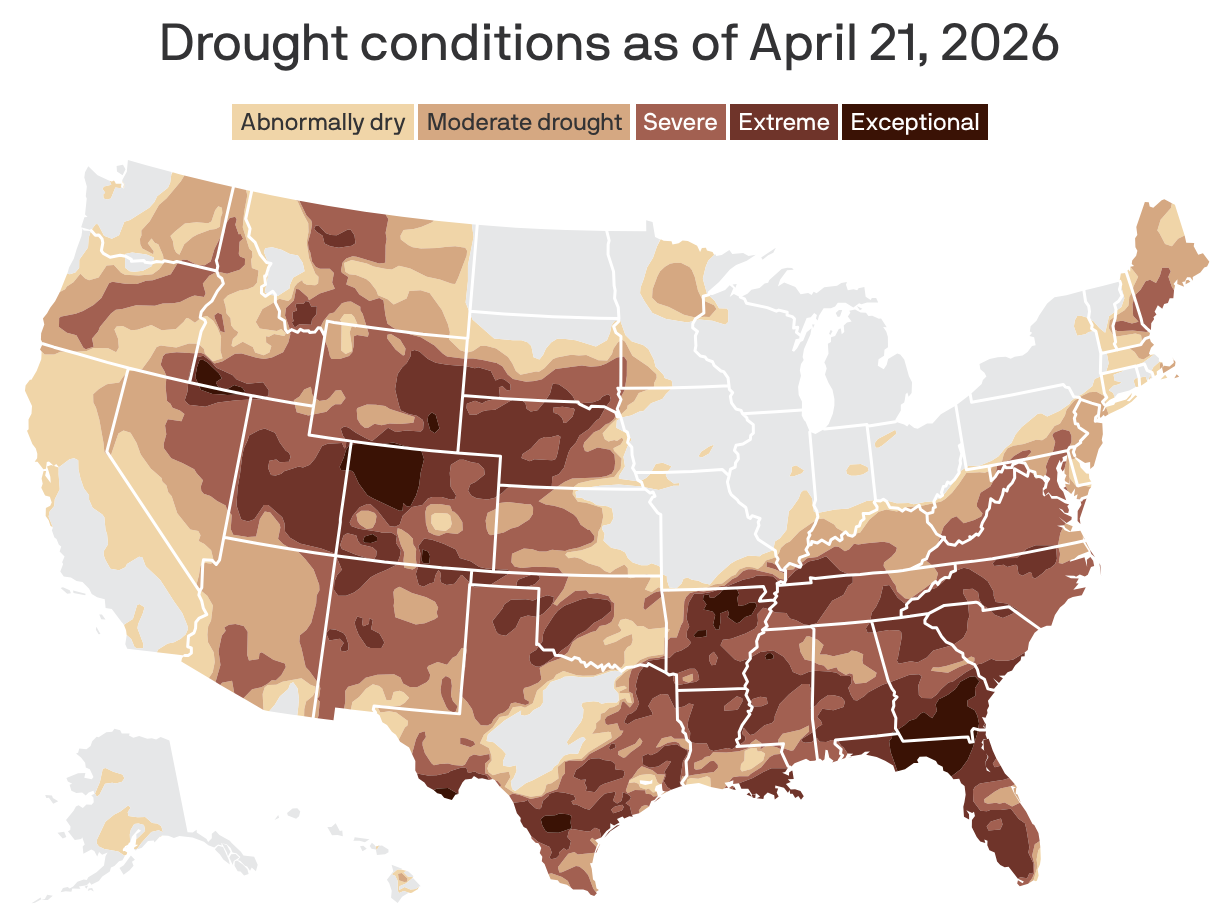
Georgia's wildfires could be a preview of a potentially severe fire season nationwide, with swaths of dried-out land primed to burn from coast to coast.
Driving the news: The Highway 82 Fire and Pineland Road Fire have destroyed more than 120 homes, fueled by dry conditions, high winds and leftover debris from 2024's Hurricane Helene.
The big picture: Much of the U.S. is at least "abnormally dry" after long stretches of low precipitation, per the U.S. Drought Monitor.
- Severe, extreme or exceptionally dry conditions prevail across much of the West, South and Southeast, setting the stage for fires.
By the numbers: About 1.8 million acres have burned nationwide as of April 24, according to the National Interagency Fire Center (NIFC).
- That's nearly double the year-to-date 10-year average, and the highest year-to-date figure since 2017.
What they're saying: "Over the last few years, different states have set new records for acres burned and acres of high severity fire and homes burned," says John Bailey, professor of silviculture and wildland fire at Oregon State University's College of Forestry and author of "A Walk With Wildland Fire."
- Three factors are driving those broken records, Bailey says: An "inordinate amount of fuel in the landscape," new homes in fire-prone areas that become fire fuel themselves, and longer and more severe fire seasons.
Between the lines: It's too soon to tie the Georgia wildfires directly to climate change.
- But climate change is driving longer, more intense wildfire seasons — and worsening pollution from wildfire smoke — according to Climate Central, a research group.
Threat level: The NIFC's latest outlook warns of above-normal wildfire potential next month across much of Arizona and New Mexico, plus all of Florida and the Southeast Atlantic coast.
- In June, the high-risk areas also include most of inland Louisiana, part of East Texas, western Colorado, southern Utah, Northern California, and inland Washington and Oregon.
What we're watching: The severity of this year's wildfire season could depend on the potential formation of a "super El Niño."
- "El Niños — driven by unusually warm Pacific Ocean temperatures — can reshape global weather patterns, push temperatures to record highs, and create conditions for the devastating wildfires and smoke that have increasingly come to define West Coast summers," Axios' Kale Williams and Christine Clarridge report.
- Such a phenomenon could also have far-reaching consequences for the global fight against climate change, The Guardian notes.
