"Digital fantasy": AI hair, makeup gets under beauty industry's skin

Add Axios as your preferred source to
see more of our stories on Google.
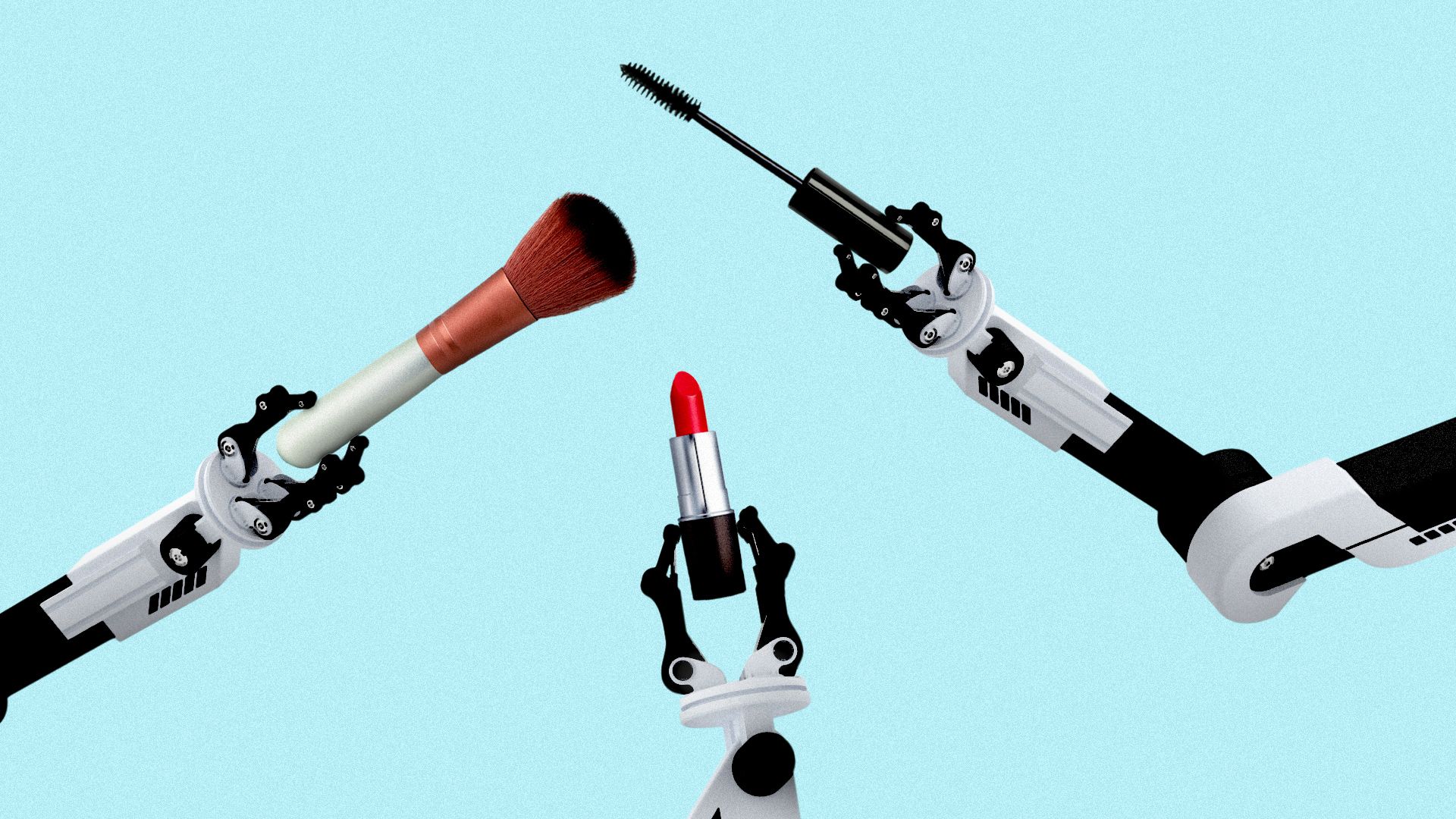
Illustration: Gabriella Turrisi/Axios
One of the beauty industry's biggest headaches today isn't split ends or bad blending: It's the influx of bridal parties and other clients seeking 'dos from an AI fantasy.
Why it matters: AI-generated content has inundated digital platforms and social media, often leaving makeup artists, hair stylists and others in client-facing roles to serve as the industry's reality checkers.
Case in point: "I have to really dive deep into the consultation [with clients] to really let them know the clarity about this. This is a digital fantasy," says Angelina Murphy, a celebrity hair extension specialist and TV personality.
- The proliferation of AI content creates unrealistic expectations for clients and an unfair dynamic for artists.
- "This is not real: the roots aren't real, the color isn't real, her bone structure isn't real," Murphy says. "The end result will never, ever look like this."
Zoom out: Artists and stylists across social media have expressed their frustration with the onslaught of AI-generated inspiration — with one photo in particular becoming a routine nightmare.
- Mehry Schmitt, the founder of Northeast-based Gloss Beauty + Bridal, tells Axios that among the 40 to 50 brides her company sees per year, at least half of their inspiration is AI-generated.
- Serving bridal parties means glamming a whole group on a tight schedule. When bridesmaids are inspired by fake faces, Schmitt and her team must quickly determine which elements they can replicate.
- "Is it frustrating? It can be, but I try not to let it frustrate me and just use it as a way for me to ... flex my artistry and my skill set," she says.
Context: AI-generated content has become a challenge — and an annoyance — across of industries and hobbies, from real estate to gardening, and has flooded DIY forums with glossy, unattainable perfection.
- Images and vides generated via sophisticated tools from tech giants like Google, Meta and OpenAI have swamped social media and are fooling even the most shrewd users, Axios' Megan Morrone writes.
- The proliferation has gone even further with AI models and influencers, stoking industry fears and exacerbating extreme beauty standards.
Yes, but: Artists and stylists still have a job to do. That means dissecting the look with clients rather than shaming them for having an untrained eye — and for clients, it means returning that compassion.
- Most people are understanding when the consultation process is clear, honest and thorough, Murphy says. Some desired results are still possible, she notes, but they take time: multiple appointments rather than the few seconds it takes to generate an AI image.
- "We have to understand that they don't know they're coming in with an AI photo thinking, 'that's exactly what I want,'" she says. "Little do they know, it's not usually doable."
The bottom line: Schmitt says she's choosing to adapt, accepting the challenges and opportunities of the new normal. If artists don't, she warns, they could fail their clients.
- Still, she says, "it's really showing us how impactful personal touch is: We're creating more of a human experience from something that isn't human."
