Trump suffers rare defeat with House Republicans

Add Axios as your preferred source to
see more of our stories on Google.
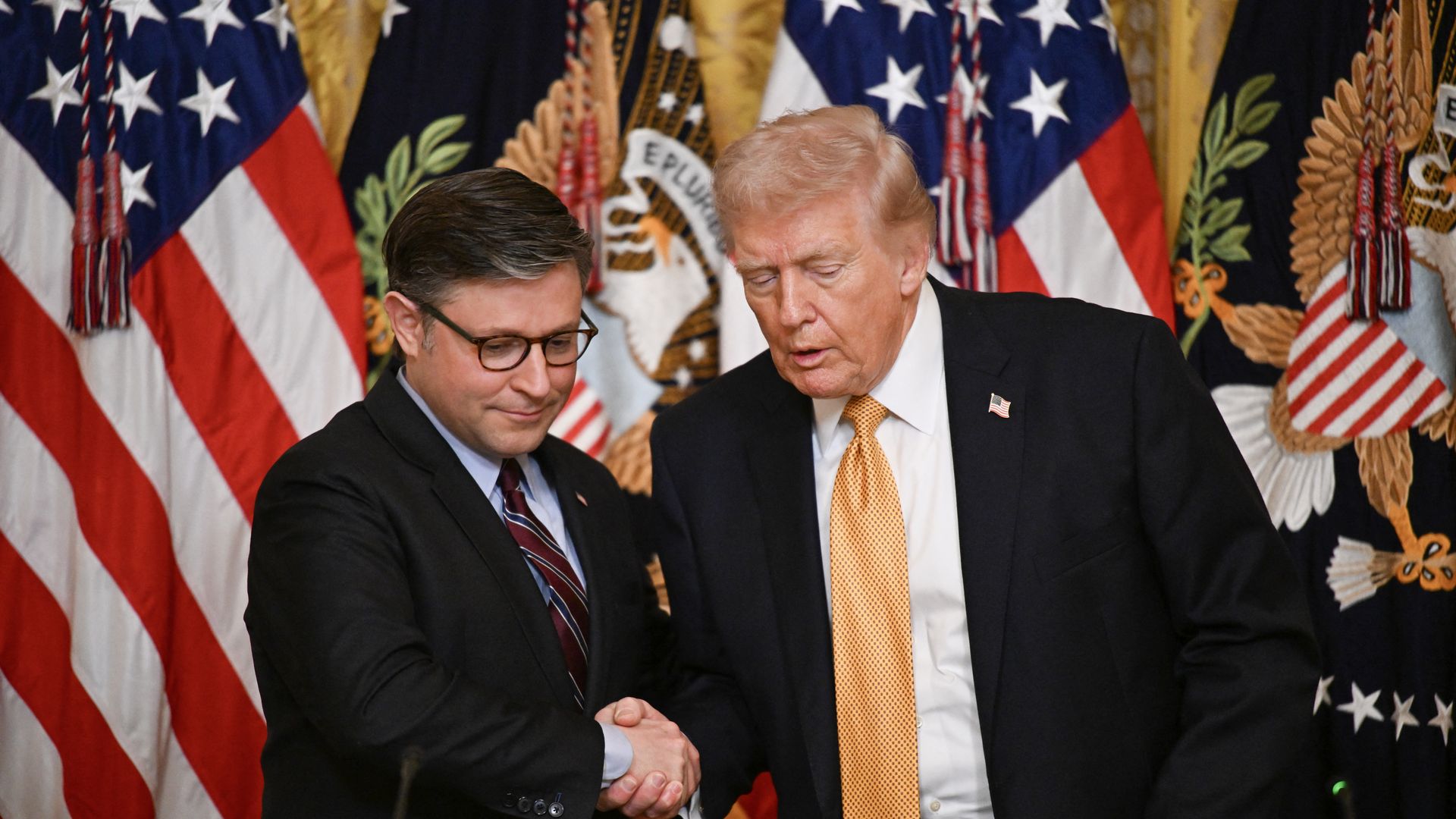
President Trump shakes hands with Speaker Mike Johnson on March 16 in Washington, D.C. Photo: Annabelle Gordon/AFP via Getty Images
The House GOP revolt on FISA Friday wasn't just a setback for Speaker Mike Johnson (R-La.) — it was a rare defeat for President Trump with his own party.
Why it matters: Trump usually delivers House Republicans on big votes. This time he couldn't — exposing the limits of his influence and leaving Johnson exposed.
- Charging ahead on a clean extension of Section 702 was a White House call, but some of Trump's closest allies refused to budge on long-held beliefs around the national security tool.
- More than two dozen Republicans voted down two separate procedural votes early Friday morning — once unheard of for members in the majority, but now an increasingly common tactic.
- That failure left GOP leaders with no choice but to fall back on a 10-day extension of the spy powers program, their last-resort option.
Driving the news: The White House, in tandem with GOP leadership, mounted an intense pressure campaign to convince holdouts to come on board. It ultimately fell short.
- They brought in CIA Director John Ratcliffe to address Republicans at their weekly meeting Tuesday, held numerous briefings at the White House solely for Republican holdouts, and even set up a makeshift "SCIF" off the House floor to streamline access to classified info during whipping.
- After explicitly pushing for a clean extension, GOP leaders and the White House softened their stance and agreed to entertain changes to appease conservatives.
- But it wasn't enough to get it over the finish line.
The big picture: On almost every issue, Trump has successfully bent House Republicans to his will. Johnson's legislative strategy has depended on it.
- There's often drama on the floor during tough votes, but the conference typically falls in line.
- On FISA, the White House and Johnson couldn't close the deal.
What they're saying: Some members say the White House came to the table too late on FISA, an issue they knew would be a heavy lift.
- Rushed talks, 1am votes and last-minute changes that didn't fully address concerns doomed the effort, Rep. Ralph Norman (R-S.C.), who voted against the rule, told Axios.
- Still, Norman said he's confident a deal can come together in the next two weeks.
The other side: "This is not an accurate characterization of WH involvement at all. The Administration has been engaged on this issue for months. We have had multiple briefings from senior officials — both house and senate side — about the importance of this program," a senior White House official told Axios:
- The official shared a list of over a dozen FISA briefings for lawmakers dating back to early Feb., noting the list does not include the numerous phone calls and meetings between the White House and different congressional stakeholders over the last six months.
Friction point: FISA always exposes deep, hard-to-bridge divides among lawmakers.
- Adding warrant requirements risks losing intelligence hawks; falling short alienates privacy-minded conservatives.
- Some conservatives also injected eleventh-hour demands, pushing to attach unrelated measures like the Anti-CBDC Surveillance State Act.
The bottom line: Johnson will have to find a way to unite his fractured conference, and make sure the White House and Senate stay on board, in the next 12 days.
- And Trump will need to prove his sway hasn't slipped.
Editor's note: This article has been updated with White House comment.
