Bayer CEO: "We need a predictable regulatory regime" for Roundup weedkiller

Add Axios as your preferred source to
see more of our stories on Google.
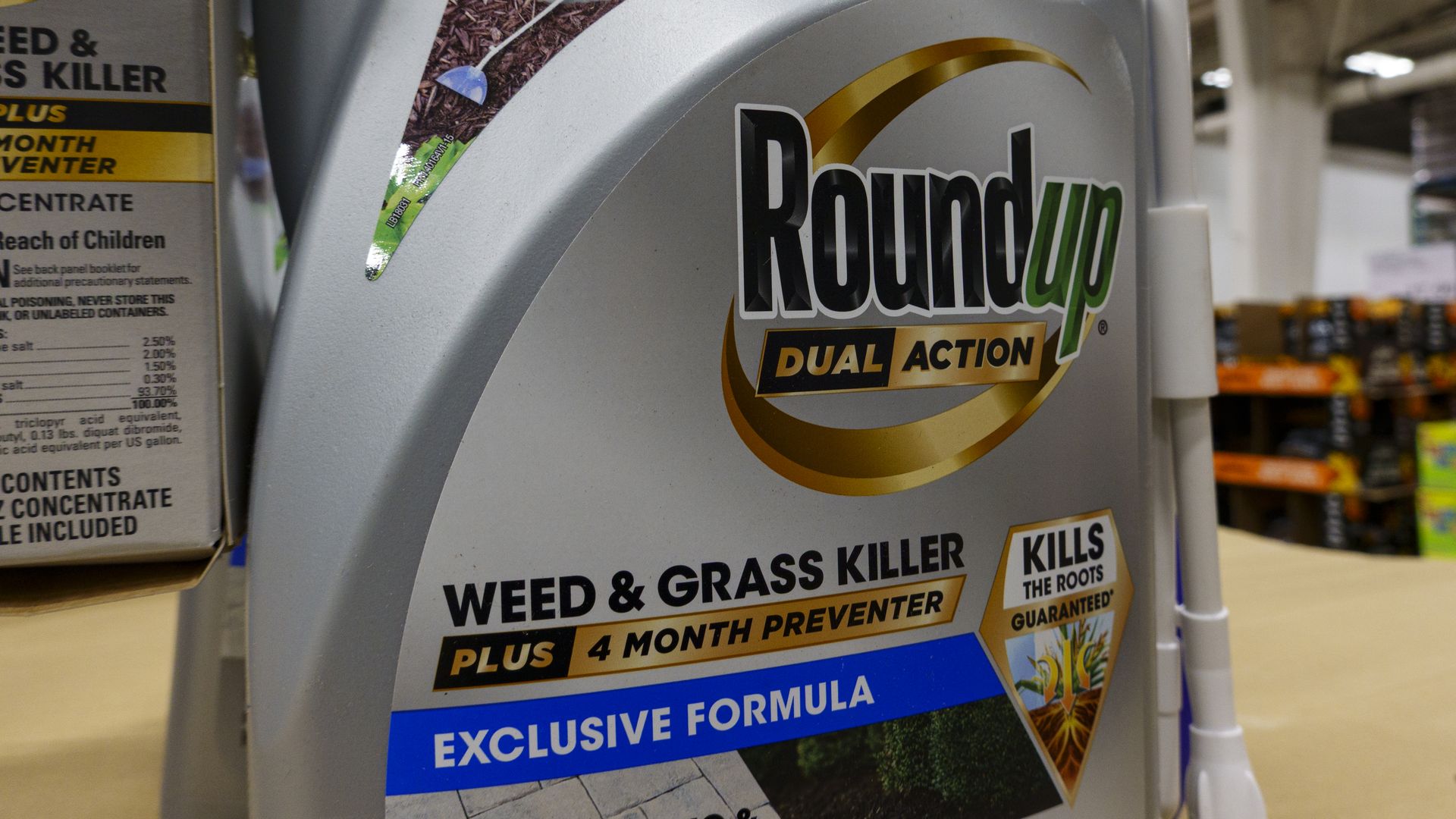
Bottles of Roundup weedkiller on sale at a Costco store in San Diego on March 11. Photo: Kevin Carter/Getty Images
Bayer CEO Bill Anderson says the German crop science and drug company is hoping to move past the long-running controversy over its Roundup weedkiller in 2026.
Why it matters: Bayer — which acquired Roundup when it bought Monsanto in 2018 — recently announced a $7.25 billion settlement deal and is awaiting a Supreme Court ruling that could decide the product's fate in the U.S.
Driving the news: Anderson tells Axios that the settlement and the legal fight — which experts believe the company will win — are "major milestones" in Bayer's turnaround.
- "We want to bring an end to this," Anderson said in an interview at a hotel in Washington, D.C. "This is a very important product for agriculture. It's been demonstrated to be safe over and over again and cleared by regulators in every nation, and we're ready to put this chapter behind us."
The Supreme Court is poised to rule on whether states have the authority to govern Roundup, or whether federal environmental regulators should control its fate.
- Bayer says it should be the latter.
- "We need a predictable regulatory regime," Anderson says. "It can't be that the reward for innovating and developing better, safer products is endless lawsuits. And so the Supreme Court ruling is really critical."
The other side: Some watchdogs and alleged victims of Roundup say the product is unsafe and should be blocked from the market.
- "Monsanto's self-interested desire that it and EPA be the sole arbiters of pesticides' safety would vitiate the long tradition of cooperative federal-state roles in protecting the public health," George Kimbrell, legal director of the Center for Food Safety, said in a recent statement. "Their position seeking to escape accountability for their toxic products is wrong every possible way: legally, scientifically, and factually."
- The product has also reportedly faced opposition from Health and Human Services Secretary Robert F. Kennedy Jr., though it has support from the EPA, reflecting an unusual split in the Trump administration. Anderson said "we have a productive relationship with the Trump administration."
What we're watching: Whether Bayer keeps Roundup on the market in the event of an adverse ruling.
- Anderson has previously suggested the product's U.S. fate could hinge on a favorable outcome, but he said Wednesday that he would "rather not speculate about that."
Meanwhile, the future of another Bayer product in the U.S. could also hinge on the shifting regulatory landscape.
- The company has developed a new insecticide called Plenexos that's already on sale in Latin America, but not here.
- It's "targeting the crop-killing insects but is protective of the beneficial insects," Anderson says, calling it "very potent" as it only "requires about eight grams per acre" of crops.
What's next: The company is developing new technology that would allow common grains like corn, wheat and rice "to produce some of their own" nitrogen fertilizer.
- "It's still a relatively early development project, but we definitely have proof of concept," Anderson said. "I think that would be one of the biggest imaginable breakthroughs in agriculture."
