Research advocates prepare for next NIH budget fight

Add Axios as your preferred source to
see more of our stories on Google.
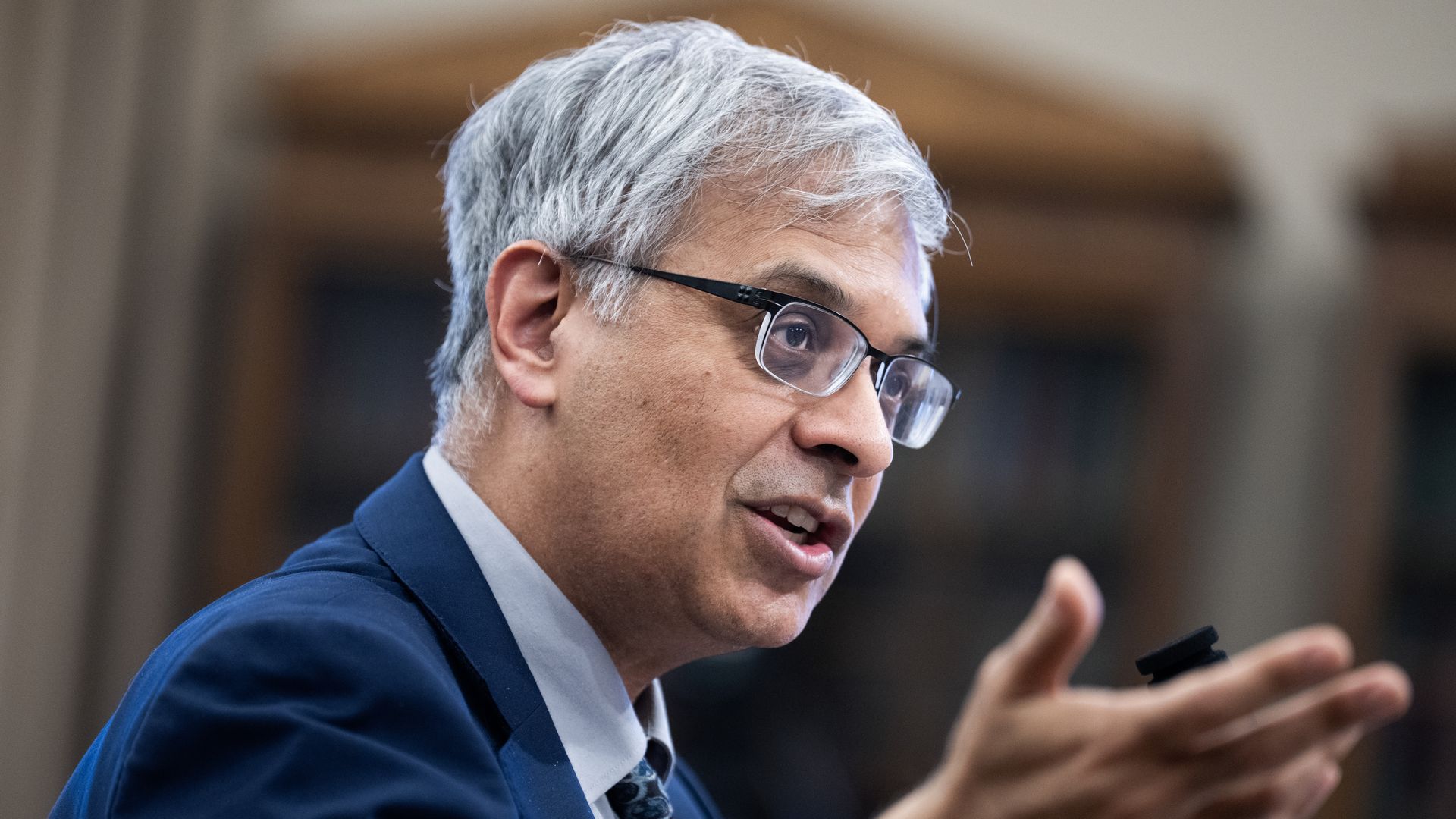
Bhattacharya pledged to spend the agency's full budget by year's end. Photo: Tom Williams/CQ-Roll Call Inc. via Getty Images
Medical research advocates are bracing for a grinding election-year fight over the future of the National Institutes of Health with the expected release of the Trump administration's FY 2027 budget Friday.
Why it matters: Congress rejected the steep 40% cut the administration proposed for NIH last year, but the biomedical research institution continues to feel fallout from canceled grants, layoffs and a slower pace of getting money out the door to academic researchers.
Driving the news: Trump's budget is expected to reheat much of last year's debate, though advocacy groups don't expect it to call for as big a cut.
- "The president has said he wants to make America healthy again. He said he wants to end cancer. These things are only possible if you increase the funding of the NIH," said Russ Paulsen, executive director of United for Cures, a network of patient advocacy groups.
- His organization preemptively released polling this week finding 66% of voters opposed a hypothetical 20% cut to federal medical research funding.
- A spokesperson for the White House budget office did not respond to requests for comment.
Between the lines: Congress the last time around rejected Trump's plans on a bipartisan basis and actually increased the NIH budget by $415 million for 2026, to $48.7 billion.
- But topline numbers are only part of the story. There's also concern about changes to how NIH grants are structured and dispersed.
- The Trump administration has increasingly used "forward funding," providing a multiyear grant in one up-front lump sum, rather than year-by-year.
- That has resulted in the same overall dollar amount going toward fewer projects, because more money is committed in up-front costs. There were 5,564, or 9%, fewer grants in fiscal year 2025 than 2024, according to United for Medical Research.
The intrigue: Grantees are also concerned that grants are going out the door more slowly — and sometimes with more restrictions. The Supreme Court last year let NIH terminate $783 million in awards linked to DEI initiatives.
- The NIH has obligated $5.8 billion in research awards as of March 20, down 34% from the same point in 2024, according to the Association of American Medical Colleges.
- NIH director Jay Bhattacharya tried to calm the waters in House testimony last month, pledging to spend the agency's entire budget by the end of the year.
- "The pace [of grants] has diminished substantially and many researchers are left to wonder how they can plan for the future," Rep. Rosa DeLauro (Conn.), the top Democrat on the House Appropriations Committee, told him.
Bhattacharya responded: "Scientists need not worry; we will get the grants out the door this year."
Yes, but: Delays are still a sensitive matter, especially for lawmakers with big research universities in their districts or states. And patient groups warn of dire consequences.
- "NIH is on the forefront of so much science, but if you delay it by six months, that's six months that somebody has to get sicker," Paulsen said, adding that layoffs at the start of the Trump administration "did leave a mark."
- Republicans in Congress, including the chairs of both chambers' Appropriations Committees, Rep. Tom Cole and Sen. Susan Collins, have long been advocates for NIH funding.
- "It's not a partisan thing," said Eleanor Dehoney, senior vice president at the advocacy group Research!America.
- "We'll be out there fighting hard, and luckily, we do have champions on both sides of the aisle," she added.
