MIT study challenges AI job apocalypse narrative

Add Axios as your preferred source to
see more of our stories on Google.
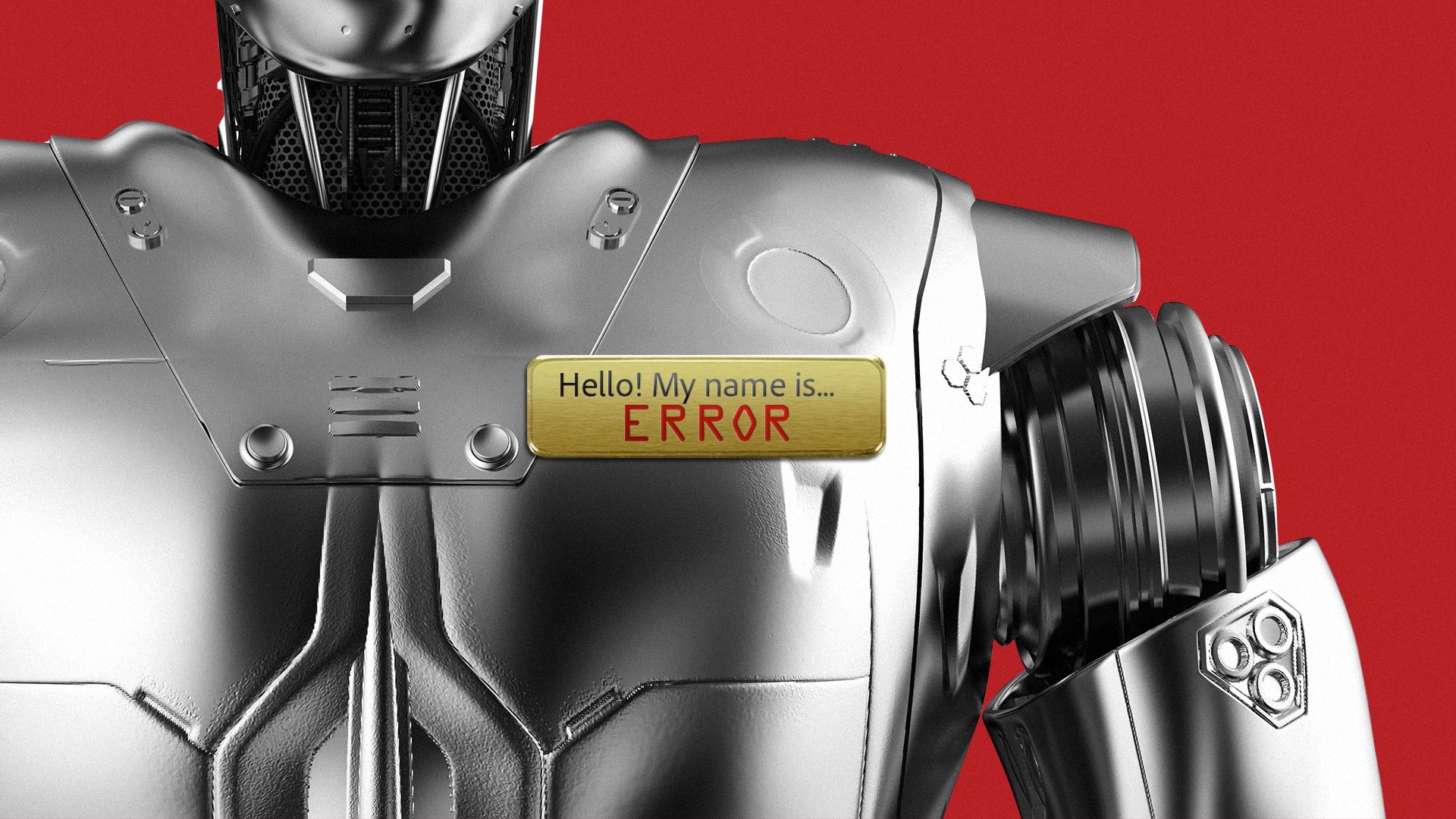
Illustration: Lindsey Bailey/Axios
AI is going to change the way people work, but it's not going to replace them en masse, according to new research from MIT's Computer Science and Artificial Intelligence Laboratory.
Why it matters: This directly pushes back on fear-based narratives coming from some AI leaders and reframes the debate from "when do jobs disappear?" to "how quickly do tasks shift?"
State of play: AI is advancing across the workforce more like a "rising tide" than a "crashing wave" — meaning work will change broadly and gradually, not through sudden job wipeouts in specific sectors, per the study.
How it works: Instead of using benchmarks, the study measures whether AI can produce usable work in real-world settings.
- The MIT researchers identified 11,500 tasks in the U.S. Labor Department's database and created multiple instances of each. They were then run through more than 40 AI models using workplace-style prompts.
- They had workers in those fields evaluate more than 17,000 AI-generated outputs as to whether they were good enough to use without edits.
By the numbers: In 2024, AI models could complete roughly 50% of text-based tasks at a minimally acceptable level, rising to 65% by 2025, per the report.
- At the current pace, AI could handle 80% to 95% of text-based tasks by 2029 — though only at a "good enough" level.
Yes, but: "Good enough" isn't the same as reliable.
- High-quality, error-free work remains much harder and is a gap that continues to trip up real-world deployments.
- Recent examples include Deloitte's error-filled AI-generated report for a Canadian province and Klarna's pullback from AI-led customer service.
Between the lines: The research finds that we are several years away from AI achieving near-perfect success rates, which means workers may have more time to adapt, making the disruption less abrupt.
Zoom in: AI's impact varies by industry but reinforces the need for humans in the loop.
- AI has the lowest success rate (47%) in legal work due to the need for precision, judgment and strategic guidance.
- It has the highest success rate (73%) across installation, maintenance and repair tasks because of technology's ability to automate the administrative pieces of manual work, like troubleshooting and documentation.
- In media, arts and design, AI has a 55% success rate, proving useful for drafting and ideation but lacking in higher-end creative execution, per the report.
- Meanwhile, AI has a 53% success rate for managerial tasks like planning, writing and analysis, but is weak when it comes to coordination, judgment, and decision-making.
What to watch: Integrating AI into workflows has proven to be hard and costly, which continues to slow AI adoption in the workplace.
- March jobs numbers land tomorrow amid rising headlines about AI-linked layoffs.
- In February, AI was cited in 10% of job cuts, but so far, a broad job apocalypse hasn't materialized.
- Some are using the term "AI-washing" to describe the act of blaming cuts on AI to justify broader restructuring. (See Jack Dorsey's explanation for Block layoffs).
The bottom line: The study challenges the idea of a sudden AI-driven employment cliff and instead points to a slower, more uneven reshaping of work.
- For now, AI isn't replacing jobs — it's gradually redefining them.
💭 Eleanor thought bubble: This is helpful context for business leaders and communications teams managing the AI transformation inside companies.
More on Axios:
