Jared Kushner's new fund raises old questions

Add Axios as your preferred source to
see more of our stories on Google.
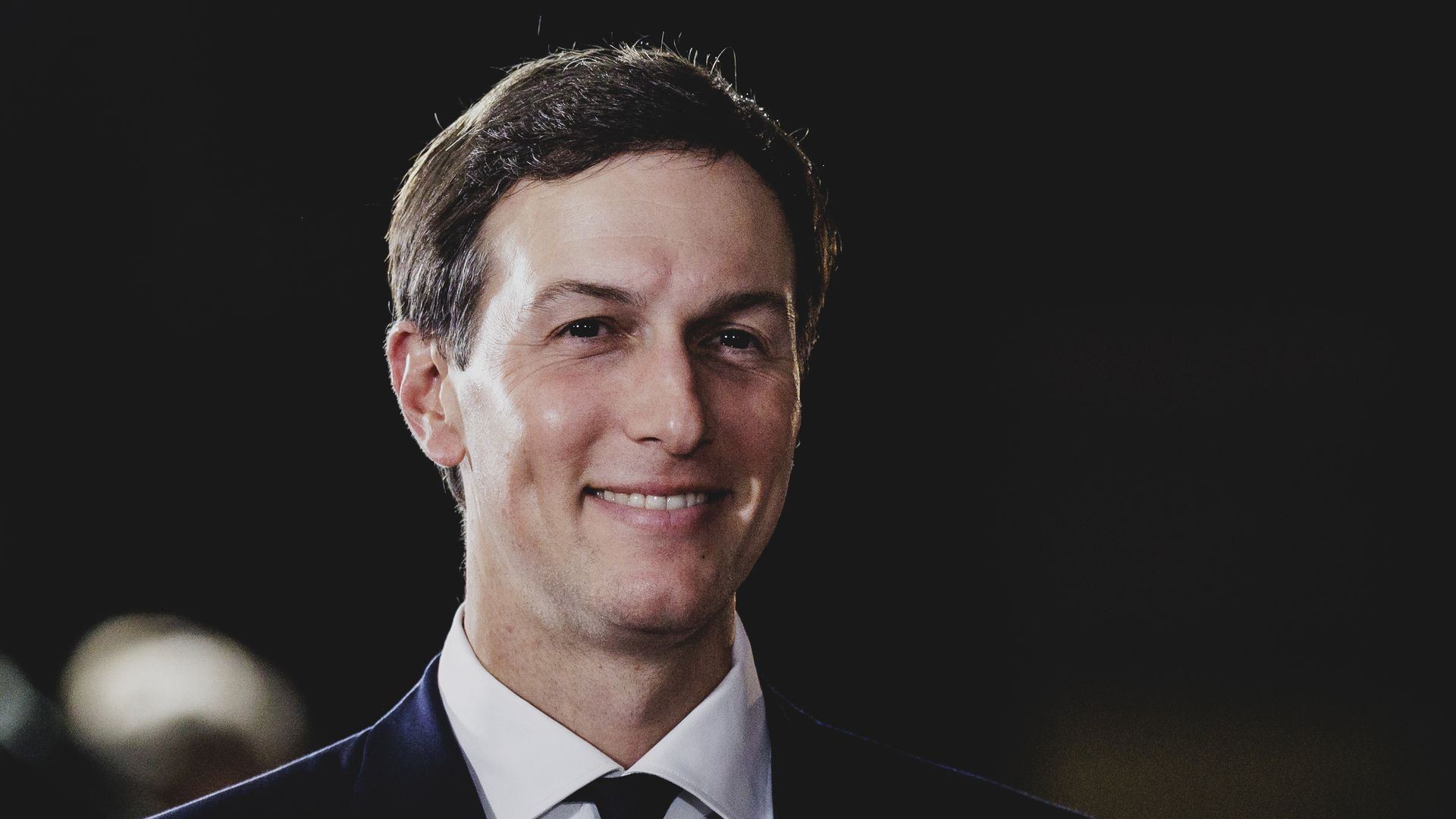
Photo: Florian Gaertner/Photothek via Getty Images
When Jared Kushner formed Affinity Partners in 2021, and then raised most of his first fund from Middle Eastern sovereigns, he took great pains to say that the endeavor was conceived after he left the White House.
- He bristled at suggestions of quid pro quo, but also understood that the whiff was strong enough that it had to be addressed.
- Kushner also insisted that his government days were in the past, even if his father-in-law regained power. Full-time private equity guy in Miami, not a D.C. denizen hoping to boomerang.
But it hasn't quite worked out that way, ressurecting old questions as Affinity begins premarketing its second fund.
- Kushner has spent the vast majority of his time since last summer on geopolitics, as a volunteer at the behest of President Trump. First on Israel/Gaza. Then on Russia/Ukraine. And most recently a trio of meetings with Iran, prior to the war.
Affinity, meanwhile, has been operating as if it's business as usual.
- Its 30-person team now has committed around 80% of Fund 1, including in the pending $55 billion buyout of video game giant Electronic Arts that also includes Saudi Arabia's Public Investment Fund and Silver Lake.
- On that deal, Affinity basically acted as the buy-side banker for lead investor Saudi PIF, which also is Affinity's anchor limited partner.
- Affinity also was part of Paramount's original bid for Warner Bros. Discovery, but later backed out.
Which brings us to Fund 2.
- Affinity isn't formally in market yet, but has begun discussions with Saudi PIF because of contractual "first look" rights, as first reported by the New York Times and confirmed by Axios.
- Its internal performance data includes a 36% gross IRR and 25% net IRR, albeit almost all unrealized.
Those numbers matter more for Affinity than they would for other firms.
- Kushner was mocked by some as a PE neophyte who raised his fund on the back of political connections — accusations that were emboldened by reports that Saudi PIF's investment staff recommended against the commitment but were overruled by Saudi Crown Prince Mohammed bin Salman.
- All of that may have been true, although now he can simply point and say: "Scoreboard."
Kushner is said to still brush aside the idea of conflicts between his side hustle and his day job — even if some of his biggest LPs are directly impacted by what's happening in Iran, and have ongoing reason to remain in Trump's good graces.
- And he may have a legitimate case. Again, scoreboard. Plus, there are plenty of other Wall Street and PE bigs who serve on various presidential councils and the like.
The complications, however, is that Kushner recognized at least the appearance of conflicts back in 2021, which is why he was so adamant about Affinity's founding story.
- One remedy would be to take a leave from Affinity. Another would be to eschew Middle Eastern sovereigns as LPs, save for its obligation to PIF.
- But neither sounds like it's going to happen. Instead, Affinity is left with a situation in which its headlines will get bigger as its fundraising progresses — Miami linked to D.C., regardless of the distance or design.
