Central banks have an oil price problem


Add Axios as your preferred source to
see more of our stories on Google.
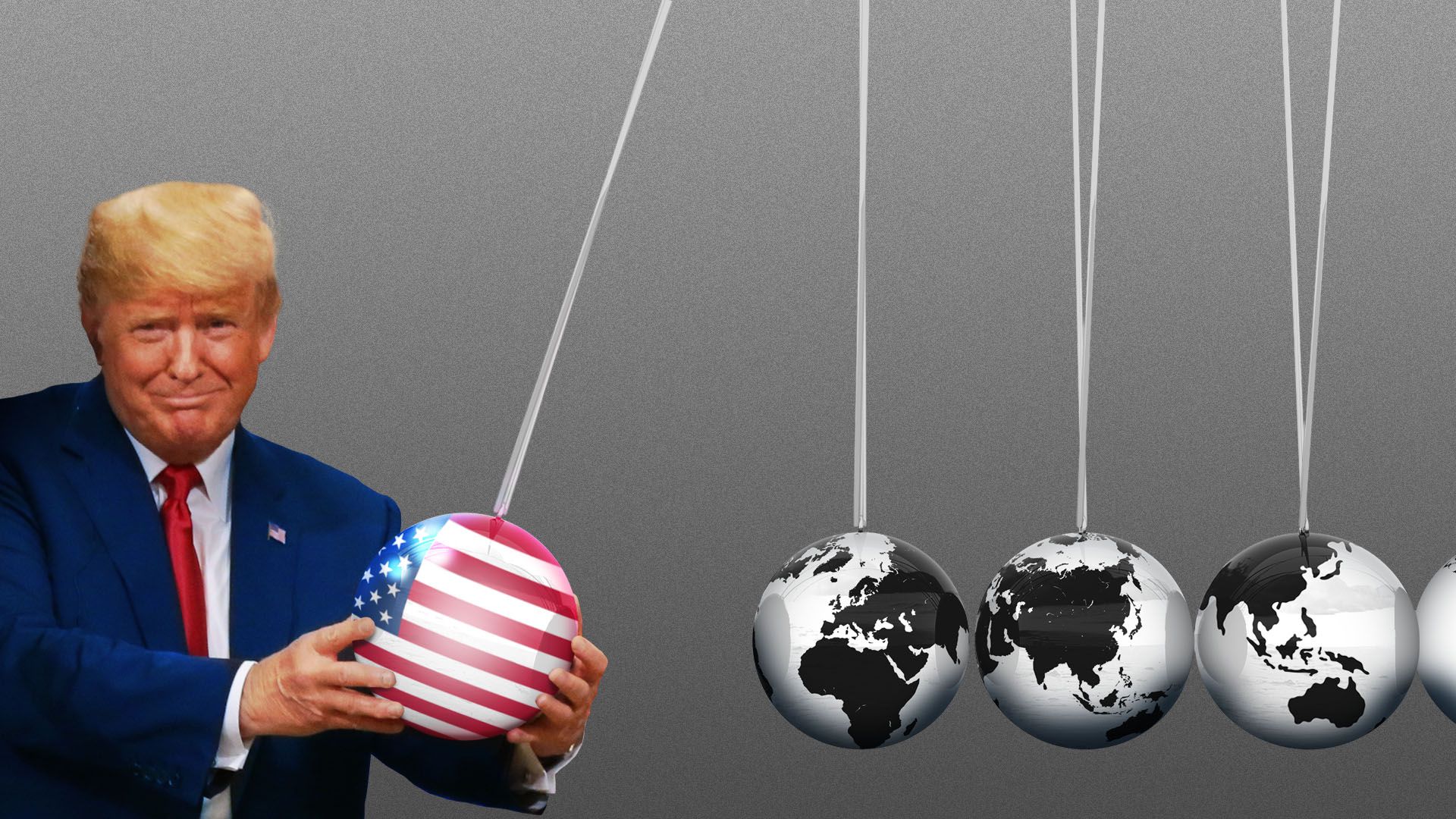
Photo illustration: Sarah Grillo/Axios. Photo: Mikhail Svetlov/Getty Images
President Trump soothed rattled global financial markets Monday afternoon by suggesting that the conflict in Iran will be over "very soon." But the reality of a more fractured world may not dissipate quite so easily.
The big picture: The geopolitical strains unleashed by the U.S. and Israeli attacks on Iran 11 days ago point to an ongoing reset in the politics and economics of the Middle East — with downstream effects for global inflation, interest rates and more.
- Markets are pricing in a relatively temporary surge in energy prices, but they are just the latest in a series of supply shocks that have been the defining feature of the global economy this decade.
- It creates a particular challenge for the Federal Reserve and other central banks. They must decide whether to try to fight supply-shock-driven inflation — or look through it.
State of play: Bond yields are up since the end of February. The 10-year on Tuesday morning was 4.12%, up from 3.96% pre-attack.
- It implies that the potential for an inflationary surge is seen as more significant than the flight-to-quality impulse that often drives U.S. bond yields lower in times of geopolitical strife.
Reality check: The moves in yields and inflation expectations have hardly been the stuff of nightmares.
- Longer-term Treasury yields were higher just a few weeks ago and through most of 2025.
- Treasury markets priced in 2.6% annual inflation over the next five years at Monday's close, up from 2.4% before the attacks but far below the levels seen at the height of the Ukraine invasion four years ago (3.6%).
- Futures markets are now pricing in better-than-even odds (57%) that the Fed will leave interest rates unchanged at its June meeting. A month ago, the CME FedWatch tool put the odds of a rate cut by June at about 75%.
Yes, but: While these markets haven't displayed all-out panic, and U.S. stocks aren't down much, there is reason to think the Fed and other central banks will be reluctant to deliver rate cuts at a moment of elevated inflation.
- Traditional monetary policy theory holds that energy price shocks are one-time events that policymakers should look past.
- But coming after the pandemic supply shocks, the Ukraine war and the U.S.-launched trade war, the world economy is looking more like one in which rolling price shocks are the norm, not the exception.
Between the lines: If confirmed as Fed chair in a timely manner, Kevin Warsh will lead the central bank's June meeting. He will face a knotty tension between trying to deliver the rate cuts he has argued are justified and energy-driven inflation that is likely to reignite between now and then.
What they're saying: "The general tone of central banks will remain hawkish so long as the threat of the war's inflationary implications persist," Thierry Wizman, global FX and rates strategist at Macquarie Group, wrote in a note.
- "We would expect that this more 'hawkish' disposition persists even after hostilities end, largely because the data may continue to point to inflationary pressures," he wrote, and "hence a shift in public expectations."
