Can Jews run AI on Shabbat? Rabbis weigh in

Add Axios as your preferred source to
see more of our stories on Google.
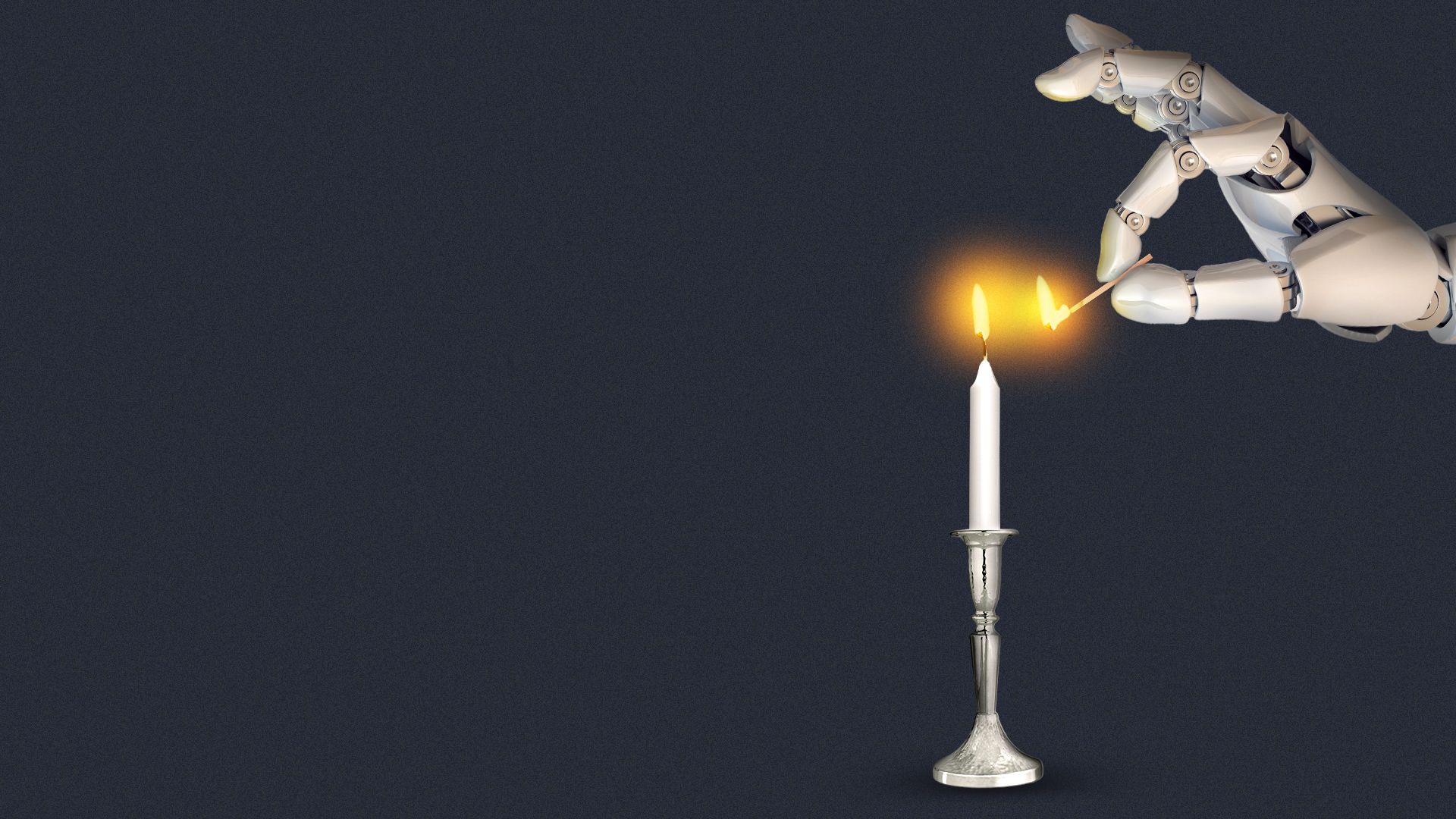
Illustration: Aïda Amer/Axios
Here's a question the Torah doesn't specifically answer: "Can a Jew let his AI agent run over Shabbat if the last prompt was Friday afternoon?"
Why it matters: It's a post that went viral on X, and is one of many new queries that rabbis debate when it comes to reconciling how modern technology fits within millennia-old tradition.
Catch up quick: Shabbat is observed from before sundown Friday to nightfall Saturday.
- Traditionally, it's a holy day when Jews must rest. The Torah even says that Jews shouldn't ask their non-Jewish friends to work, or have their animals work.
- However, they can automate machines to work for them.
- "In the Talmud, they would set some things going before Shabbat," like farmers who would set up channels ahead of Friday nights to direct streams to water their fields — says Daniel Nevins, senior rabbi-elect at New North London Synagogue, author of "Torah and Technology," and a member of the Conservative movement's Committee on Jewish Law and Standards.
"I think the answer is yes" to the question of whether you can run AI on Shabbat, Dani Pattiz, a rabbinical student at Hebrew Union College, the Reform movement's seminary, tells Axios.
- Although she doesn't personally use generative AI, "we know that religious Jews are allowed to set electronic applications up in advance so that they'll do the work."
- Some appliances even have a "Sabbath mode" that keeps them running in a specific way, she points out.
- Nevins hears the argument: AI "is automatic, it's a machine [and] machines don't have to rest on Shabbat," he tells Axios.
The other side: Sometimes Jews avoid something just to keep the spirit of Jewish law — even if it isn't technically against the law.
- Over Passover, Ashkenazi Jews traditionally don't eat rice — not itself forbidden — because medieval rabbis worried wheat could accidentally mix into it.
- Similarly, prompting an AI agent and having it run during Shabbat might not technically go against Jewish law, but it could appear to, which might be enough for an observant Jew to avoid it.
- Also, exceptions might also be made for people with disabilities if avoiding technology creates "unbearable burdens," Nevins says.
The intrigue: If you want to get very existential, ask a rabbi or rabbinical student a follow-up question about AI and personhood. As in: When would you consider AI human enough to require rest on the Sabbath?
- Like Nevins, they might reference the golem, debate whether being born from humans makes us people, and then wonder aloud what potential future technology like artificial wombs might mean for that definition.
- Or, similar to Pattiz, they could focus on whether it's possible to pass on humans' divine spark to artificial intelligence. (She thinks not.)
💭 Carly's thought bubble: Sure, you could ask Claude the same questions.
- But in Judaism, the interpretation of law — especially about what it means to be human — is traditionally a communal, human conversation.
