The products and services likely to surge in price due to the Iran war

Add Axios as your preferred source to
see more of our stories on Google.
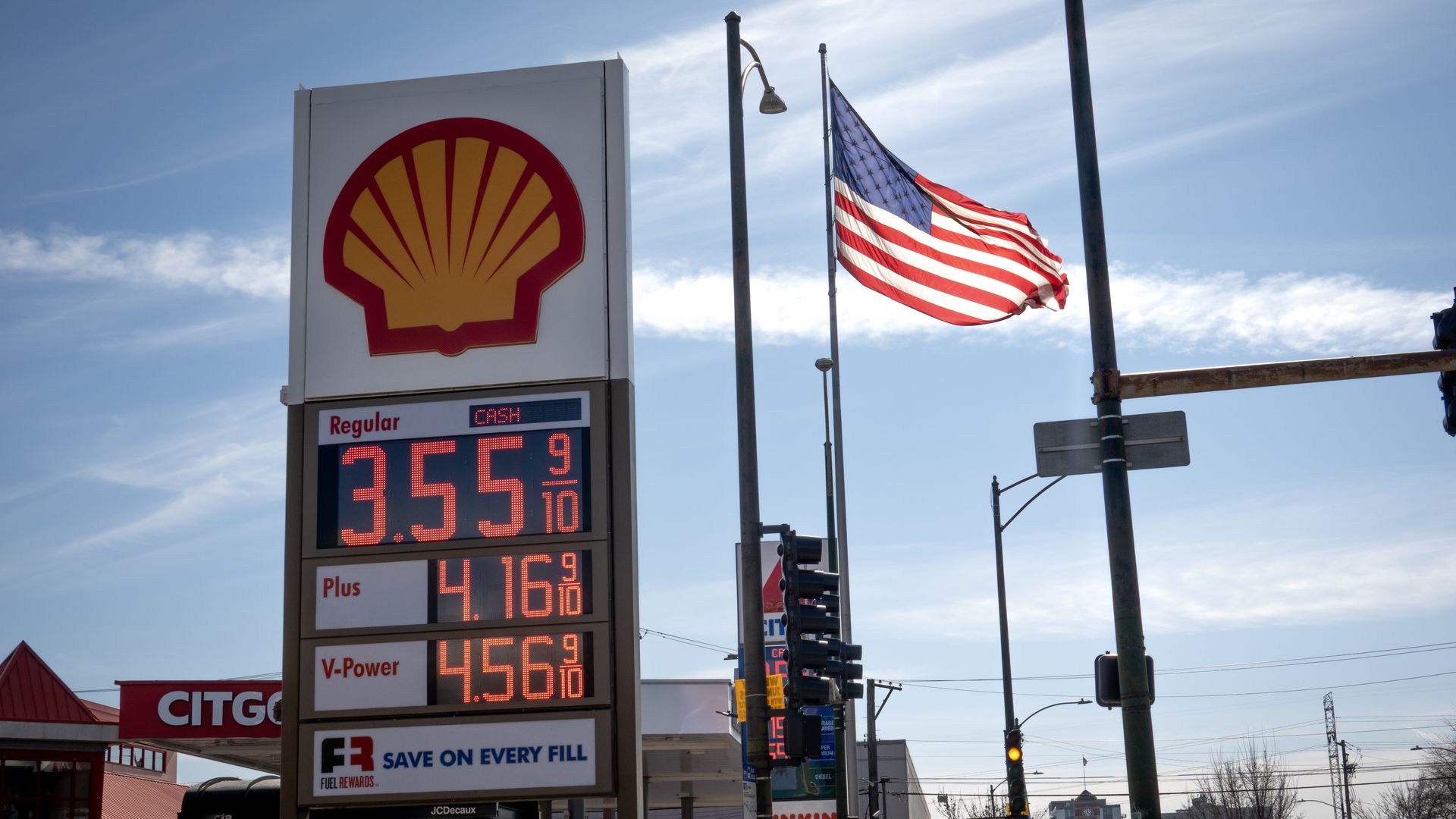
A sign displays prices for gasoline at a station on March 02, 2026 in Chicago, Illinois. Photo: Scott Olson/Getty Images
Americans are likely to feel the impact of President Trump's war with Iran in their wallets.
The big picture: The conflict is pushing up energy prices, and there will likely also be a ripple impact on industries connected to them.
Driving the news: Oil prices, then gas prices, spiked following the U.S. and Israel's strikes on Iran.
- The national average price of unleaded gas hit $3.11 a gallon on Tuesday, an 11-cent increase overnight, according to AAA.
- It was the biggest single-day spike since March 4, 2022, according to GasBuddy analyst Patrick De Haan.
What they're saying: "Energy price shocks have historically been disruptive for households and businesses, and the latest edition, if sustained, would constitute another unhelpful inflation impulse," James McCann, senior economist at Edward Jones, told Axios this week.
What's likely to get more expensive for Americans:
Oil and gas prices
Zoom in: Tom Kloza, a longtime oil analyst now working for Gulf Oil, told Axios that he expects the national average gas price to reach a high of $3.25 to $3.50 a gallon in the coming weeks.
- Prices will jump even higher in the western U.S., Kloza predicted.
Catch up quick: Gas prices have been a deflationary tailwind for Trump, whose economy is otherwise unpopular among Americans dealing with a widespread affordability crisis.
Travel
State of play: Travel is also likely to get more expensive.
- European jet fuel prices surged to multi-year highs as well on Tuesday.
Yes, but: Some airlines have hedged against surges in fuel prices, purchasing fuel at pre-set prices months or years in advance.
- Singapore Airlines said in November, for instance, that it was hedging fuel for "up to five years."
Thousands of flights were canceled in the wake of the U.S. and Israel's attacks.
- Standard travel policies exclude coverage for war and military-related disruptions, travel experts told CNBC, which means those with suspended trips may not even get reimbursed.
Consumer goods relying on oil
Zoom out: Products that rely on oil — namely, plastics — are likely to get more expensive as well.
- "Plastic is based around oil or natural gas, heating, air-conditioning, cooking, all that stuff... gets more expensive when there's a shortage or when supplies are constrained," Jim Krane, energy research fellow and Middle East specialist at Rice University's Baker Institute, told Time.
What we're watching: U.S. combat operations in Iran, following coordinated Israeli strikes, caused a fire at a Dubai port, per the Dubai Media Office.
- The port handles about 65% of the Gulf Cooperation Council's (GCC) polymer exports and 33% of its total petrochemical exports, according to port owner and operator DP World.
- Polymers are used to make clothing, cookware, medical equipment and more. Petrochemicals are used in soap, detergents and fertilizers.
By the numbers: About 33% of the world's fertilizers, including sulfur and ammonia, travel through the Strait of Hormuz, a waterway on Iran's southern coast, according to the trade analysis firm Kpler.
- But a senior commander for Iran's Revolutionary Guard said that it would attack any ship trying to pass through the strait, per Iranian state media.
- "Morocco notably relies on sulfur and ammonia from the Middle East, which are crucial for producing phosphate fertilizers for the export market," the Kpler researchers note. "This dependency has the potential to disrupt the global phosphate market."
Shipping
Between the lines: One-fifth of the world's oil is transported through the Strait of Hormuz.
- It is also a key route for other commodities, such as aluminum and sugar.
- Diverted ships will likely have to reroute, causing major delays.
- "Raw materials arrive late. Components don't show up on schedule. Manufacturers feel it first, and consumers feel it soon after in the form of delays, tighter inventories, and rising prices," Mahmoud Abuwasel, managing partner at geopolicy firm Wasel & Wasel, told NBC News.
Adam Posen, president of the Peterson Institute for International Economics, told Marketplace that consumers will likely feel higher shipping costs and elevated insurance premiums in a few months.
The intrigue: Companies were already planning to raise prices this year because of tariffs.
- "This gives them further cover to do it," Posen said.
