Iran conflict spurs early oil price surge

Add Axios as your preferred source to
see more of our stories on Google.
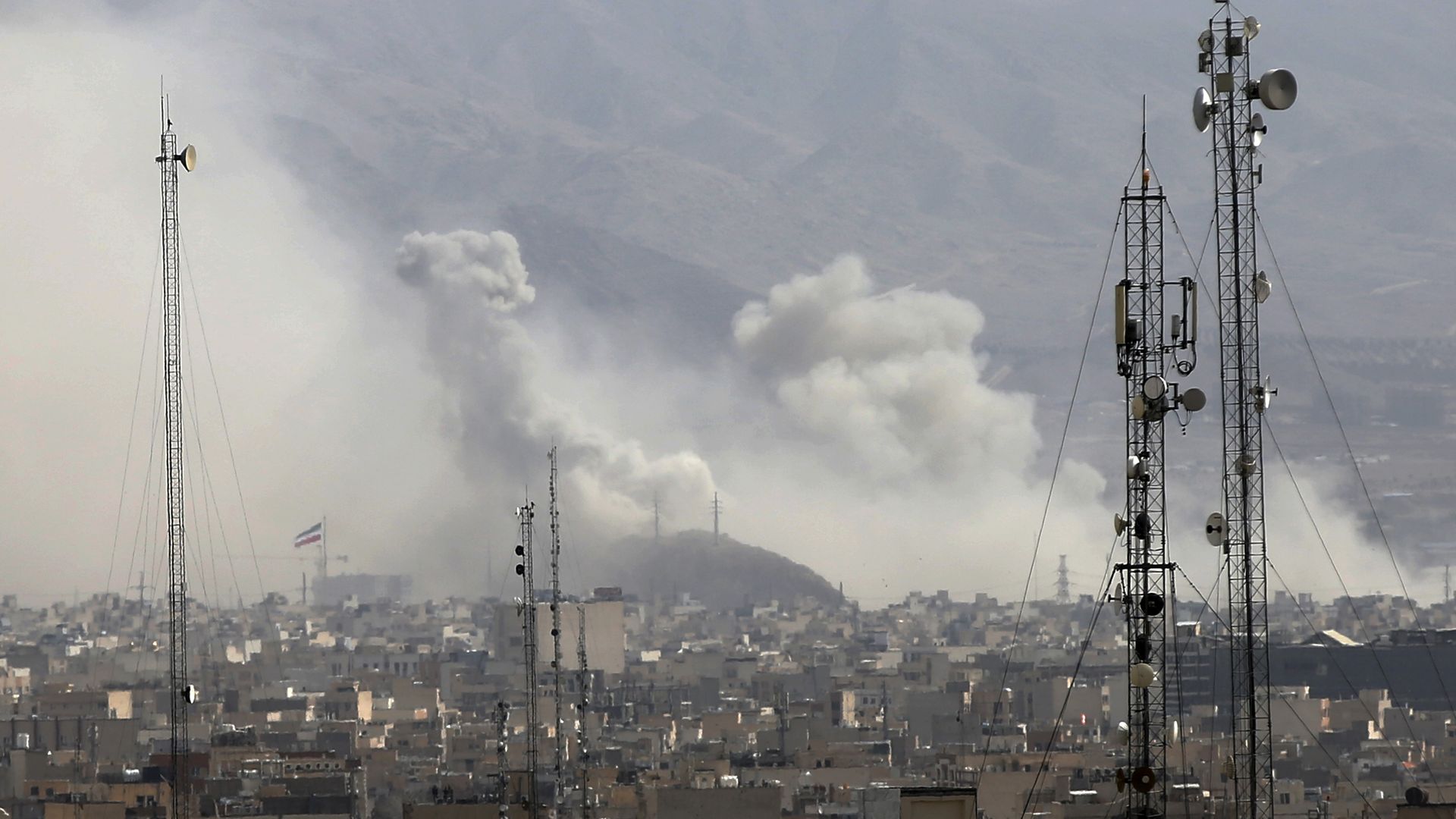
Smoke rises over Tehran after a second wave of Israeli airstrikes Saturday. Photo: Fatemeh Bahrami/Anadolu via Getty Images
Crude oil prices soared to their highest level in slightly over a year in early trading in Asian markets Sunday night.
Why it matters: The surge from the Asia markets' opening is an early concrete sign that prices at the pump could go up because of supply disruptions from the strikes against Iran.
- The surge is likely to push up U.S. gasoline prices, though the impact will depend on the evolving market response as well as the scope and duration of the conflict.
My thought bubble: The early increase — substantial, but short of some predictions — signals that traders don't see anything approaching a worst-case scenario that badly damages regional oil producing and exporting infrastructure.
Driving the news: As of 8:10 p.m. Eastern, the global benchmark Brent crude was trading at $78.26 per barrel — up over 7% from Friday's close.
- They initially had opened at over $81 a barrel before declining.
The big picture: The duration of the conflict, which President Trump on Sunday said potentially could span up to four weeks, will affect the market.
- Ships are already avoiding the Strait of Hormuz, the narrow waterway abutting Iran that handles about a fourth of the world's seaborne oil trade, for several reasons.
- Even without a physical blockade and closure, insurance rates are skyrocketing for tankers moving crude and petroleum products, analysts note.
- And there have been reports of attacks on tankers near the strait.
What they're saying: Oil analyst Ellen Wald said that if ships avoid entering the strait for weeks, it could further boost prices.
- "If we're looking at this kind of level of military activity in the Gulf for four weeks, I think we will probably have some serious problems, particularly in Asia, for availability of crude oil and oil products," she told Axios.
- This could bring "serious price hikes and potentially even shortages in Asian countries," she said.
- And in a global market, even though the U.S. has plenty of oil, it will affect gasoline prices, she noted.
What we're watching: To date, there aren't reports of U.S. or Israeli attacks on Iran's oil producing or export infrastructure. There also haven't been reports that Iran's strikes on other Gulf countries have targeted oil sites.
- But prices could easily spike further if that changes — and the odds rise as the conflict continues, said oil analyst Clayton Seigle of the Center for Strategic & International Studies.
- "The longer this thing goes on, the more likely it is that either or both sides in this conflict, the United States and Israel on one hand, and the Iranians on the other hand, will play their their energy leverage cards in order to try to get an advantage," he told Axios.
Editor's note: This story has been updated with additional reporting.
