Five early conclusions from Trump's "endangerment" climate move

Add Axios as your preferred source to
see more of our stories on Google.
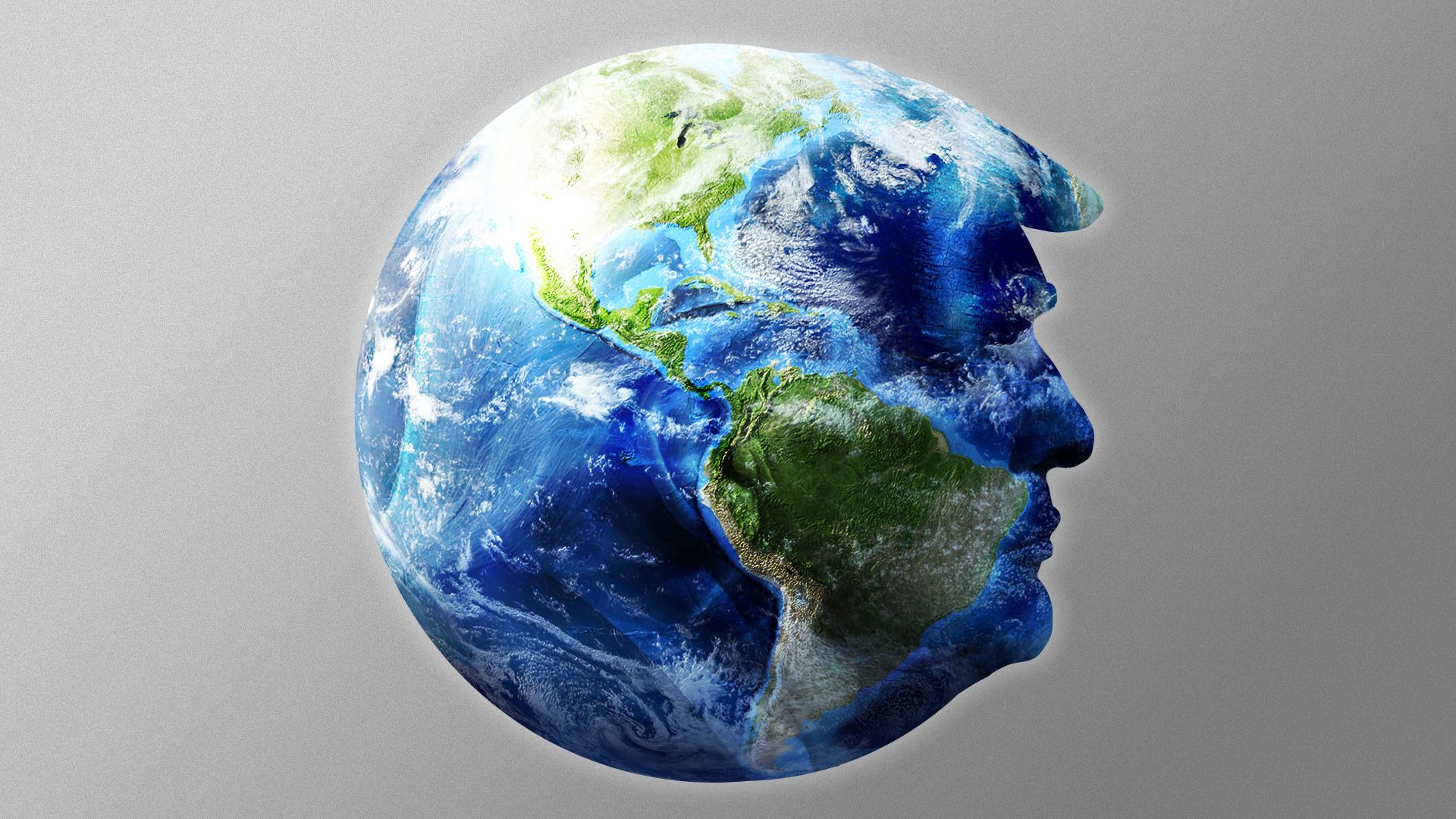
Illustration: Sarah Grillo/Axios
The White House's gutting of the legal foundation of climate regs will spill into U.S. elections, global diplomacy, C-suites, and litigation that's on a collision course with the Supreme Court.
Catch up quick: On the off-off chance you missed it, EPA on Thursday repealed the "endangerment finding" — the formal 2009 conclusion that greenhouse gases threaten humans.
- The move, if it stands, makes it much tougher for a future president to impose various emissions rules that this White House is already abandoning.
- EPA is also eliminating vehicle CO2 standards, which rest on the finding.
Here are five early takeaways ...
1. It tests how 2028 hopefuls will approach climate. The response from California Gov. Gavin Newsom (D) hit Trump but also looked past him as Newsom preps a 2028 run.
- "This decision betrays the American people and cements the Republican Party's status as the pro-pollution party," he said in a statement (emphasis added).
- And look for other possible 2028 candidates to emphasize energy costs alongside climate, like this from Sen. Ruben Gallego (D), or far ahead of it, like Rahm Emanuel.
2. The legal battle will get underway fast, and early contours are emerging already. Environmental groups and Newsom have vowed to sue.
- EPA Administrator Lee Zeldin, at the White House, said the Supreme Court established "clear precedent" in 2022 and 2024 rulings that support nixing the finding and vehicle rules.
- Those rulings — in West Virginia v. EPA and Loper Bright Enterprises v. Raimondo — together limit federal agencies' power to impose sweeping regulations without clear congressional blessing.
- Analysts expect litigation over the repeal to reach the Supreme Court.
3. The money battle is already underway, as rising power costs are way above rising temps on the political radar.
- EPA estimates the repeal and related scuttling of tailpipe CO2 rules will create $1.3 trillion in long-term savings for Americans, mostly from the reduced costs for new vehicles.
- But the Environmental Defense Fund projects up to several trillion dollars in long-term costs. Think more fuel needed for less-efficient cars, health effects from soot that's emitted alongside CO2, and damage from climate change.
4. It's a mixed bag for industrial C-suites. The Alliance for Automotive Innovation, an automaker trade group, said Biden-era vehicle standards were "unachievable."
- But the Edison Electric Institute, a major utility group, has previously said it fears a patchwork of state power-sector requirements if the finding goes away.
- And while these court battles play out — and maybe longer — major industries still face all kinds of regulatory uncertainty, with long odds of Congress stepping in to clear things up for the foreseeable future.
5. It might have global ripple effects. Sure, the Trump administration has already backed away from the Paris Agreement. But other nations track other U.S. steps, too.
- "I would anticipate that it sends a signal to other nations to do less, and that we will see some — probably quietly, I don't think they would necessarily announce this — display less ambition in cutting their emissions and acting on climate change," said Alice Hill, a senior energy and environment fellow at the Council on Foreign Relations.
What we're watching: As of this writing, the text of the decision remained under wraps.
Go deeper: Check out our earlier coverage this week.
Sign up here for Axios' Future of Energy newsletter.
