IOC's protest policy takes center stage at Olympic Games

Add Axios as your preferred source to
see more of our stories on Google.
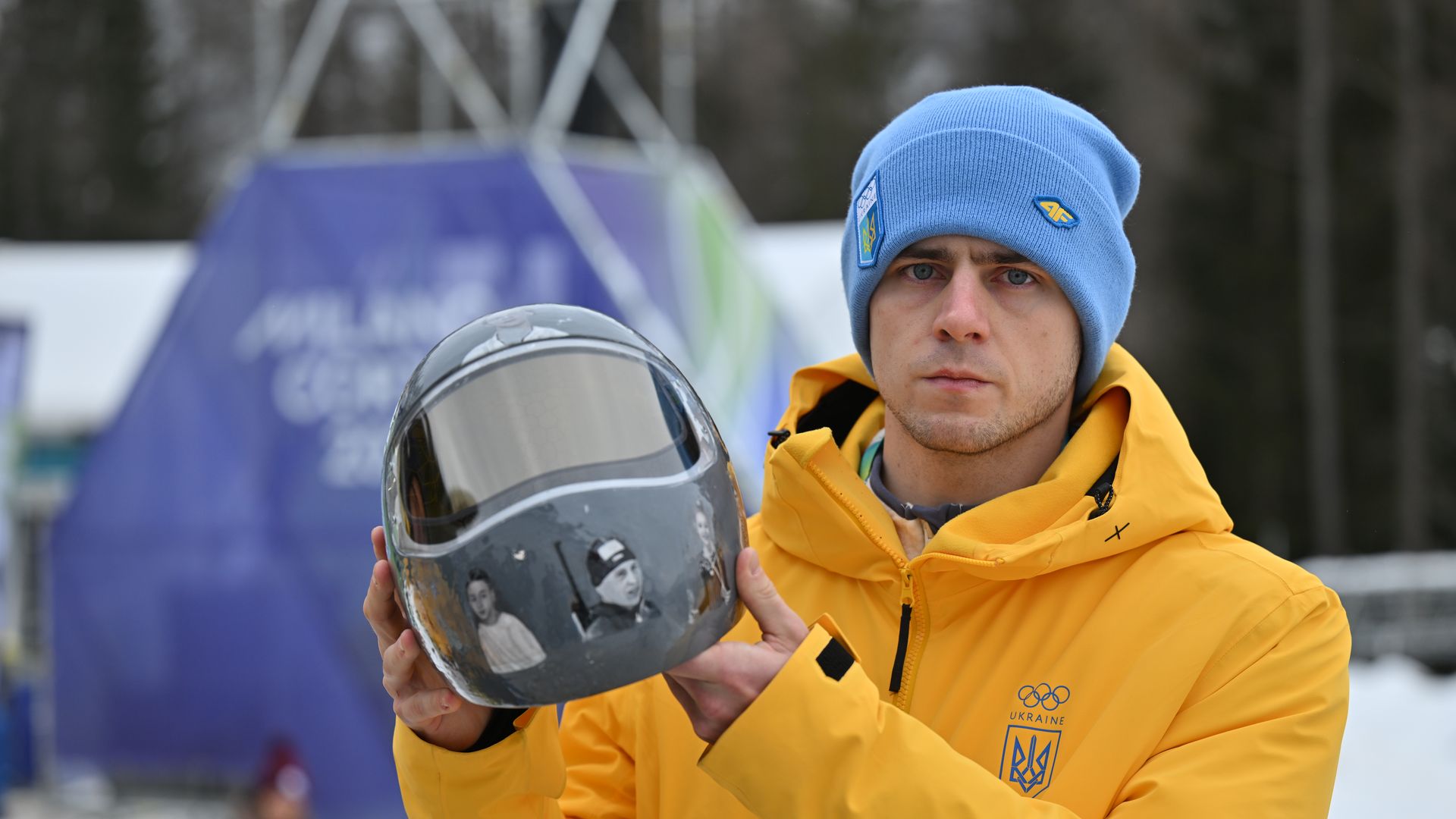
Ukraine skeleton athlete Vladislav Heraskevych shows his helmet on Feb. 12 at the Olympic Games. Photo: Robert Michael/Picture Alliance/Getty Images
The International Olympic Committee's protest guidelines are reigniting debate over how far Olympians can go in making political statements at the Games after a Ukrainian athlete was disqualified for wearing a helmet honoring athletes killed in the Russia-Ukraine war.
Why it matters: The IOC's decision underscores the balancing act the organization must strike between enforcing political neutrality and navigating athletes' freedom of expression about global conflicts and politics.
- Vladyslav Heraskevych, the Ukrainian skeleton who was suspended Thursday, called the IOC's decision "totally wrong," adding that "others in almost equal situations were treated differently and didn't face any sanctions."
Context: Political protests have been restricted since 1975 under Rule 50 of the Olympic Charter, which states that "Every kind of demonstration or propaganda, whether political, religious or racial, in the Olympic areas is forbidden."
- Rule 50 was instated after the 1968 Olympic Games, where U.S. track and field athletes John Carlos and Tommie Smith raised a gloved fist while standing on the Olympic podium. They were immediately suspended.
The latest version of Rule 50 guidelines provides a "non-exhaustive" list of actions defined as protest rather than political expression.
- Those include displaying political messages on signs or clothing, making political gestures such as kneeling and refusing to follow ceremony protocols.
- Protests and demonstrations are prohibited at all Olympic venues, including on the field of play, in the Olympic Village and during medal and other official ceremonies, per the guidelines.
- Assuming athletes' form of protest complies with local legislation in the nation where the Games are held, they are permitted to voice opinions during press conferences and interviews, team meetings and via traditional or social media. The same rules apply to trainers, coaches and officials.
Yes, but: Heraskevych accused the IOC of having "double standards" in disqualifying him.
- He cited an Israeli skeleton athlete, Jared Firestone, who said in an Instagram video that he would wear a kippah to the opening ceremony with the names of the 11 Israeli athletes and coaches killed by terrorists at the 1972 Munich Olympics written on it.
- However, Axios found no images or videos of Firestone wearing the kippah in the media it reviewed, although Firestone was also wearing a beanie that may have covered it.
- Heraskevych also noted that an Italian snowboarder wasn't removed for displaying a Russian flag on his helmet, despite rules that have prohibited Russian athletes from wearing the flag at the Olympics since the invasion of Ukraine in 2022, and pointed to statements by American Olympians in media appearances against some Trump administration policies.
The other side: Michael Payne, who served as the head of the IOC marketing team for many years, said the organization is stuck "between a rock and a hard place."
- "No matter how sympathetic IOC (& everyone) is to the Ukrainian cause, let one message slip through & you potentially open up Pandora's box & set precedent," he said on X.
- IOC spokesperson Mark Adams said, "There are 130 conflicts going on in the world. We cannot have 130 different conflicts featured, however terrible they are, during the field of play, during the actual competition."
Go deeper: 2026 Olympians use global stage to criticize Trump administration
