Inside Qatar's bid for AI sovereignty

Add Axios as your preferred source to
see more of our stories on Google.
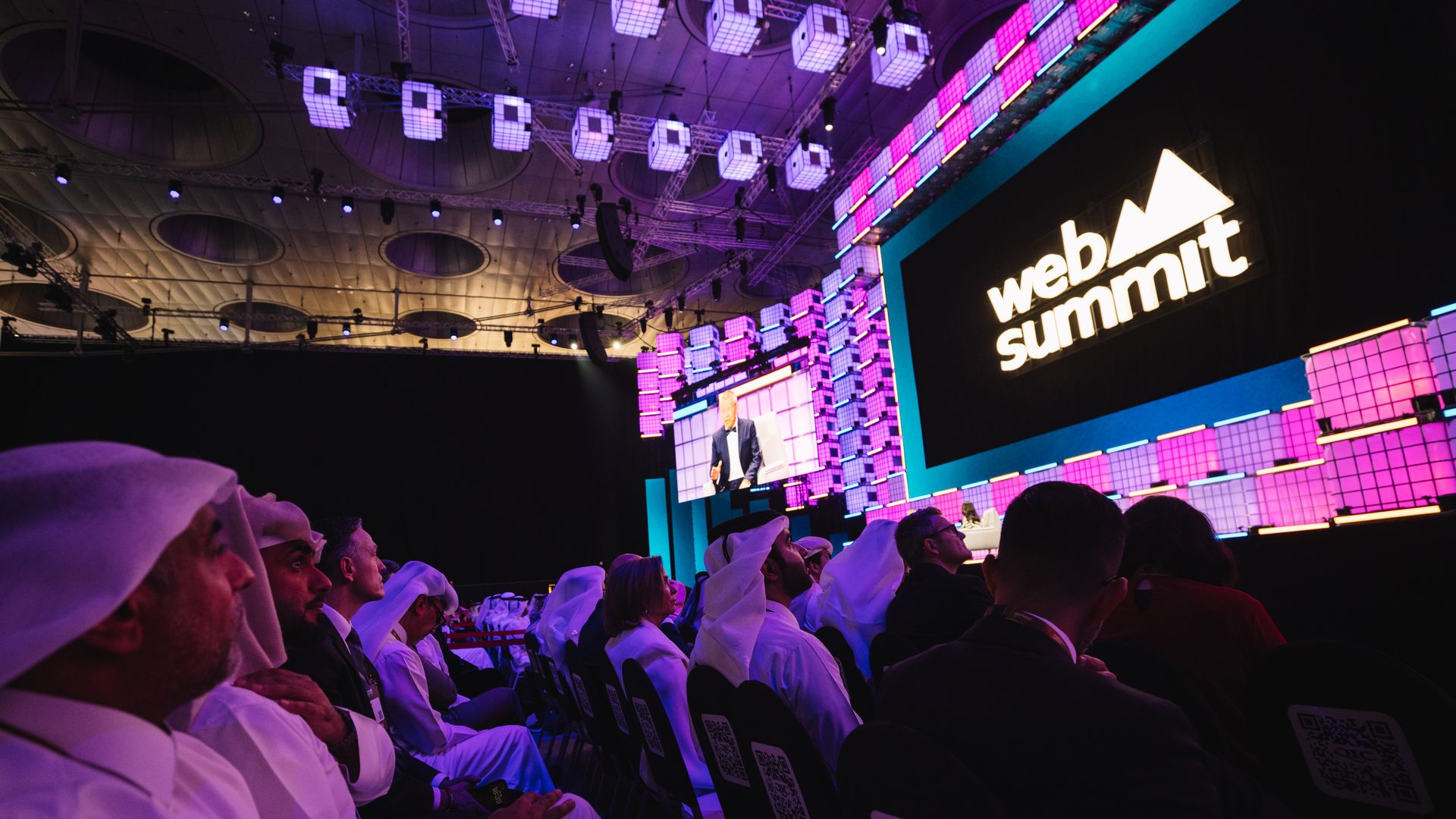
Opening night of Web Summit Qatar 2026 at the Doha Exhibition and Convention Center. Photo: Courtesy of Web Summit Qatar
DOHA, Qatar — As foreign investment pours into Qatar's tech sector, Doha is trying to harness the AI boom without giving up control.
Why it matters: Gulf states are making major plays to become AI hubs, and Qatar is betting that sovereignty over data, infrastructure and models will be key.
Driving the news: U.S. tech giants including Meta, Microsoft and Google were among more than 1,000 companies at Web Summit Qatar this week.
- While Doha is courting global tech giants, leaders spent the week emphasizing local ownership of data, infrastructure and governance — often referred to as "AI sovereignty."
What they're saying: "We're not just importing talent. We have homegrown talent," Namek Zu'bi, founder of venture capital firm Silicon Badia, said in a panel interview with Axios.
- Zu'bi and his partners from BECO Capital and Invisible Technologies previewed an AI services company for the Gulf Cooperation Council to automate workflows, noting "the majority of the the team is Arab, which is important."
Between the lines: One way Doha is looking to position itself as a global leader is in talent and workforce development.
- Universities showcased student and alumni startups across AI, fintech, agriculture and recruitment.
The intrigue: Chip R&D firm Imec is especially interested in Qatar, global partnerships vice president Max Mirgoli said in an interview on the sidelines of Web Summit.
- "Why here and not Riyadh? Education City. They built this cocoon for talented students," Mirgoli said, citing Qatar's academic ecosystem.
- Imec is launching a regional R&D hub in Qatar early this year and aims to reach 100 employees by 2030.
Yes, but: Given how the global AI ecosystem works, even efforts to assert AI sovereignty still depend on foreign chips, infrastructure and models.
The big picture: Qatar's focus on developing its workforce and STEM education comes as President Trump makes it harder and more expensive for foreign talent to obtain H-1B visas.
- "Quite honestly speaking, immigration is no longer moving in the U.S." Mirgoli said. "... If the flavor of the week is lemon, we should make lemonade."
