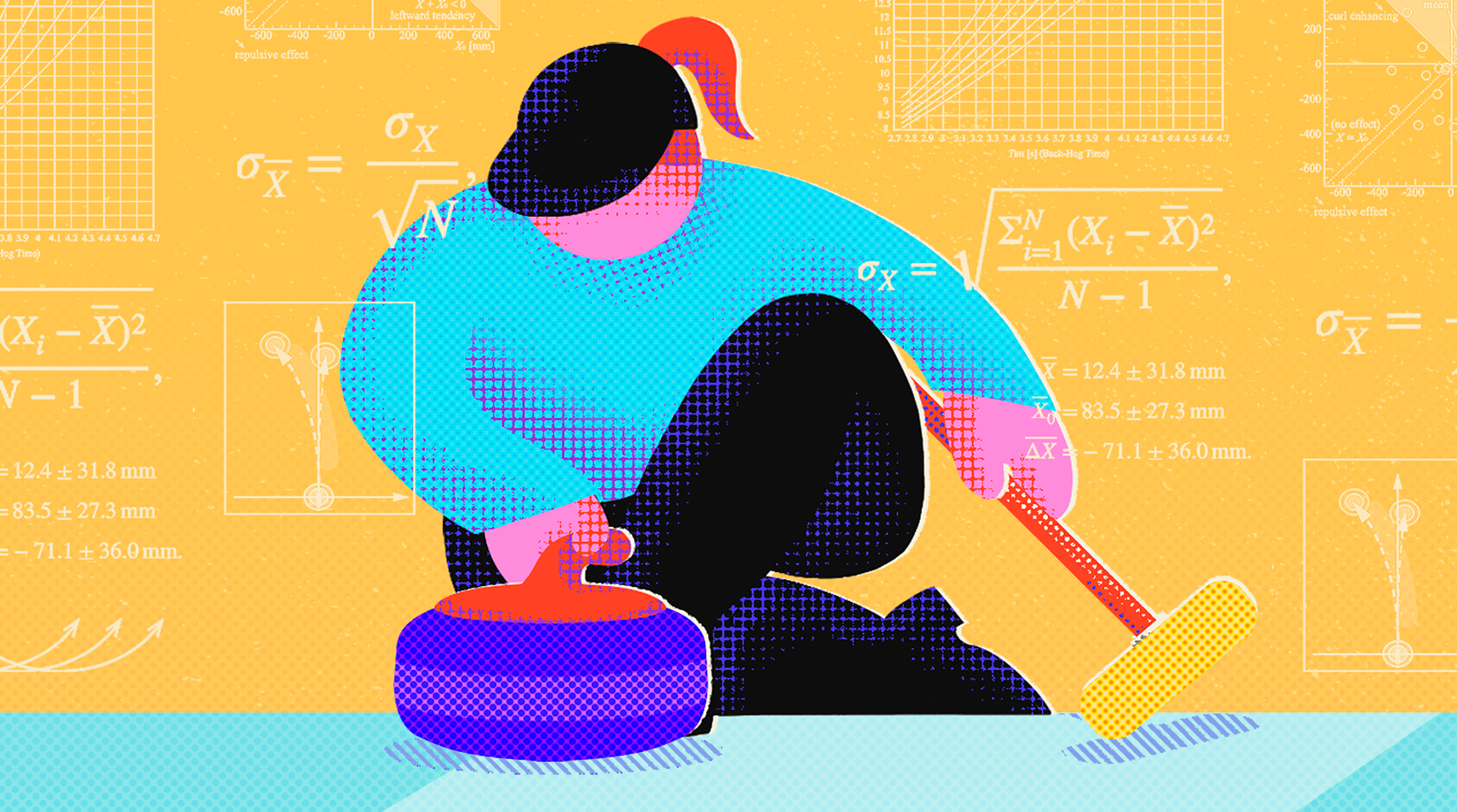
Olympic curling: The science behind sweeping

Add Axios as your preferred source to
see more of our stories on Google.
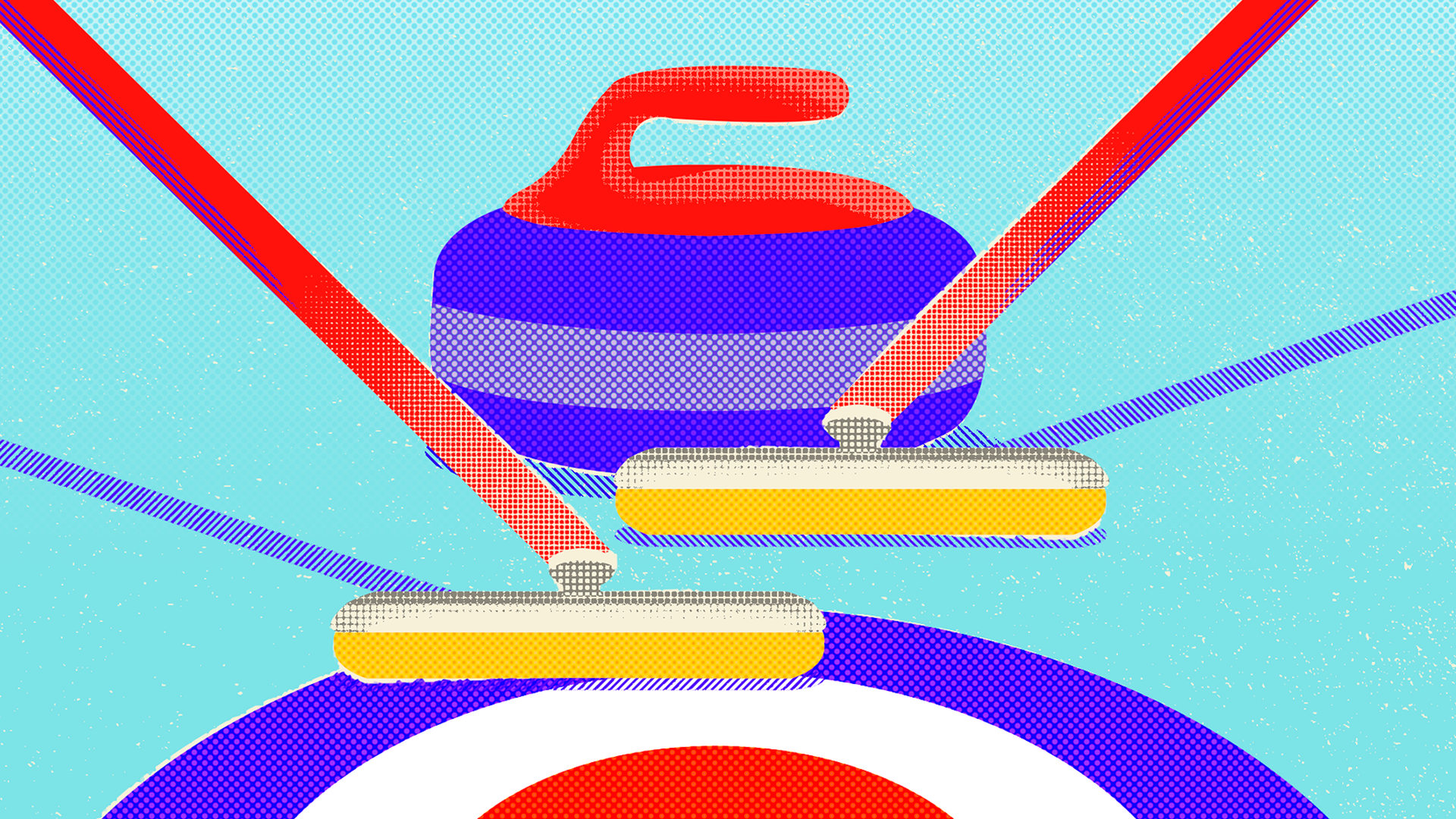
Illustration: Allie Carl/Axios
Like shuffleboard or bowling, curling involves throwing an object toward a target for points. But there's one big difference: Players can influence shots after they're thrown. That's where sweeping comes in.
Why it matters: The sweeping in curling might look simple, but it's a real-time mix of strategy, physics and athleticism in a game that can be decided by a matter of inches.
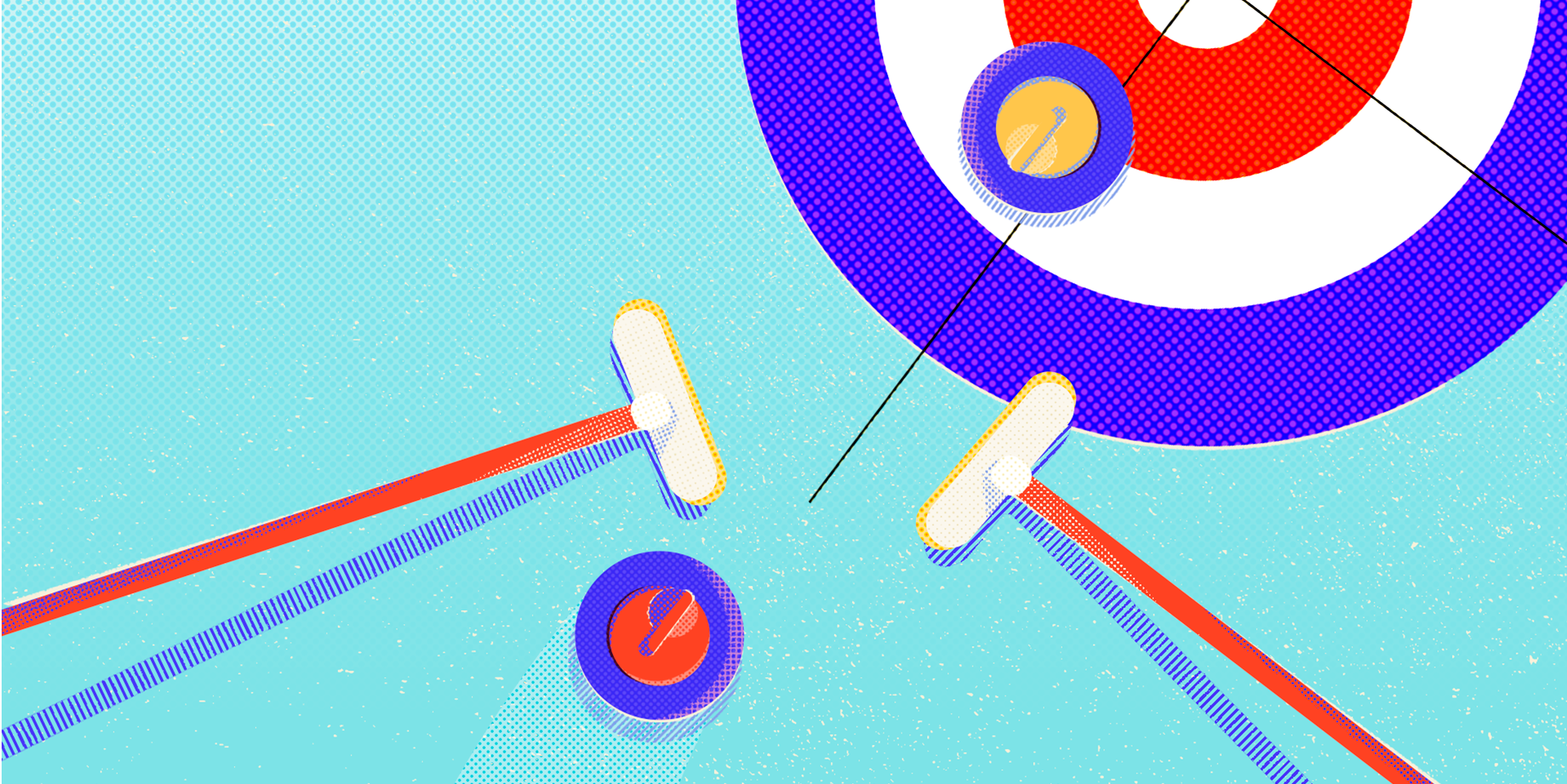
Catch up quick: Curling is the Winter Olympics sport in which teams throw 42-pound granite "rocks" toward the "house" (target) on ice that's been sprayed with water — this gives it a pebbly surface.
- The name comes from the way the rock arcs as it moves down the ice — a phenomenon that's inspired dozens of scientific papers.
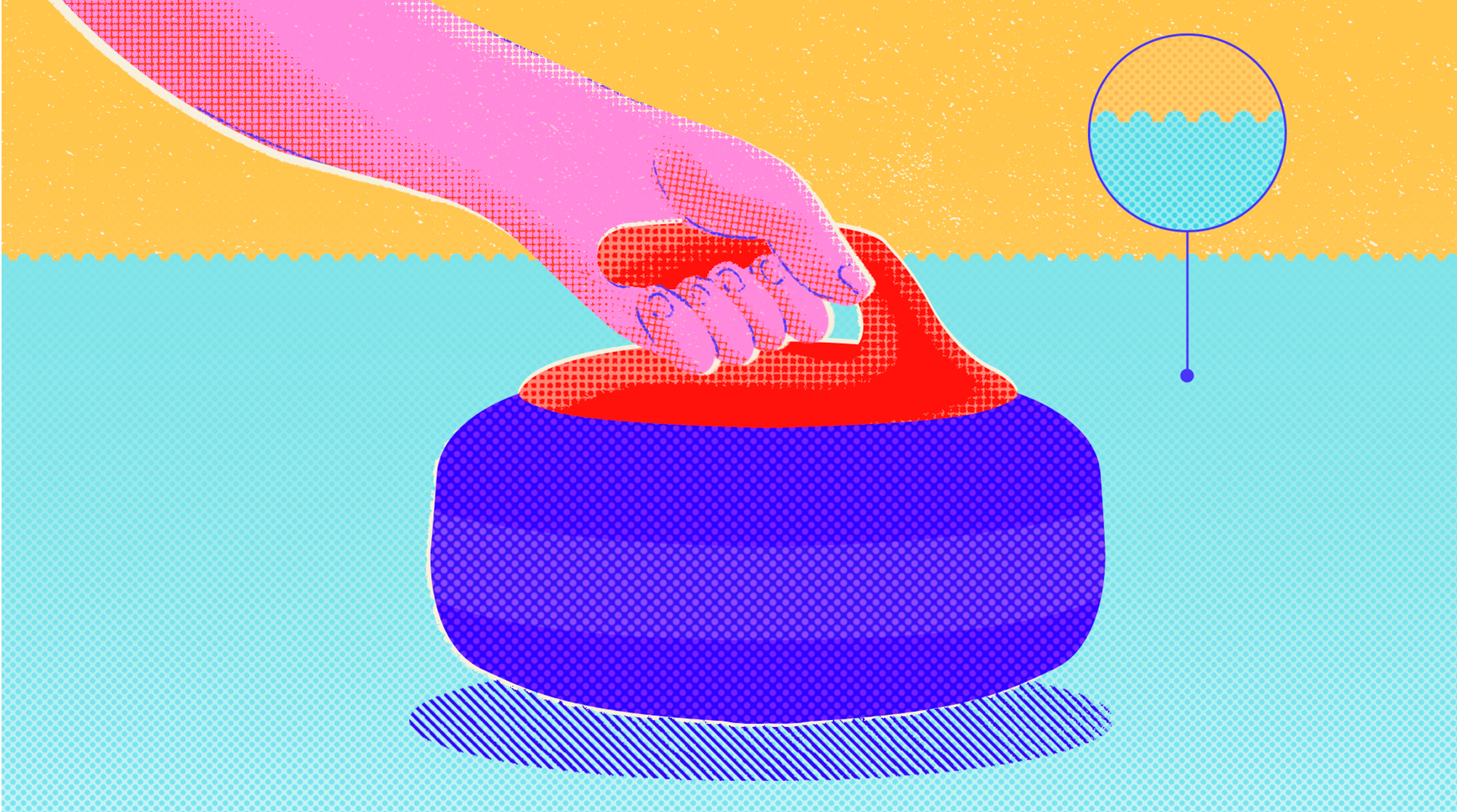
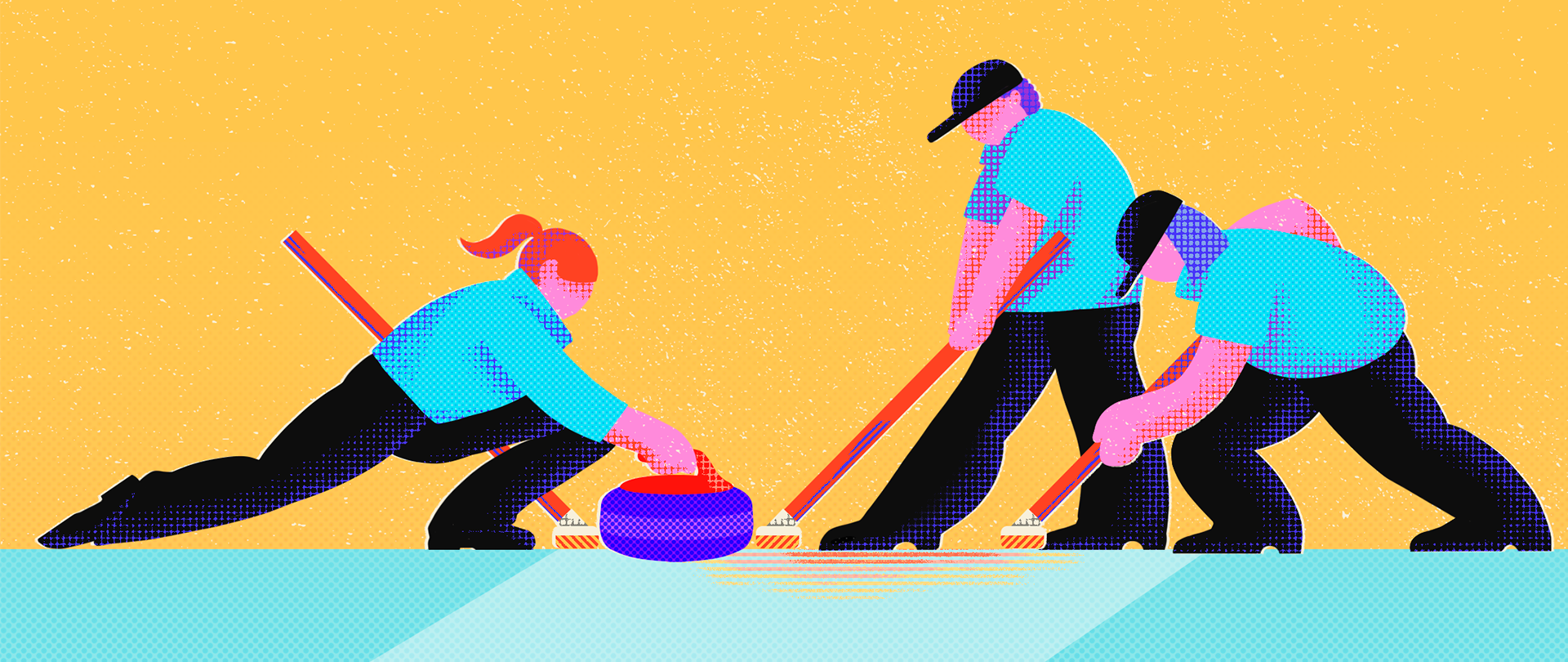
How it works: On each team, a thrower lunges and tosses the rock with spin. Then, sweepers brush the ice to influence a rock's path after it's thrown.
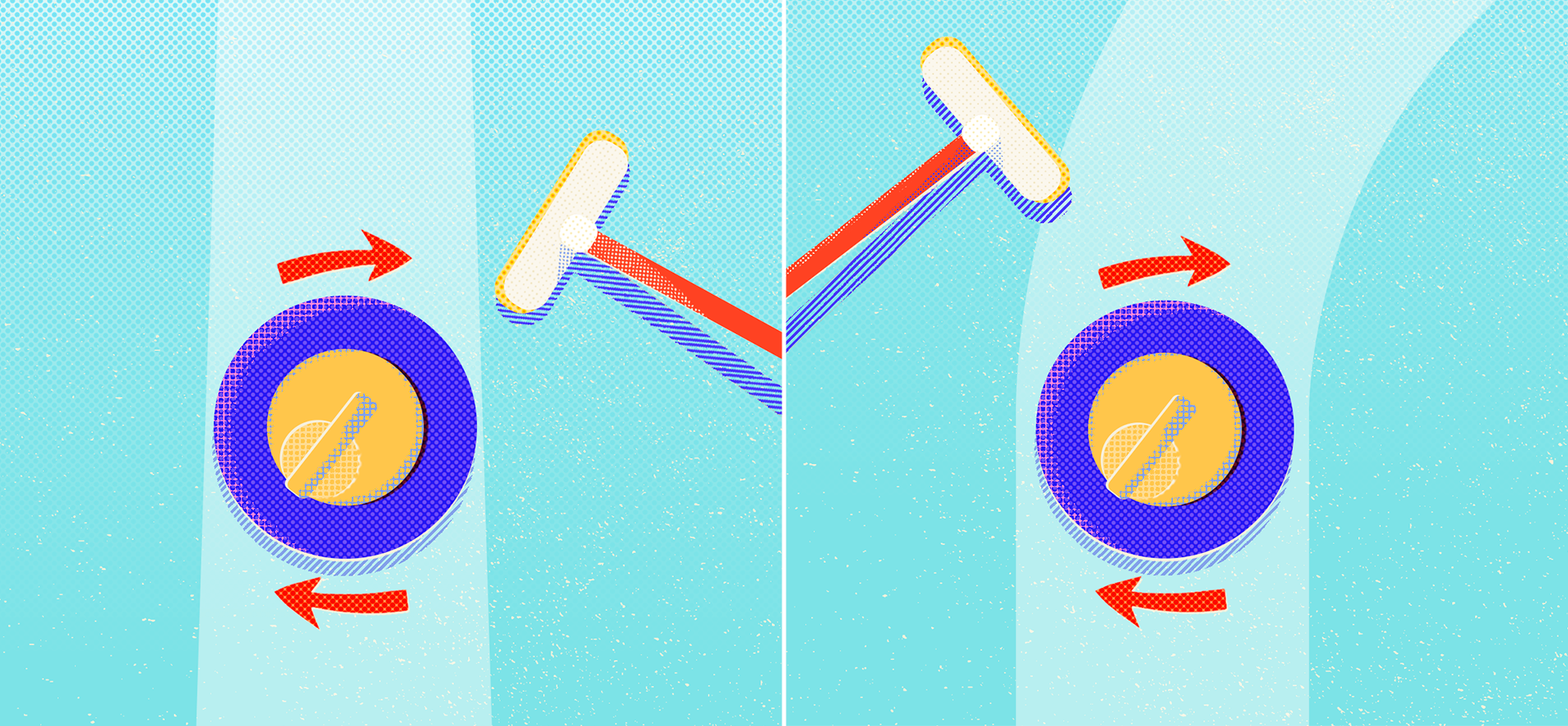
Zoom in: The direction a rock is turned as it's thrown (clockwise or counterclockwise) determines its curl direction (right or left), and sweeping ahead of it extends its distance on the ice.
- Sweeping in front of the rock not only moves debris out of the way, but is thought to warm, smooth and slightly melt the ice, allowing the rock to slide farther.
- In recent years, elite curlers have used sweeping to not only reduce curl, but to induce it.
Between the lines: Sweepers consider strategic timing, angles, speed and pressure as they sweep, while teammates yell "straight" and "curl" to coach sweepers on how to brush the ice.
- It may seem counterintuitive, but sweeping inside the curl — to the right if the rock was thrown with a clockwise spin — can reduce the rock's curl. Sweeping on the other side could add curl.
- The rock keeps a better grip on the unswept side and could move more in that direction.
The intrigue: In 2015, so-called stiff Frankenbrooms were banned by the World Curling Federation because they left deep scratches and had too much influence on a rock's trajectory.
What they're saying: "People call [curling] 'chess on ice' because there is a lot of strategic thinking," Dean Gemmell, USA Curling CEO, tells Axios. But he thinks the analogy should have a caveat.
- "It doesn't take much physical ability to move a chess piece, whereas we have to actually make shots," he says. Curling requires power, balance, flexibility and "significant athletic ability to play at the highest levels."
The bottom line: Curling is physics in motion — and a true team sport, in which every player has a hand in shaping every shot.