ICE Out protests hit Main Street — not big retailers (so far)

Add Axios as your preferred source to
see more of our stories on Google.
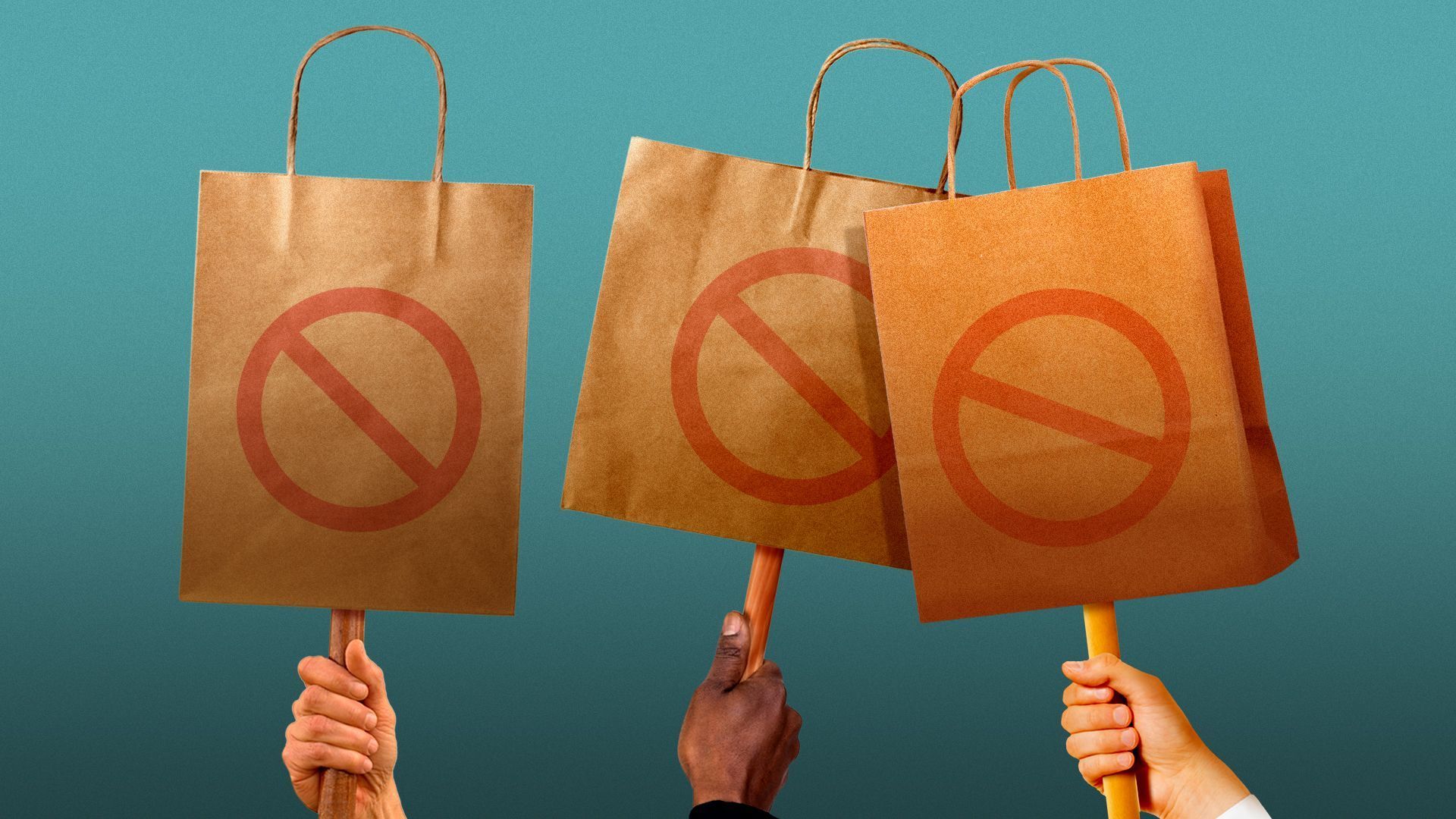
The Feb. 28 economic blackout is an initiative by The People's Union USA, which describes itself as a "grassroots movement dedicated to economic resistance, government accountability, and corporate reform." Illustration: Shoshana Gordon/Axios
ICE Out protests have prompted Main Street businesses across the country to close in solidarity, but the boycotts have yet to reach the registers of America's biggest retailers.
Why it matters: The lack of impact on major retailers so far underscores the limits of protest-driven economic pressure — even as businesses brace for potential disruptions tied to Friday's action.
Driving the news: Friday marks a major test for the ICE Out movement, with activists nationwide calling for people to skip work, school and shopping as part of coordinated national strike actions aimed at pressuring U.S. Immigration and Customs Enforcement.
- More than 60 CEOs, including Target's incoming CEO Michael Fiddelke, recently signed an open letter calling for de-escalation amid unrest tied to ICE enforcement actions.
- Friday's action coincides with a standoff in Washington over Department of Homeland Security funding, with Senate Democrats — and some Republicans — vowing to block any spending bill that includes DHS.
The big picture: Localized spending dips and reduced foot traffic have been reported in cities where protests are most disruptive, including Minneapolis. Nationally, however, there's little evidence the movement is affecting major retailers' sales.
- "If a boycott was working, the sales numbers would tell the story," Neil Saunders, managing director of retail at GlobalData, tells Axios. "We would see growth plunge and even push into negative territory. This very rarely happens — and isn't happening right now."
Reality check: Research on consumer boycotts suggests most fail to produce lasting sales declines, particularly at large national retailers, because participation is difficult to sustain and shopping habits are hard to change.
- Saunders said any real impact would show up first in daily retail sales data but would need to persist over time to signal a genuine shift in consumer behavior.
- "If sales start to slow as a direct result of the boycott, then that drives all other metrics downward," retail analyst Bruce Winder tells Axios.
Between the lines: Large national chains are better positioned to absorb short-term disruptions than small businesses, even when they're the stated target of boycott calls.
- "Big chains are more resilient and can cope with sales fluctuations more," Winder said.
- Major national retailers contacted by Axios did not respond to requests for comment on whether the protests and boycott calls have affected sales or store operations.
Yes, but: Even if big retailers remain insulated for now, protest-driven disruptions can still have outsized effects on small businesses — highlighting the uneven economic impact of movements aimed at pressuring major corporations.
What's next: Analysts say sustained participation over days or weeks — reflected consistently in retail sales data — would be the clearest signal that protest-driven boycotts are escalating into a broader business issue.
