Tesla's robotaxis win on price, lose on wait times

Add Axios as your preferred source to
see more of our stories on Google.
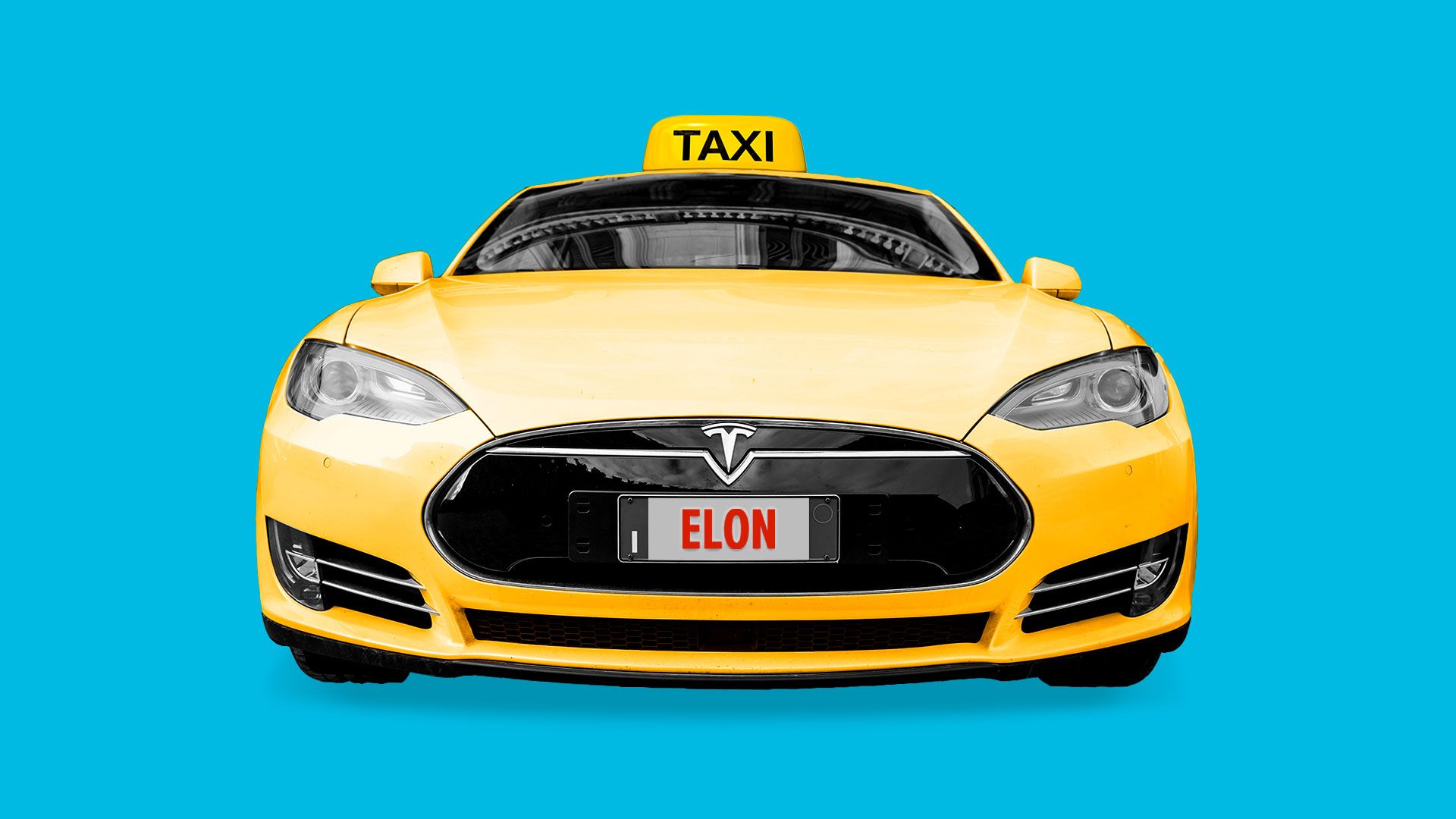
Illustration: Aïda Amer/Axios
Tesla robotaxis are consistently cheaper than Uber, Lyft or Waymo in San Francisco, according to a fresh study of the rapidly evolving market.
Why it matters: The economics of ride-hailing are changing quickly as robotaxis hit the road — and over time, their high utilization and lower labor costs could make them the cheapest option.
Driving the news: Tesla, which began deploying robotaxis (with a safety monitor) last summer, consistently undercuts competitors' prices in San Francisco, according to Obi, an app that compares real-time pricing and pick-up times across multiple ride-hailing services.
- Yes, but: The tradeoff is that Tesla customers have a longer wait time, likely due to its much smaller fleet than Waymo, Uber or Lyft.
By the numbers: A Tesla robotaxi ride in San Francisco averages $8.17, Obi's research shows.
- The next cheapest option is Lyft, which averages $15.47.
- Uber averaged $17.47, while Waymo is the highest, averaging $19.69.
- Waymo's prices have come down since Obi first surveyed the market in June 2025 (before Tesla's entry), while Uber and Lyft have raised prices since then.
Zoom in: On a per-kilometer basis, "Tesla is in another class entirely in terms of pricing," averaging $1.99 per km, about one-third the cost of Waymo, Uber and Lyft, Obi found.
- And unlike other players, Tesla shows no patterns of demand-based price surges, the data shows.
Between the lines: Tesla is likely subsidizing rides as it seeks to establish itself in the ride-sharing business, much as Uber and Lyft did 15 years ago.
- It's still paying safety monitors to ride along, after all.
- It could also be possible that Tesla's cars, which have fewer sensors than Waymo's, are cheaper to operate, as CEO Elon Musk claims.
Reality check: Tesla can't operate a fully driverless robotaxi service in California until it clears key regulatory hurdles, limiting its growth there.
- That permit process could take until 2027, according to Barclays auto and mobility analyst Dan Levy.
The fine print: Obi analyzed nearly 95,000 rides across San Francisco and the South Bay from late November 2025 through Jan. 1, 2026, comparing pricing and wait times for Waymo, Tesla, Uber, and Lyft, alongside a survey of 2,002 consumers in states offering autonomous rides.
- The study also notes Tesla's much smaller fleet, with about 156 vehicles compared with roughly 1,000 Waymo robotaxis at the time.
The bottom line: Obi's study found growing enthusiasm and trust for driverless rideshare, and that consumers are willing to pay more for the novelty of riding in a robotaxi.
