IRS green-lights DOGE overhaul, posing these risks to taxpayers, experts say

Add Axios as your preferred source to
see more of our stories on Google.
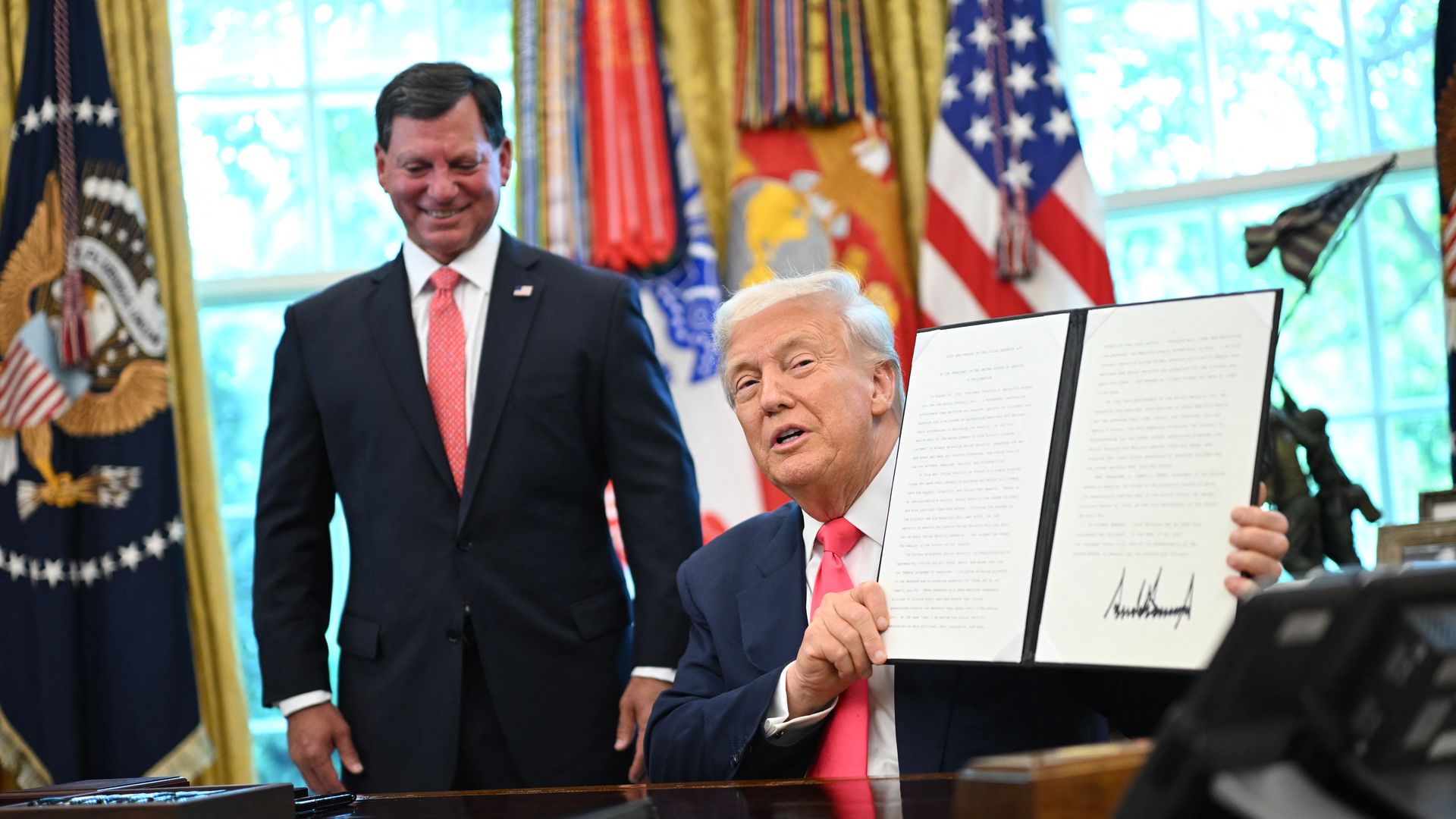
President Trump holds a signed presidential proclamation honoring the 90th anniversary of the Social Security Act, joined by Frank Bisignano, who leads both the IRS and Social Security Administration. Photo: Mandel Ngan/AFP via Getty Images
The IRS is making major changes to modernize the agency, the Washington Post has reported.
Why it matters: These changes, which involve canceling Biden-era plans and outsourcing work to private contractors, poses risks to taxpayers on the eve of tax season, several experts told Axios.
Driving the news: IRS chief executive Frank Bisignano, who also heads up the Social Security Administration, told the Post that the IRS will jettison standards measuring and tracking performance of taxpayer helplines.
- Those standards will be replaced with ones monitoring the average speed of call center answers, abandonment rate and time spent on the line, Bisignano said.
- "At the heart of this vision is a digital-first taxpayer experience, complemented by a strong human touch wherever it is needed," Bisignano wrote in an all-staff memo reviewed by the Post.
The IRS and the Treasury Department did not respond to requests for comment.
Here's what experts say about recent IRS changes:
DOGE plans get green light
The IRS will proceed with two DOGE-era initiatives, per The Post.
- One involves abandoning a Biden-era effort to overhaul the IRS' technology, with the agency instead pursuing a shortcut to connect internal data systems.
- Tom O'Saben, director of tax content and government relations at the National Association of Tax Professionals, said that doing this "rather than fully overhauling legacy infrastructure may provide faster near-term gains, but it also carries long-term risks."
- "Tax professionals routinely see the consequences of fragmented IRS systems when taxpayer accounts, notices and correspondence don't align. Shortcuts can sometimes entrench those inconsistencies rather than resolve them."
The other DOGE-era initiative will mean outsourcing some paper return processing operations to private contractors.
- Paper returns, O'Saben said, "contain some of the most sensitive personal and financial information taxpayers have" and that "expanding the number of external parties handling that data increases exposure risk."
Catch up quick: Elon Musk's DOGE team may have accessed Social Security information that was off-limits under a court ruling and shared data on third-party servers, the Justice Department said in a court filing last week.
- At least two DOGE employees, the filing says, were in touch with a political advocacy group that asked them to analyze data from state voter rolls as part of an effort to overturn election results.
Vanessa Williamson, a senior fellow at the Brookings Institution, tells Axios that given the Social Security lawsuit, "there is every reason to worry about the integrity and security of taxpayer data at IRS."
Digitization and outsourcing
Bisignano's digitization plans may look good on paper, experts said, but they expose taxpayers to several possible issues.
- Williamson said that she is "wary of privatization and outsourcing," describing the process as "more expensive" and risks an agency "trapped with ineffectual vendors."
O'Saben warned that hiring outside vendors increases the risk of identity theft and fraud.
- "Outsourcing this work raises serious concerns around data security and identity theft," he said.
- "Tax-related identity theft is already a persistent problem, and any data breach or processing error could have lasting consequences for affected taxpayers, including fraudulent filings, delayed refunds, and years of cleanup."
Zoom in: Reforming IRS data collection isn't a bad idea, experts say, but they're skeptical about Bisignano's push.
- Williamson said that "there are excellent reasons to improve the metrics used to measure customer service," but "it is not yet clear whether these metrics are actually an improvement."
- "Doing this immediately before tax season raises a lot of questions," she said. "It may make it difficult to compare IRS performance this year with previous years, and that could help the agency sweep serious issues under the rug."
