Trump administration pauses involuntary collections on defaulted student loans

Add Axios as your preferred source to
see more of our stories on Google.
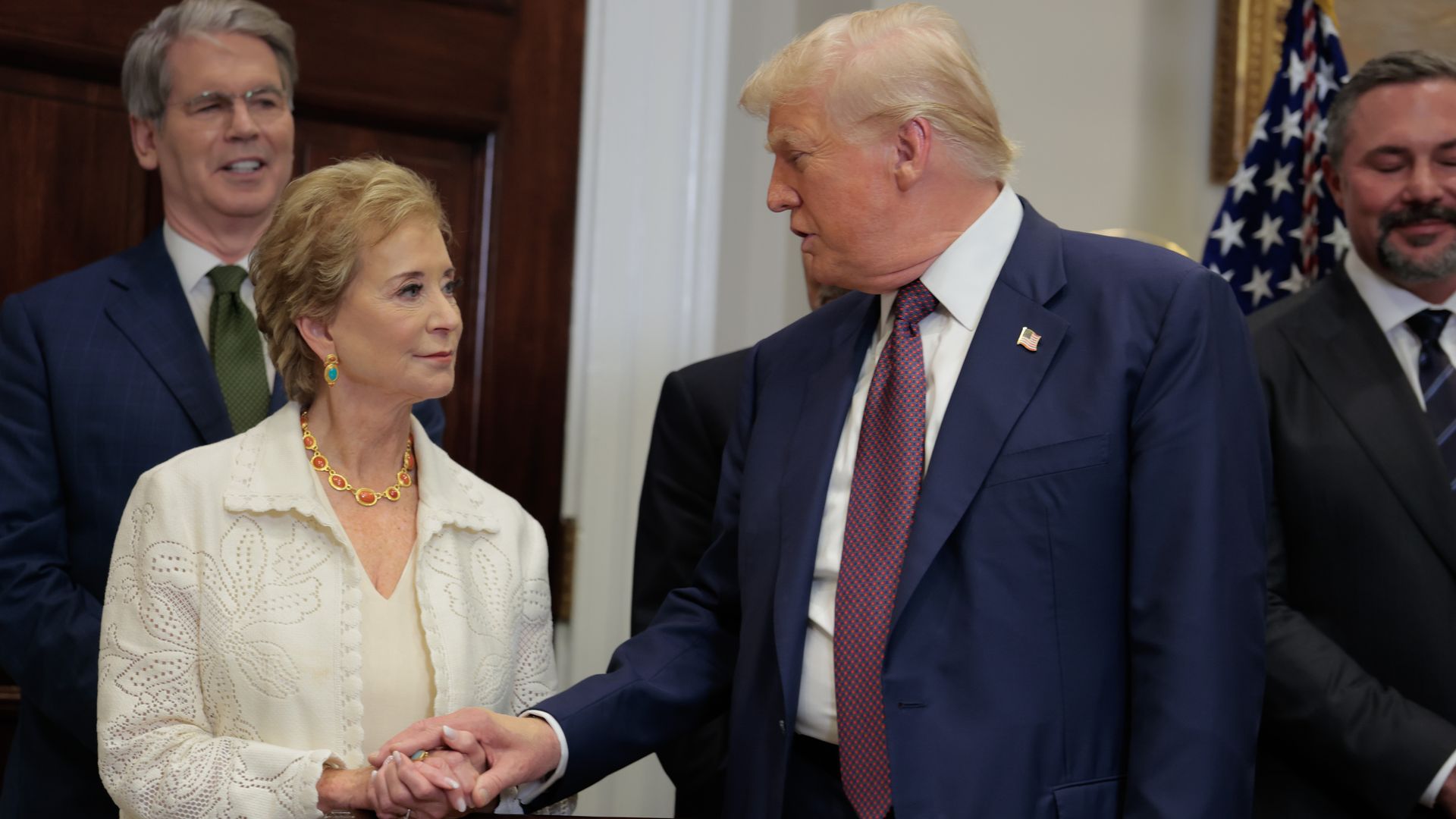
President Trump speaks with Secretary of Education Linda McMahon during an executive order signing ceremony in the Roosevelt Room of the White House on July 31, 2025. Photo: Anna Moneymaker/Getty Images
The Department of Education announced on Friday that it will delay involuntary collection efforts for defaulted student loan borrowers.
The big picture: The department had said earlier this month that it would start garnishing wages the week of Jan. 7. The quick reversal comes as the Trump administration grapples with America's affordability crisis ahead of midterms.
- Student loan advisers have warned that once wage garnishment starts, tax refunds and other income are likely to be next on the chopping block.
Driving the news: The department announced that it will delay the start of involuntary collections on federal student loans, including Administrative Wage Garnishment (AWG) and the Treasury Offset Program (TOP).
- TOP targets money owed to defaulted borrowers that are paid by federal agencies, such as tax refunds.
What they're saying: "The temporary delay will enable the Department to implement major student loan repayment reforms under the Working Families Tax Cuts Act (the Act) to give borrowers more options to repay their loans," the department said in a statement.
- "These reforms, which include simplifying repayment options and providing an additional opportunity for borrowers to rehabilitate their federal student loans, reflect the Trump Administration's commitment to provide better support for current and future borrowers in repayment."
The other side: Aissa Canchola Bañez, policy director at the advocacy group Protect Borrowers, said in a statement that "amidst the growing affordability crisis, the Administration's plans would have been economically reckless."
- "Earlier this month, a coalition of partners sent an urgent letter to ED urging them to do just this. We are pleased to see they have heeded our calls," she said.
Catch up quick: Last year, the Trump administration ended a five-year, COVID-era repayment pause.
- All student loan collections activities "are required under the Higher Education Act of 1965 and Debt Collection Improvement Act of 1996 and conducted only after student and parent borrowers have been provided sufficient notice and opportunity to repay their loans," the department said earlier this month when announcing that collections would begin.
- A spokesperson confirmed to Axios at the time that the department would start to notify about 1,000 defaulted borrowers of plans to withhold some of their wages.
- Notices would increase "in scale on a month-to-month basis," the department said.
How it works: The Consumer Credit Protection Act restricts how much of a worker's pay can be garnished at a time.
- For "ordinary garnishments" — those not for support, bankruptcy or any state or federal tax — "the weekly amount may not exceed the lesser of two figures: 25% of the employee's disposable earnings, or the amount by which an employee's disposable earnings are greater than 30 times the federal minimum wage," per the Department of Labor.
By the numbers: Student debt is central to many Americans' affordability woes.
- Credit reporting agency TransUnion reported in September that 29% of borrowers — or 5.4 million people — were delinquent on their loans in June, meaning that they had not made a payment in at least 90 days.
- That's down slightly from a record high of 31% in April.
- About 42.7 million borrowers owe more than $1.6 trillion in federal student debt, according to the Department of Education.
