New 2020 transcripts show Fed's pandemic response

Add Axios as your preferred source to
see more of our stories on Google.
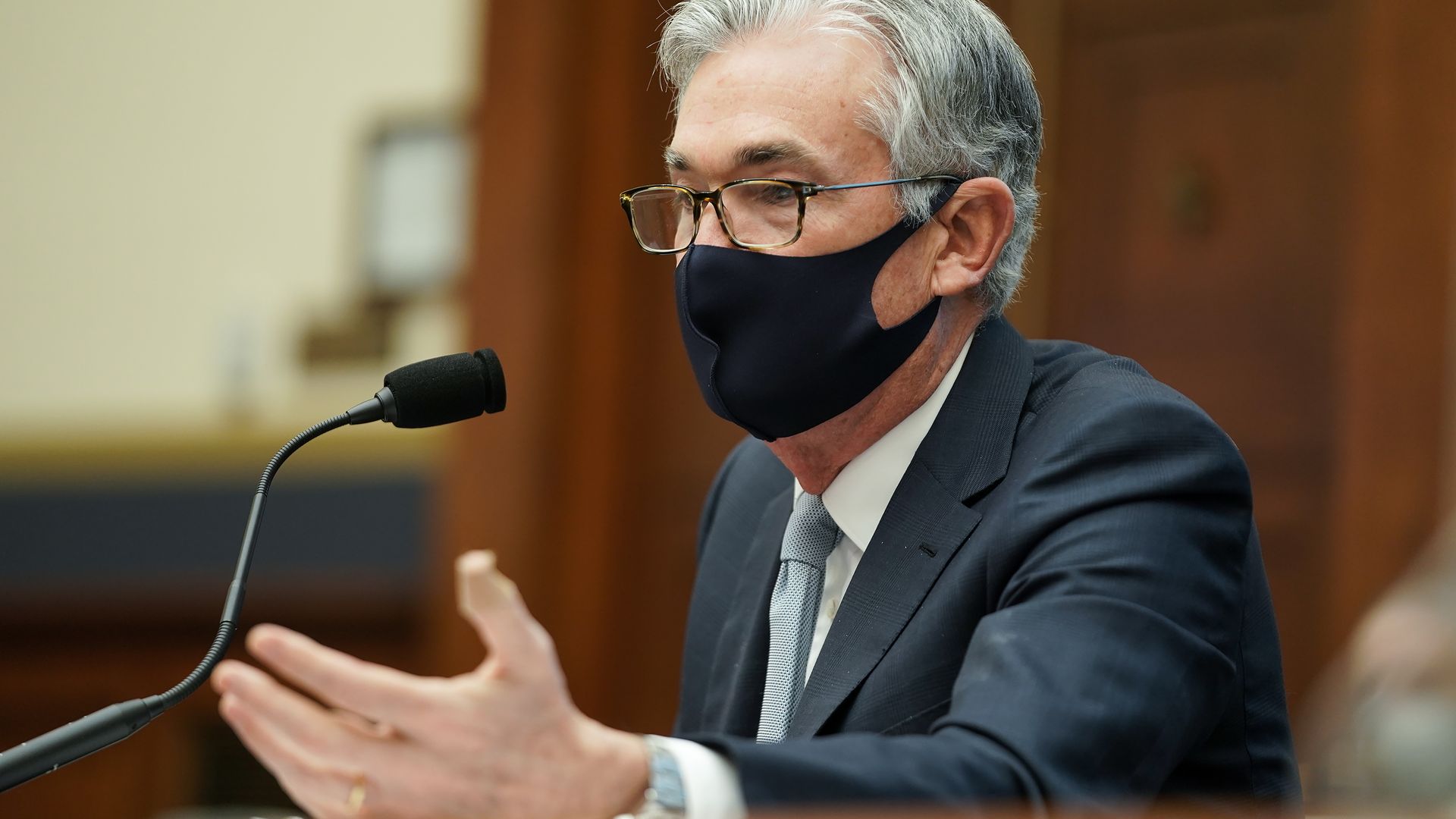
Federal Reserve chair Jerome Powell in December 2020. Photo: Pool via Getty
Newly released transcripts show how the Federal Reserve scrambled in 2020 to unleash programs meant to keep the financial system from crumbling from the COVID-19 pandemic and accompanying global shutdown.
Why it matters: The transcripts of the Fed's monetary policy committee meetings, released after the customary five-year lag, add greater nuance to what was a seismic year for the American economy and its central bank.
- Besides the extraordinary pandemic response in March and April, the transcripts later that year show Fed officials coming to broad consensus that they should be laser-focused on the job market.
- That proved a fateful decision that may have contributed to the Fed being slow to respond to the inflation that took off in 2021.
Flashback: In the Fed's first meeting of the year, in late January, the outbreak of what governor Lael Brainard called the "Wuhan coronavirus" was mentioned 17 times, mainly in terms of creating a risks to financial markets and global growth.
- "Obviously, the coronavirus would have implications, if it spreads," said Dallas Fed President Robert Kaplan at that meeting. Governor Randal Quarles observed about the virus that "some people seem to be reacting to as if it were the 'Andromeda Strain.'" St. Louis Fed president Jim Bullard said that "if the past is a guide, this'll be scary, but temporary."
- Five weeks later, in an emergency meeting, the Fed enacted a surprise half-point interest rate cut, the first in a cavalcade of actions that helped stabilize the economy and bolster financial markets when they were becoming unraveled in March 2020.
- "Markets and the general public need a clear signal that the Federal Reserve and other policymakers around the world understand the significance of what's going on and will move decisively to counter a tightening of financial conditions and support the economy," chair Jerome Powell said.
Zoom in: That would be the first of five emergency policy meetings that month.
- Twelve days later, the FOMC slashed its interest rate target to near-zero and announced at least $700 billion in bond purchases known as quantitative easing.
What they're saying: ""It is now evident to each of us that the effects of the COVID-19 crisis are striking a painful blow to the economy, with inevitable repercussions for consumer and business confidence that will very likely multiply and prolong the effect of this shock for months and perhaps quarters to come," said vice chair Richard Clarida at the March 15, 2020 meeting.
Zoom out: As the immediate crisis phase of the pandemic passed — but unemployment remained stratospheric — Fed officials pivoted to their longer-term framework for policy.
- It was focused on the persistent problems of the 2010s: inflation persistently below the Fed's target, interest rates constrained by not being able to cut below zero and a sluggish labor market recovery.
- Powell, over the course of that year, repeatedly called on Congress to enact fiscal action to address the economic disruption caused by the pandemic.
Zoom in: At the December 2020 meeting, officials discussed the continuing struggles of the labor market, and viewed the predominant inflation problem as the risk of undershooting the Fed's 2% target.
- "I think inflation is likely to remain soft as these sectors are held back by containment measures for COVID," then come back amid the vaccine rollout, San Francisco Fed president Mary Daly said. "But that will only be part of the battle," she said, saying that returning inflation to 2% will take "sustained policy accommodation to moderately overshoot the target."
- Just a few months later, inflation would begin soaring upward, though the Fed did not suspend its QE programs and raise interest rates until early 2022.
