How AI-driven productivity could lead to more jobs

Add Axios as your preferred source to
see more of our stories on Google.
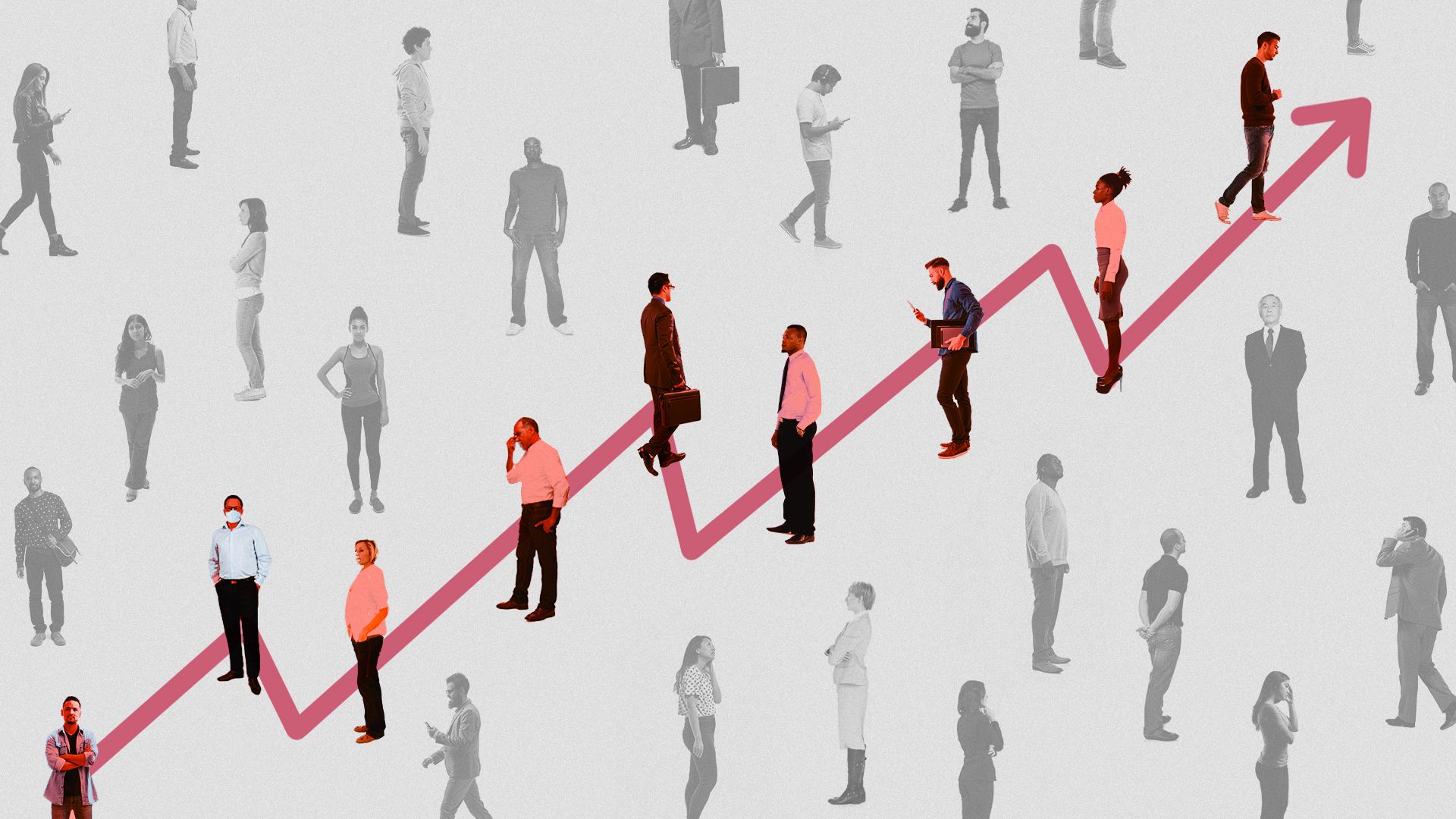
Illustration: Annelise Capossela/Axios
Higher productivity is often viewed as a synonym for fewer workers. Market strategists, however, say productivity gains driven by AI could actually lead to more jobs.
Why it matters: That would be a boon for the economy and could give the stock market enough steam to extend its rally.
Driving the news: Labor productivity rose 4.9% in the third quarter, the Bureau of Labor Statistics reported on Thursday, the fastest pace in two years, which could be due to the proliferation of AI.
What they're saying: "Productivity growth is an amazing thing," Steve Englander, head of G10 FX research at Standard Chartered, tells Axios.
- "I know we worry about employment, but in the past, strong productivity growth has been accompanied by strong employment performance."
- "History tells us that when firms make money, at some point they say, you know, we need a few more bodies here to make even more money," he says, citing data showing this kind of productivity has led to more jobs over the last 150 years.
Follow the money: An AI-driven productivity boost will have positive implications for equity investors.
- "We're embedding for the first time in our estimates an actual earnings boost from AI adoption and productivity this year," Ben Snider, equity strategist at Goldman Sachs, tells Axios.
- "It's still very small, less than a percent, but we think that'll grow going forward." Any cost savings from AI that results in margin expansion is good for earnings and therefore good for the market.
Zoom in: That would be also good for the dollar and for asset prices more broadly, Englander notes, because of the economic growth associated with businesses expanding.
- Productivity equals greater profits. That means more business spending on labor, thus more people with jobs, and more people spending money, and so on and so on.
Reality check: As always, there is the risk that this time is different, and productivity gains are not such a positive.
- That is not the base case for Englander, although he says he is worried, but not pessimistic, about this potential outcome.
The bottom line: Higher productivity from AI may sound like code for layoffs and negative economic effects.
- But if history is any guide, that short-term pain will lead to long-term gains for the economy and markets.
