AI is changing childhood. The guardrails aren't ready

Add Axios as your preferred source to
see more of our stories on Google.
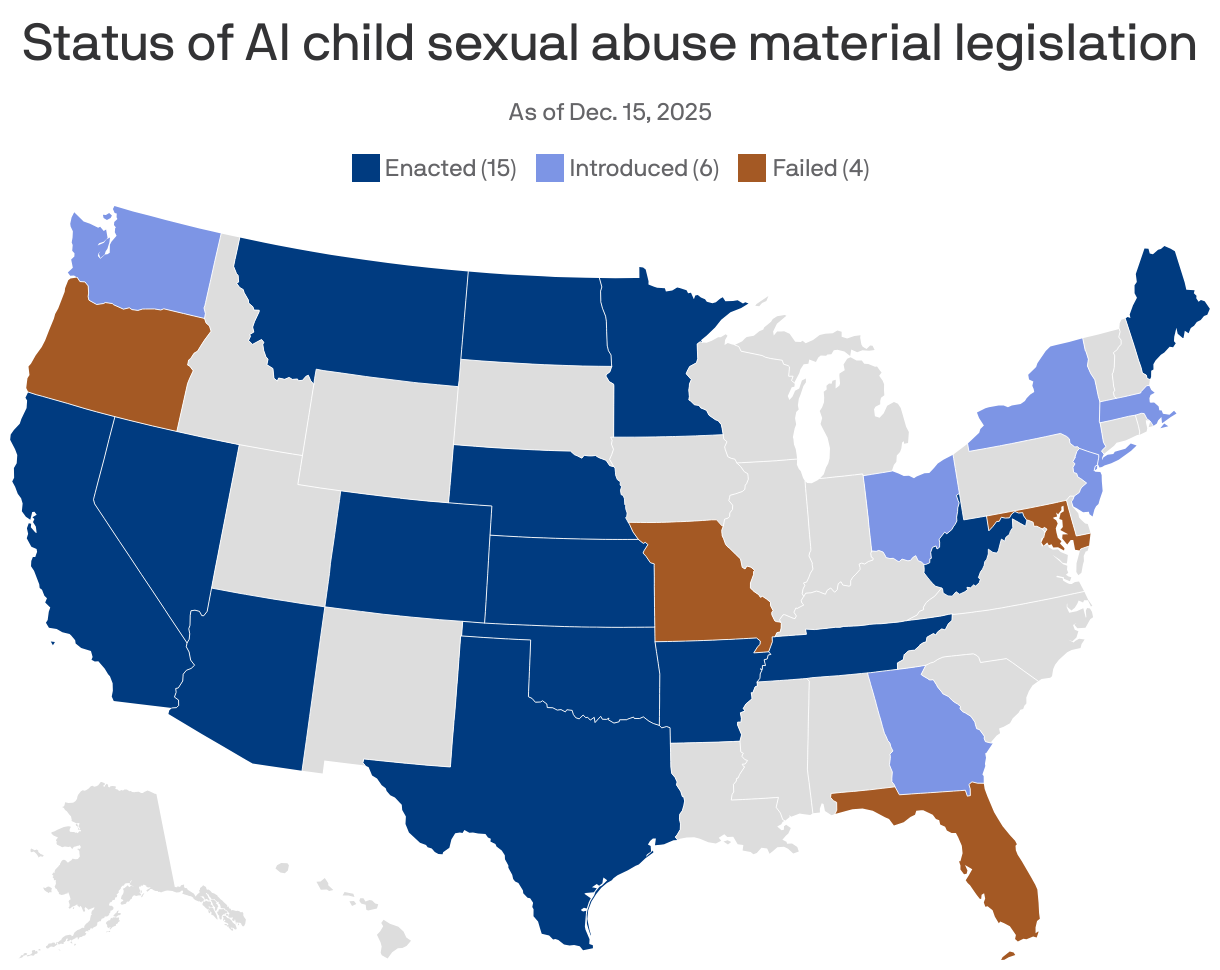
Most teens now use generative AI, even as parents and schools struggle to keep up with guidance on how to keep kids safe.
Why it matters: Kids' AI habits are outpacing adult oversight, raising concerns about privacy, development and online safety.
By the numbers: Seven in 10 teens used generative AI last year, and 83% of parents said schools haven't addressed it, a Common Sense Media survey found.
- A 2025 Pew survey shows that among teens who reported using chatbots, about 3 in 10 do so every day.
State of play: Conversations about children's safety and AI are just now coming to the forefront.
- OpenAI just launched parental controls this fall.
- Character.AI launched "parental insights" in March and then tightened them in October, saying users under 18 won't be allowed to have open-ended chats.
On the policy front, the landscape recently shifted.
- Trump signed an executive order to override state AI laws — including those aimed at protecting children — in favor of a single national framework. The move could weaken or delay emerging state protections, like California's, and sets up high-stakes legal battles.
What they're saying: "There really does need to be more overarching policy to move the needle towards safer online experiences for kids, including AI," Tiffany Munzer, a developmental behavioral pediatrician, tells Axios.
- Munzer is working on the American Academy of Pediatrics' AI policy. It's expected to publish at the end of 2026.
Flashback: Kids' online safety has been a flashpoint since the early days of the internet.
- A 1998 FTC survey found nearly 90% of kids' websites collected personal data — a catalyst for the Children's Online Privacy Protection Act and the Children's Internet Protection Act.
The bottom line: What we're protecting children from keeps shifting.
- Early worries centered on nude photos, data-hungry sites and chatroom strangers. The 2010s brought smartphones, screen time, cyberbullying and algorithmic rabbit holes. Today, concerns extend to how AI and other digital interactions may shape kids' brains, attention and emotional development.
- Families are navigating these questions now, even as guidance from policymakers, researchers and tech companies catches up.
